

Dr Forest
Dr Forest's Organic Sulphate of Potash Fertiliser. 50% Potash
Dr Forest's Organic Sulphate of Potash Fertiliser. 50% Potash
Couldn't load pickup availability
Organic sulphate of potash — 50% K₂O chloride-free potassium & 18% sulphur
Potassium drives fruit development, flavour intensity, disease resistance, and drought tolerance. Most cheap potash fertilisers deliver it as potassium chloride — adding chloride ions that accumulate in soil and damage sensitive crops. This is sulphate of potash (K₂SO₄): a naturally mined, EU-certified organic mineral that delivers the highest concentration of chloride-free potassium available, alongside plant-available sulphur for protein synthesis and enzyme activation.
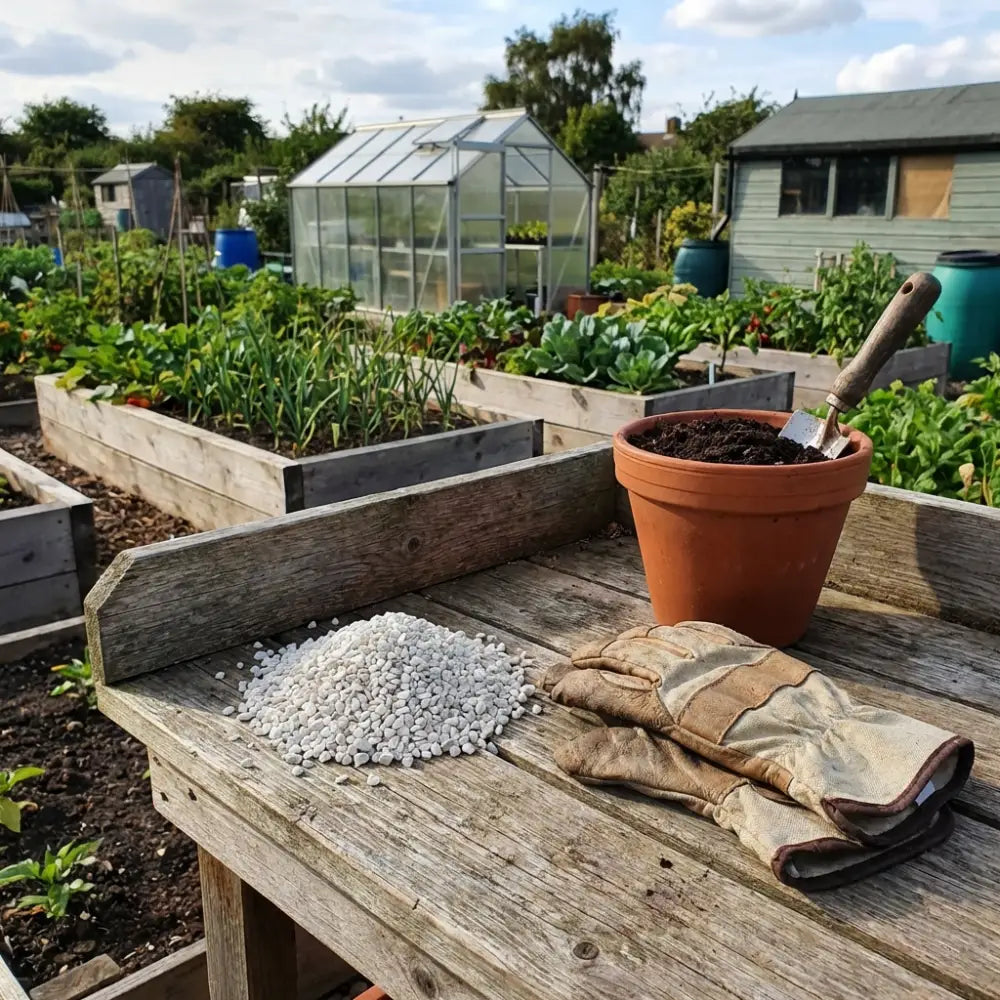
At 50% K₂O and 18% sulphur, this is not a diluted compound or a blend — it is pure potassium sulphate in a uniform granulate that spreads evenly and dissolves readily on contact with soil moisture. Two essential macronutrients, immediately plant-available, with no chloride, no nitrogen, and no phosphorus to upset carefully balanced feeding programmes. Also available as a fine powder for dissolving into liquid feeds.
What sulphate of potash is used for in the garden
- Fruiting and flowering crops — potassium regulates sugar transport, accelerates fruit ripening, and intensifies flower colour; essential for tomatoes, strawberries, peppers, roses, and all fruiting plants
- Flavour and quality improvement — research consistently shows potassium sulphate increases soluble sugars, vitamin C, and dry matter content compared to untreated controls
- Chloride-sensitive crops — berries, grapes, potatoes, tomatoes, citrus, and salad crops all perform better with a sulphate-based potassium source that avoids chloride accumulation
- Drought and frost resistance — potassium regulates stomatal opening and cell turgor pressure, reducing water loss and improving survival under temperature extremes
- Disease resistance — adequate potassium strengthens cell walls and activates plant defence enzymes, reducing susceptibility to fungal and bacterial pathogens
- Sulphur supplementation — 18% sulphur supports amino acid synthesis, chlorophyll production, and nitrogen utilisation; particularly important in high-demand crops like brassicas and alliums
- Lawns and turf — potassium hardens turf for winter, improves drought tolerance, and enhances green-up speed in spring without excessive nitrogen flush
- Balancing NPK feeds — zero nitrogen and zero phosphorus makes this ideal for boosting the K component of any feeding programme without altering N or P ratios
Why sulphate of potash instead of muriate of potash?
Sulphate of Potash (K₂SO₄) — this product
- 50% K₂O — highest-concentration chloride-free potassium source
- 18% sulphur — a second essential macronutrient in every application
- Almost zero chloride — safe for all crops including sensitive fruits and vegetables
- Low salt index — minimal osmotic stress to roots
- EU certified organic — approved for organic farming under EC 834/2007
- Sulphate-S improves nitrogen uptake efficiency
Muriate of Potash (KCl)
- 60% K₂O — higher potassium per kg, but at a cost
- 47% chloride — accumulates in soil and root zone over time
- No sulphur — delivers only one nutrient
- Higher salt index — greater risk of root burn and osmotic stress
- Reduces starch content, dry matter, and ascorbic acid in potatoes (Koch et al., 2020)
- Not suitable for chloride-sensitive crops in containers or tunnels where leaching is limited
Every Dr Forest product is made by hand in small batches at our workshop in Stockport, Greater Manchester. We use recyclable packaging throughout and source ingredients for quality, not cost.
The science of potassium and sulphur in plant nutrition
Potassium: the quality nutrient
Potassium is the most abundant cation in plant tissue and the single most important nutrient for fruit quality. It does not become part of organic molecules — instead it operates as a free ion, regulating water pressure, activating over 60 enzymes, balancing electrical charges, and transporting sugars from leaves to developing fruit. Plants deficient in potassium produce smaller, less flavourful fruit with reduced shelf life and weaker resistance to disease and environmental stress.
Unlike nitrogen — which drives vegetative growth and can be over-applied — potassium cannot be made excessive in practical garden settings. It is the nutrient most commonly under-supplied in container growing and intensive vegetable production.
Why the potassium source matters
Approximately 96% of the world's potassium fertiliser is sold as potassium chloride (muriate of potash). It is cheap and highly concentrated. But the chloride ion it carries is not inert — it accumulates in soil, increases salinity, and directly damages sensitive crops. The choice between chloride and sulphate as the accompanying anion has measurable consequences for crop quality.
Potato Quality — Starch, Sugars & Vitamin C
A two-year field trial by Koch et al. (2022) compared K₂SO₄ and KCl fertilisation on two potato cultivars. Potassium sulphate maintained higher starch content and ascorbic acid (vitamin C) concentration, while KCl-treated tubers accumulated more reducing sugars during storage — the precursors to acrylamide formation during cooking. Volatile compound analysis also revealed higher levels of lipid-derived off-flavour compounds in the KCl treatment.
Fruit Weight & Soluble Solids
In pineapple, replacing KCl with K₂SO₄ (at 20% less total K) produced significantly larger fruit and improved bromatological quality metrics including total soluble solids and vitamin C content (Arias-Vázquez et al., 2018). The sulphate-fed plants outperformed despite receiving less total potassium — demonstrating that potassium source matters as much as quantity.
Chloride Accumulation & Root Zone Salinity
Potassium sulphate exhibits stronger adsorption to soil particles than KCl, making it less prone to leaching (Tisdale, 1999). In container growing — where leaching is limited — this distinction is critical. Chloride ions from KCl accumulate in the root zone, increasing osmotic potential and reducing the plant's ability to take up water. Sulphate ions do not carry this risk.
Sulphur as the Fourth Macronutrient
Sulphur is essential for the synthesis of the amino acids cysteine and methionine — without which protein synthesis stalls. It is a structural component of coenzyme A and thiamine, and is required for chlorophyll production. Sulphur deficiency limits nitrogen utilisation efficiency: adding nitrogen to a sulphur-deficient soil produces diminishing returns. Every application of sulphate of potash delivers 18% S alongside potassium, addressing two macronutrient requirements simultaneously.
Potassium & Disease Resistance
Adequate potassium thickens cell walls, increases cuticle wax deposition, and activates pathogenesis-related (PR) proteins. Potassium-sufficient plants show reduced incidence of fungal diseases including powdery mildew, botrytis, and fusarium wilt. The mechanism is primarily physical — stronger cell walls are harder for fungal hyphae to penetrate — combined with faster activation of enzymatic defence cascades.
Potassium & Water Regulation
Potassium is the primary ion controlling stomatal aperture. When potassium is adequate, guard cells respond rapidly to water stress by closing stomata to reduce transpiration loss. This makes potassium the single most important nutrient for drought tolerance. Plants with adequate K also recover faster from frost damage because potassium lowers the freezing point of cell sap and maintains membrane integrity under temperature extremes.
Scientific References
- Koch, M. et al. (2022). Comparison of the Effects of Potassium Sulphate and Potassium Chloride Fertilisation on Quality Parameters of Potato Tubers. Frontiers in Plant Science, 13, 920212.
- Arias-Vázquez, E.L. et al. (2018). Effects of potassium chloride and potassium sulphate on 'MD-2' pineapple fruit yield and quality. Acta Horticulturae.
- Tisdale, S.L. et al. (1999). Soil Fertility and Fertilizers. 5th ed. Prentice Hall.
- Mengel, K. & Kirkby, E.A. (2001). Principles of Plant Nutrition. 5th ed. Kluwer Academic.
- Sharma, U.C. & Sud, K.C. (2001). Effect of potassium sources on potato yield and quality in acidic and alluvial soils. J. Indian Potato Assoc., 28, 70–71.
- Kumar, P. et al. (2004). Effect of sulphate and muriate of potash on quality of potato. Annals of Agricultural Research, 25(3).
How to use sulphate of potash: application rates & guide
The granulate is ideal for broadcasting, top-dressing, and mixing into soil or compost. The powder dissolves readily in water for liquid feeding, foliar spraying, and fertigation systems. Choose the form that suits your application method.
Application rates — granulate (soil application)
Soil mix — potting and container preparation
Mix thoroughly into compost or potting soil before planting. Provides baseline potassium and sulphur for the first 4–6 weeks. Ideal for tomatoes, peppers, strawberries, and other fruiting crops.
Top dressing — established containers
Scatter granules evenly across the soil surface and water in thoroughly. Increase the rate for heavy-fruiting crops in peak production. Work lightly into the top centimetre of soil if possible.
Outdoor beds and borders
Broadcast evenly across the soil surface and water in well. Use the lower rate for maintenance feeding; the higher rate for heavy-fruiting crops, new plantings, or where soil potassium is known to be low.
Lawns and turf
Apply in spring to support active growth and in autumn to harden turf for winter. Water in immediately. Potassium improves drought tolerance, wear resistance, and winter colour retention.
Application rates — powder (liquid feed)
Liquid feed — general potassium boost
Dissolve powder in water and apply as a root drench. Ideal for supplementing potassium during peak fruiting and flowering when demand is highest. Use at the lower rate for regular maintenance; the higher rate when plants are in full production.
Foliar spray
Apply to both leaf surfaces in early morning or late evening. Foliar potassium is absorbed rapidly and can correct deficiency symptoms within days. Particularly effective for fast-growing fruiting crops.
Step-by-step application
- Identify your potassium need. Fruiting and flowering crops have the highest demand. Signs of deficiency include scorched leaf edges, poor fruit set, and reduced disease resistance.
- Choose granulate or powder. Granulate for soil mixing, broadcasting, and top-dressing. Powder for dissolving into liquid feeds, foliar sprays, and fertigation.
- Measure the correct rate. Use the rates above as a starting guide. A level teaspoon of granulate is approximately 5g. A level teaspoon of powder is approximately 4g.
- Apply and water in. For granulate, scatter evenly and water thoroughly. For powder, dissolve fully before applying. Always water in soil applications to move potassium into the root zone.
- Time applications to demand. Potassium demand peaks during flowering and fruit development. Start supplementing when the first flowers appear and continue through to harvest.
Use alongside Dr Forest crop-specific fertilisers (Tomato, Rose & Flower, Fruit & Veg) where additional potassium is needed during peak fruiting. Combine with Seaweed Powder for biostimulant activity, and Cal-Mag Supplement where calcium is also required. Zero nitrogen content means it will not interfere with bloom-phase feeding ratios.
Frequently asked questions about sulphate of potash
Share