Fertiliser
Organic Tomato Fertiliser | Slow Release Tomato Feed 3-4-6
A slow-release 3-4-6 feed for tomatoes.
from £11.50
A slow-release organic coarse powder formulated for the full range of kitchen garden crops — tomatoes, peppers, courgettes, root vegetables, brassicas, soft fruit and beans. The 4-5-6 NPK ratio is potassium-led for high-quality produce, with elevated phosphorus for root development and nitrogen calibrated to sustain growth without pushing foliage at the expense of fruit. Handcrafted in Stockport from certified organic ingredients.
Both primary plant-meal ingredients are sourced from Cambridgeshire. The potassium mineral is mined exclusively in North Yorkshire. The seaweed is hand-harvested from Scottish coastal waters. The biochar is British-sourced and fermented before blending. Nineteen synergistic ingredients deliver an immediate mineral fraction that begins working within days, and a slow-release organic fraction that builds soil biology across a full season.
Dr Forest fertilisers are blended in small batches from traceable British ingredients. Named after Joe's grandfather — an NHS GP who believed in doing things properly. No shortcuts. Every bag is made to the same standard we use in our own garden.
Every ingredient is here for a specific, research-backed reason. Nothing is filler. Both primary plant meals are sourced from Cambridgeshire. The potassium mineral is mined in North Yorkshire. The seaweed is hand-harvested from Scottish waters. The biochar is British-sourced and fermented before blending.
The primary nitrogen carrier at 12% N, mineralising through microbial protease activity over 6–8 weeks. Also contributes 3% P and 4% K. The controlled-release profile is critical for fruiting crops: a nitrogen spike at fruit set redirects energy into foliage at the expense of fruit development. Marschner, 2012
The primary fast-acting phosphorus source at 15% P and 7% Ca. Undergoes rapid microbial breakdown, releasing phosphorus within weeks — addressing the two most critical P-demand moments: root establishment after transplanting, and bud initiation at flowering. Same Cambridgeshire supplier as the Nitrogen Plant Extract. Marschner, 2012
A uniquely British mineral supplying four nutrients from a single crystal: 14% K₂O, 17% CaO, 6% MgO and 48% SO₃. Mined 1,200m below the North Sea. Extends the K feeding window by 50–60 days after SOP's immediate release is exhausted — critical for sustained fruit development across a long season. Johnston & Dawson, 2018
Fast-release potassium at 50% K₂O — chloride-free. Muriate of potash causes tip burn and osmotic stress in fruit crops; its chloride content negatively affects flavour in tomatoes and soft fruit. SOP activates stomatal regulation, sugar transport and anthocyanin production immediately, bridging the gap before Polyhalite's slower K release builds. Römheld & Kirkby, 2010
Dual-function mineral: 23.3% calcium and 18.6% sulphur in immediately plant-available sulphate form. Calcium is immobile in the phloem and must be continuously supplied to developing fruit; deficiency causes blossom end rot. Delivers Ca without raising soil pH — safe across all UK soil types. Barker & Pilbeam, 2015
The most concentrated P and Ca source in the formula at 31% P₂O₅ and 30% Ca, but dissolves slowly as a long-term reserve. Micronisation dramatically increases surface area. Works with Phosphorous Rich Plant Meal: the plant meal handles early P demand; this mineral handles the final stretch when the last trusses are swelling in August. Marschner, 2012
High-protein plant meal providing steady slow-release nitrogen over 6–8 weeks through microbial protease breakdown. Acts as a prebiotic carbon source for the soil microbial community. The gradual mineralisation avoids the nitrate spikes that suppress fruit set and flavour development in fruiting crops. Jensen, 1994
Montmorillonite and illite clays with the highest cation exchange capacity of any soil mineral — ionic reservoirs that bind and slowly release K, Ca and Mg between waterings. Particularly valuable in containers and grow bags where leaching through drainage is the primary cause of mid-season nutrient loss. Unlike organic matter, clay CEC is permanent. Barker & Pilbeam, 2015
Contains chitin — the polymer found in fungal cell walls and insect exoskeletons. Plants detect it as a signal of pest presence and upregulate Systemic Acquired Resistance (SAR) pathways, priming defences against Pythium, Botrytis, powdery mildew and other common fruit and vegetable pathogens. Also supplies trace minerals and slow-release N and P. Aranega-Bou et al., 2014
A traditional British fertility blend validated by modern soil science. Comfrey is exceptionally K-rich and breaks down rapidly. Nettle supplies iron and silica. Yarrow promotes phosphorus-solubilising bacteria. Chamomile releases calcium and supports beneficial rhizobacteria colonisation. Together they provide broad-spectrum biological stimulus. Zaller & Kopke, 2004
Silicon strengthens epidermal cell walls — a physical barrier against aphid stylet penetration, thrip rasping and fungal spore germination. Consistently reduces pest damage in fruiting crops and improves stem rigidity, reducing collapse under heavy fruit load. Silicon is not present in most UK garden soils at sufficient concentrations. Epstein, 1999
Concentrated seaweed extract supplying cytokinins that delay fruit and leaf senescence — extending the productive season. Betaines improve osmotic adjustment under drought and heat stress. Mannitol feeds beneficial rhizobacteria. Natural auxins drive lateral root proliferation during the high-demand fruiting phase. Craigie, 2011
A consortium of beneficial bacteria, yeasts, actinomycetes and lactic acid bacteria. Suppresses pathogens through competitive exclusion, accelerates decomposition of organic matter, and produces vitamins and bioactive compounds that promote root growth. In fruiting crops, EM consistently improves secondary metabolite production — the flavour and aroma compounds. Higa & Parr, 1994
Contains triacontanol — a natural plant growth regulator that increases chlorophyll content by 15–20% and accelerates meristematic cell division. Increases the rate of photosynthate production and partitioning to developing fruit. Also supplies 2.5% N, 1.4% Ca and trace minerals as it decomposes. Khan et al., 2009
Magnesium is the central atom of every chlorophyll molecule — without it, photosynthesis and fruit sugar production fails. At 20.9% Mg it is the highest-concentration Mg source in the formula, providing sustained correction for UK soils that are chronically Mg-deficient according to the DEFRA Countryside Survey (2016). Marschner, 2012
The fastest-acting magnesium source at 16.7% Mg and 13% S in immediately plant-available sulphate form. Addresses interveinal chlorosis within days — critical during the rapid early-season growth phase when Mg demand peaks. Bridges the gap from day one while Micronised Magnesium Mineral builds through the season. Barker & Pilbeam, 2015
Provides cytokinins that delay leaf senescence, betaines that improve osmotic adjustment, and mannitol as a carbon source for beneficial rhizobacteria. Delays the plant's natural transition from fruiting to senescence, extending the productive season. Auxins drive lateral root proliferation during the high-demand fruiting phase. Craigie, 2011
British-sourced agricultural biochar, fermented and activated before blending. Creates a permanent, porous mineral scaffold that retains water and nutrients between waterings — particularly valuable in grow bags and containers. Fermentation activates the surface with beneficial microbial populations. Increases plant-available K retention by 18–35% under leaching conditions. Lehmann et al., 2011
Complementary chelation and root-stimulation effects. Humic acid chelates micronutrients — particularly iron and manganese — and increases total soil bacterial biomass by 30–60% while stimulating mycorrhizal colonisation by 25–40%. Fulvic acid penetrates root cell membranes directly, increasing permeability to nutrient ions during the rapid growth and fruiting phases. Nardi et al., 2009; Zandonadi et al., 2010
All g/m² rates assume even surface incorporation to 2–3cm depth. For new beds, borders or containers being set up for the first time, apply at double the standard rate as an initial base charge and work into the full soil depth before planting.
| Plant | Rate per m² | Frequency & Notes |
|---|---|---|
| Tomatoes | 80–120g | Every 4 weeks from first flower through to end of harvest. Apply at planting, then begin top-dressing when the first truss sets. |
| Peppers & Chillies | 75–110g | Every 4 weeks. High-K feeding is particularly important for pepper flavour development and capsaicin production. |
| Courgettes & Summer Squash | 80–120g | Every 4–5 weeks. Heavy K feeders — flavour and skin quality both improve markedly with adequate K. |
| Winter Squash & Pumpkins | 80–110g | Every 5 weeks through to August, then stop to allow hardening and sugaring of the skin before harvest. |
| Cucumbers | 75–100g | Every 4 weeks. The 6.2% Ca in this formula prevents bitter fruits and hollow cores. |
| Runner & French Beans | 55–70g | Every 5–6 weeks. Legumes fix atmospheric nitrogen — the high K and P support pod fill without adding unwanted N. |
| Peas | 30–45g | Every 6–8 weeks. As N-fixers, peas need minimal added N. Elevated K and P supports pod development. |
| Sweetcorn | 80–110g | At planting then every 4 weeks until tassels appear. Reduces to every 6 weeks once silk has been pollinated. |
| Plant | Rate per m² | Frequency & Notes |
|---|---|---|
| Potatoes | 100–150g | At planting, then every 4 weeks until foliage begins to die back — 4 applications minimum, 5 for a long-season maincrop. Upper rate (130–150g) noticeably improves tuber bulk. |
| Carrots | 60–75g | At sowing, then every 5–6 weeks. Lower N prevents excessive forking and hairy root development; K drives sugar content and colour intensity. |
| Beetroot & Turnips | 65–80g | Every 5 weeks. K and P drive root swelling and sugar accumulation. |
| Onions & Garlic | 65–80g | At planting, then at 5–6 weeks, then at 10–12 weeks. Stop entirely once bulbs begin to swell visibly — excess nutrition prevents proper curing. |
| Leeks | 70–110g | Every 4–5 weeks. Long-season crop with high nutrient demand. Moderate N prevents excess leaf at the expense of shank development. |
| Plant | Rate per m² | Timing & Notes |
|---|---|---|
| Strawberries | 65–100g | March and after the first flush. K drives improved flavour and colour in the second and third flushes. |
| Raspberries | 70–110g | March, June and post-harvest (August–September). Three applications required for a full-season cane crop. |
| Blackcurrants & Redcurrants | 90–130g | March, June and post-harvest. Blackcurrants have the highest nutrient demand of all common soft fruit — three applications at the upper end are the minimum. |
| Gooseberries | 80–120g | March and after fruiting (July–August). High K improves dessert gooseberry sweetness and colour. Upper rate recommended for established bushes. |
| Blueberries | 65–90g | March and June. A third application in August at 70–80g maintains berry size into late harvest. Acidify soil separately to pH 4.5–5.5. |
| Situation | Rate | Method | Notes |
|---|---|---|---|
| Containers & pots | 4–6g per litre | Mix evenly through the full volume before potting | 4g/L in compost already containing nutrients. 6g/L in plain or peat-free mixes. |
| Grow bags (40–50L) | 150–200g per bag | Mix thoroughly throughout the full bag before planting | 150g for bags with nutrients. 200g for plain bags. |
| Raised beds & borders | 100–120g per m² | Fork into the top 15–20cm before planting | Double the standard top-dress rate as a single pre-season application. |
| Single plant at transplanting | 15–25g per plant | Mix into the planting hole before placing the rootball | 15g for small transplants. 25g for larger rootballs or hungry crops like tomatoes. |
| Situation | Rate | Frequency | Notes |
|---|---|---|---|
| Containers (per litre of pot volume) | 2–3g per litre | Every 4 weeks | Apply to compost surface, fork in lightly, water in thoroughly. |
| Grow bags (40–50L) | 60–90g per bag | Every 4 weeks from first flower | For tomatoes and peppers, start top-dressing when first truss sets. |
| Outdoor beds & raised beds | 80–100g per m² | Every 4–6 weeks | 4 weeks for heavy feeders. 5–6 weeks for soft fruit and root veg. |
| Single plant top-dressing | 10–15g per plant | Every 4 weeks | Distribute around the full root zone, not at the stem. |
Mid-March to end of August for most crops. Soil must be above 8°C for organic N fractions to mineralise — typically mid-to-late March in most of the UK. The mineral K and Ca fractions activate as soon as the soil is moist. Stop when fruit begins ripening in earnest.
Use Dr Forest Seaweed Powder as a fortnightly foliar or drench — adds cytokinins without extra nitrogen load. Apply Dr Forest Amino Acid Calcium as a targeted foliar spray if blossom end rot appears mid-season. Use the Dr Forest All-Purpose 6-6-6 during the vegetative establishment phase before switching to this formula at first flower.
The 4-5-6 ratio reflects the nutrient withdrawal pattern of actively fruiting plants as documented in peer-reviewed tissue analysis across hundreds of crop species. The scientific case for a lower-N, higher-K formula in fruiting crops is extensive, consistent across independent research groups, and routinely ignored by mainstream products designed for maximum leafy yield rather than fruit quality.
As plants transition from vegetative growth to fruit development, relative potassium demand increases substantially — K is the primary driver of phloem loading, the process by which sugars are transported from leaves to developing fruit. Simultaneously, relative nitrogen demand decreases: the plant has established its canopy and needs to sustain it, not expand it. Phosphorus demand remains high throughout.
K is the primary driver of phloem loading — the transport of sugars from leaves to fruit. Plants under K deficiency produce fruit lower in soluble solids (Brix), lower in vitamin C, and measurably lower in the volatile aromatic compounds that give tomatoes, peppers, strawberries and other produce their characteristic smell and taste. All potassium in this formula is chloride-free — Sulphate of Potash and Yorkshire Polyhalite. Chloride at high concentrations interferes with the synthesis of lycopene in tomatoes and anthocyanins in soft fruit.
Blossom end rot is a calcium deficiency disorder: calcium fails to reach developing fruit tissue quickly enough, and cell walls in rapidly expanding cells collapse. The cause is rarely low soil calcium — UK soils typically have adequate Ca. The cause is inadequate Ca availability at the moment the fruit needs it. Three sources at different release speeds solve this: Gypsum for immediate sulphate-form Ca; Yorkshire Polyhalite for sustained supply across 50–60 days; Micronised Rock Phosphate for long-term reserve. Together: 6.2% total calcium with continuous availability.
Calcium, magnesium and potassium compete for root uptake through shared cation transport channels. Excess K suppresses Mg uptake; excess Ca suppresses K uptake. The formula maintains a 3:1:3 Ca:Mg:K ratio — the design target validated by Hoagland solution benchmarks and supported by extensive tissue analysis showing that K:Mg antagonism is the biologically meaningful constraint in fruiting-crop nutrition.
Liquid feeds work on a feast-and-famine cycle — nutrients dissolve and become available within hours, then leach through drainage before the plant can fully intercept them. The finely ground organic fractions in this formula release continuously over weeks through microbial breakdown. But the differences extend well beyond release kinetics.
Global meta-analysis of 7,859 data pairs: combined NPK plus organic sources improved yield by ~31% and nutritional quality (sugars, vitamin C, carotenoids) by ~12% on average, with vegetables and fruits highly responsive. Wang et al., 2023
Analysis of 537 experiments: organic management increased biomass by 56% while maintaining biodiversity; inorganic management increased biomass by 42% but with measurable biodiversity loss. Xu et al., 2024, Nature Communications
Nitrate concentrations 27–50% lower in organically grown produce compared with synthetic-fed controls — a consistent finding across multiple independent research groups. Cardarelli et al., 2023
Urease activity +38.3%, β-glucosidase +122.4%, with yield increases of 15–20% under organic nutrient management compared with mineral-only controls. Liu et al., 2021
Balanced NPK application prevents 23–31% actinobacterial loss documented in unbalanced fertilisation regimes — the microbial community responsible for antibiotic production and organic matter decomposition. Shen et al., 2024
All 21 starch and sucrose metabolism genes upregulated under organic fertilisation compared with mineral-only controls — the genetic pathway responsible for sugar accumulation in fruit. Li et al., 2024, Nature Scientific Reports
Soil organic carbon +12.9% under organic management vs mineral-only; +20.6% under no-till organic systems. SOC is the primary driver of long-term soil fertility and water-holding capacity. Ferro et al., 2022
The Park Grass experiment (1856–present) at Rothamsted Research is the world's longest-running grassland trial. Organic plots show continuous improvement in soil quality; mineral-only plots show progressive decline. The direction of travel over 160 years is unambiguous.
15% of buyers here also chose Organic Tomato Fertiliser
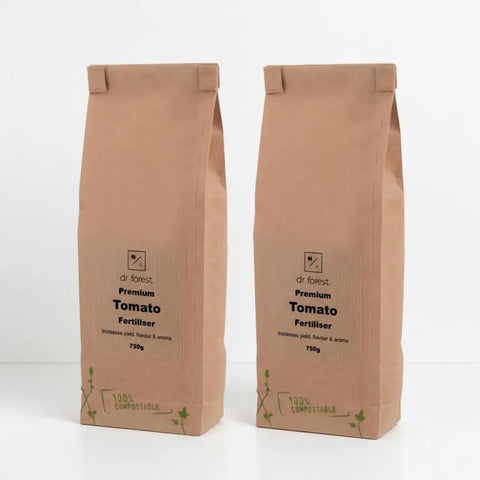
A slow-release 3-4-6 feed for tomatoes.
from £11.50
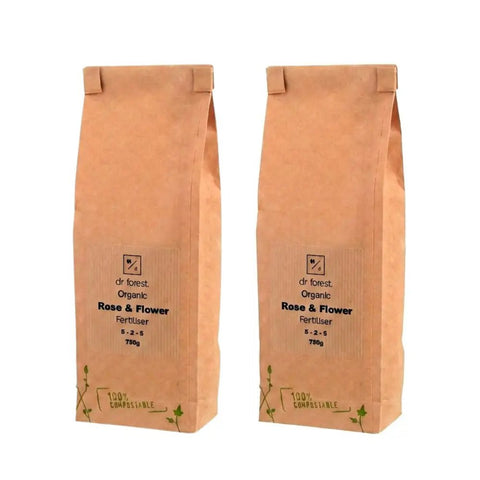
A slow-release 5-3-5 feed for roses.
from £11.50
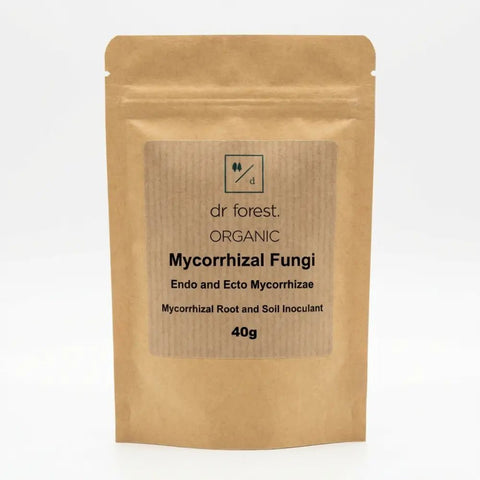
A plant-based root inoculant, 18 endo and ecto species.
from £6.99