Dr Forest
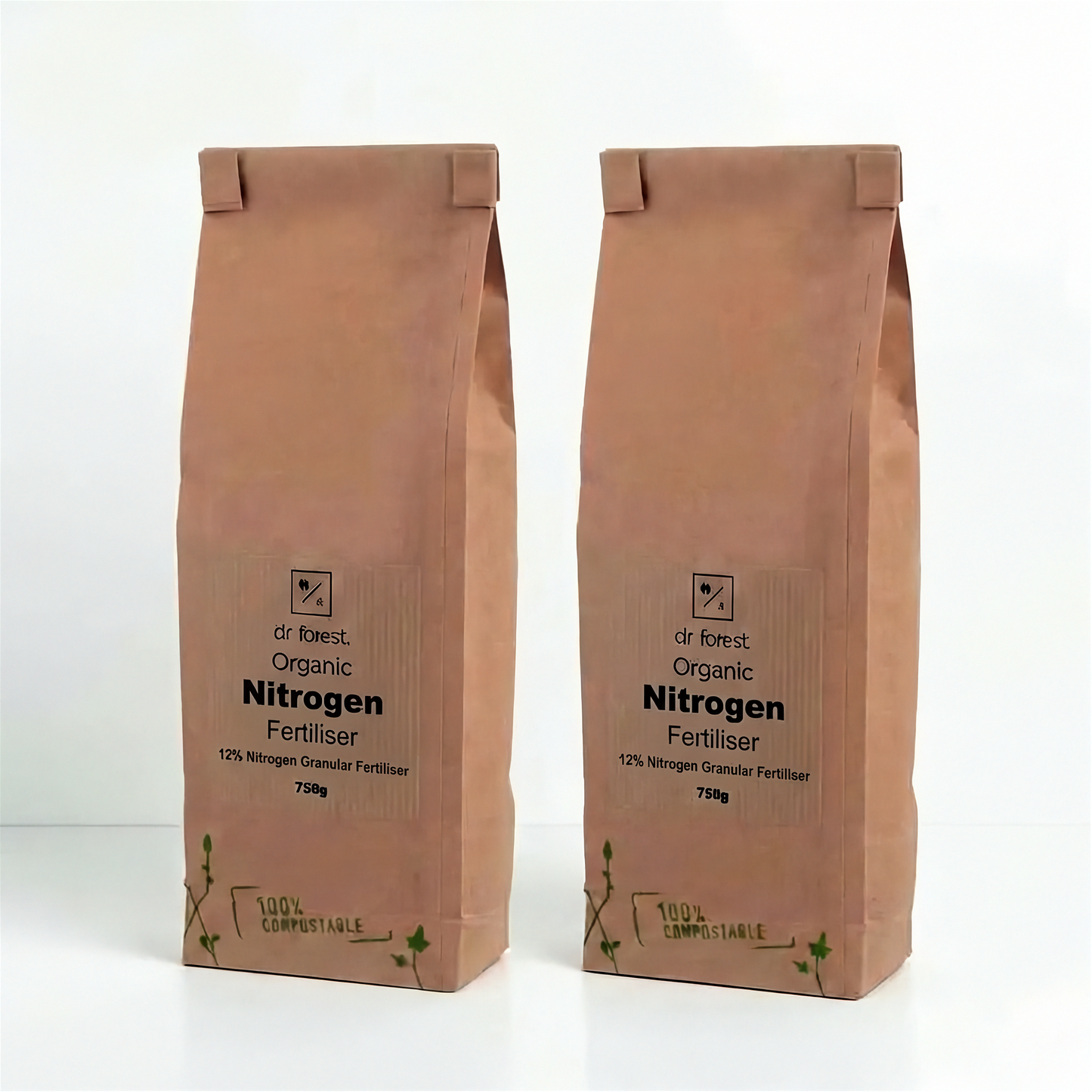
Organic Nitrogen Meal Fertiliser | 12% N | High Nitrogen Plant Feed | Lawn & Garden
Organic Nitrogen Meal Fertiliser | 12% N | High Nitrogen Plant Feed | Lawn & Garden
Couldn't load pickup availability
Organic nitrogen meal — 12% nitrogen plant extract for lawns, vegetables, gardens & all plants
Nitrogen is the nutrient that drives leaf growth. It is the central atom in every chlorophyll molecule, the building block of every amino acid and protein, and the single most limiting nutrient in almost every garden soil in the UK. When nitrogen is deficient, plants grow slowly, leaves turn pale yellow from the base upward, lawns thin out and lose colour, and vegetables produce small, disappointing harvests. When nitrogen is adequate, the result is vigorous green growth — dense lawns, productive vegetable crops, and healthy ornamental plants with strong foliage.
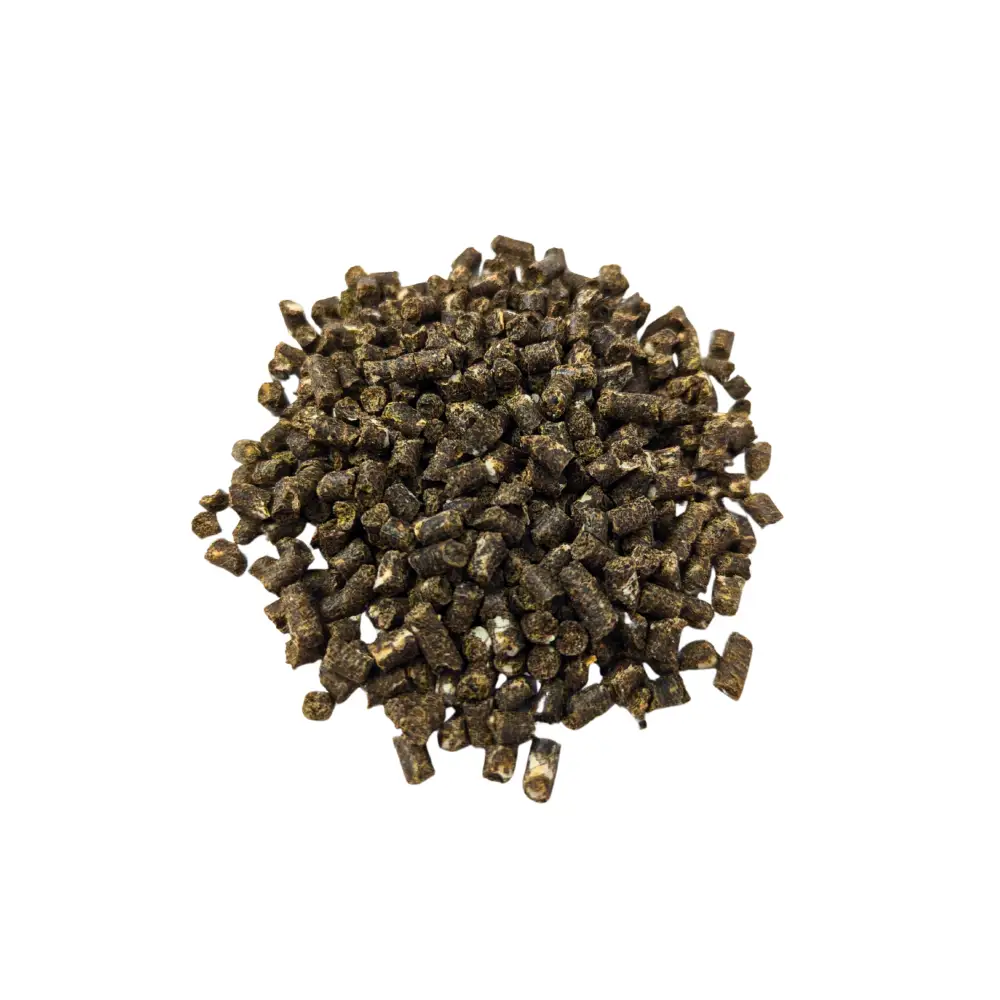
This nitrogen meal is a granular plant extract delivering 12% nitrogen in a form that releases steadily over the growing season. It is not a synthetic fertiliser — it is extracted entirely from plant material, producing a concentrated nitrogen source that also contains 3% phosphate, 4% potash, and a suite of secondary nutrients including manganese and copper. All nitrogen becomes available to plants within three months of application, providing a sustained feed without the burn risk of synthetic alternatives.
Research has demonstrated that this product has a significant positive impact on soil biology, increasing the colonisation of plant roots by mycorrhizal fungi — the beneficial fungal network that dramatically improves water and nutrient uptake. This is the opposite effect to synthetic nitrogen fertilisers, which suppress mycorrhizal activity. The result is a nitrogen feed that builds long-term soil health while delivering the immediate green growth that gardeners need for lawns, vegetables, flower beds, shrubs, trees, hedging, and container plants.
What nitrogen meal is used for in the garden
- Lawn fertiliser for green-up and thickening — the most effective organic lawn feed for spring and summer; 12% nitrogen drives rapid leaf growth and dense, dark green turf without the flush-and-fade cycle of synthetic lawn fertilisers
- Vegetable garden nitrogen feed — essential for leafy vegetables including lettuce, spinach, kale, chard, cabbage, and Brussels sprouts; supports the heavy nitrogen demands of brassicas, sweetcorn, courgettes, and pumpkins during their rapid vegetative growth phase
- Tomato and pepper early growth — supplies the nitrogen needed for strong vegetative framework building before fruiting begins; switch to a potassium-rich feed once flowers appear
- Rose and flower bed feed — supports healthy foliage production in roses, shrubs, perennials, and annual flower beds; strong leaves produce more energy for flowering
- Tree and hedge establishment — newly planted trees, hedging, and shrubs benefit from the steady nitrogen release during their first growing seasons; encourages canopy development and root establishment
- Container and houseplant feed — granular top-dressing for pots, containers, raised beds, and indoor plants; slow release prevents the root burn that liquid nitrogen feeds can cause in confined root zones
- Soil biology booster — unlike synthetic nitrogen, this plant extract feeds soil micro-organisms and increases mycorrhizal colonisation; the nitrogen is released through biological breakdown, which stimulates rather than suppresses soil life
- Spring recovery feed — lawns, borders, and vegetable plots emerging from winter benefit from a nitrogen boost to restart growth; apply when soil temperature exceeds 8°C and growth is visibly resuming
Why plant-based nitrogen rather than synthetic or animal-derived?
Plant Extract Nitrogen Meal (this product)
- 12% nitrogen from plant material — no animal by-products, no slaughterhouse waste
- Slow-release over 3 months — nitrogen is mineralised gradually by soil biology
- Increases mycorrhizal fungal colonisation in treated soils
- Contains secondary nutrients: phosphate, potash, manganese, copper
- No burn risk at recommended rates — safe for lawns, seedlings, and container plants
- Vegan-friendly, pet-safe, child-safe
- Organic certified — suitable for organic gardening and growing
Synthetic Nitrogen Fertilisers
- Fast-acting but short-lived — nitrogen is immediately soluble and quickly leached
- Suppresses mycorrhizal fungi and reduces soil microbial diversity
- Causes rapid flush-and-fade growth cycles in lawns and plants
- High burn risk if over-applied — can scorch roots, seedlings, and turf
- Manufactured from natural gas via the Haber-Bosch process — high carbon footprint
- Readily leaches into groundwater as nitrate pollution
- Not permitted in organic growing systems
The science of nitrogen: why it matters more than any other nutrient for plant growth
Nitrogen — the engine of photosynthesis and growth
Nitrogen is unique among plant nutrients because it is the most demanded and the most frequently limiting. It is a structural component of every amino acid, every protein, every enzyme, and every molecule of chlorophyll in a plant. Without adequate nitrogen, the entire biochemical machinery of growth slows to a halt. Leaves lose their green colour as chlorophyll production declines. Cell division and elongation cease. Yields fall dramatically. No other single nutrient deficiency produces such a visible and immediate impact on plant performance.
UK garden soils are almost universally nitrogen-limited during the growing season. Unlike phosphorus and potassium, which accumulate in soil and remain available for years, nitrogen is inherently unstable — it is continuously cycling between organic matter, microbial biomass, plant uptake, and atmospheric loss. A soil that tests adequately for nitrogen in March may be severely deficient by June if nitrogen has not been replenished. This is why nitrogen is the nutrient that gardeners need to apply most frequently and most thoughtfully.
Organic nitrogen release — how plant extract nitrogen becomes plant-available
- Nitrogen in plant extracts is bound in organic molecules — proteins, amino acids, nucleic acids
- Soil micro-organisms break down these organic molecules through mineralisation
- Mineralisation converts organic nitrogen to ammonium (NH₄⁺), which plant roots absorb directly
- Nitrifying bacteria then convert ammonium to nitrate (NO₃⁻) — also plant-available
- The rate of release depends on soil temperature, moisture, and microbial activity
- This biological dependency is the reason organic nitrogen feeds build soil health — they feed the organisms that drive the entire nutrient cycle
Why organic nitrogen supports mycorrhizal fungi — and synthetic nitrogen does not
- Mycorrhizal fungi form symbiotic networks with plant roots, extending the root system's effective reach by orders of magnitude
- Plants trade carbon (sugars) to the fungi in exchange for water and mineral nutrients
- When nitrogen is abundant and immediately soluble (synthetic), the plant no longer needs the fungal network — the symbiosis breaks down
- Organic nitrogen is released slowly, maintaining the conditions under which mycorrhizal relationships remain beneficial
- Research on this specific product demonstrated increased mycorrhizal colonisation in treated soils
- Mycorrhizal networks improve drought tolerance, phosphorus uptake, and disease resistance
Five mechanisms of action
Chlorophyll Synthesis & Photosynthesis
Every chlorophyll molecule contains a nitrogen atom at its centre. When nitrogen is deficient, chlorophyll production declines and leaves yellow from the base upward — the plant cannibalises nitrogen from its oldest leaves to supply new growth. Adequate nitrogen from a slow-release plant extract maintains chlorophyll density across the entire canopy, maximising photosynthetic capacity and the energy available for growth, flowering, and fruiting.
Protein & Enzyme Production
Nitrogen is the fundamental building block of amino acids, which combine to form the proteins and enzymes that control every metabolic process in the plant. Cell division, hormone synthesis, nutrient transport, and defence compound production all depend on a continuous supply of nitrogen. The 12% nitrogen content of this plant extract provides sufficient substrate for sustained protein synthesis throughout the growing season without the feast-and-famine cycle of soluble synthetic feeds.
Mycorrhizal Enhancement
Synthetic nitrogen fertilisers suppress the formation and function of mycorrhizal fungal networks by removing the plant's incentive to maintain the symbiosis. Research on this specific nitrogen meal has shown the opposite effect — increased mycorrhizal colonisation of root systems following application. This means the nitrogen feed is simultaneously improving the plant's natural nutrient and water acquisition system, producing compounding benefits that extend well beyond the nitrogen supply itself.
Soil Biology Activation
The nitrogen in this product is organically bound and requires microbial mineralisation before it becomes plant-available. This process feeds and multiplies the soil bacterial and fungal populations responsible for nutrient cycling. Each application is effectively an inoculation of carbon and nitrogen substrates for soil biology. Over successive seasons, this builds a more diverse, active, and resilient soil microbiome — the foundation of long-term soil fertility and plant health.
Secondary Nutrient Delivery
Each granule contains not only 12% nitrogen but also 3% phosphate, 4% potash, and trace quantities of manganese and copper. Manganese is essential for photosynthesis and enzyme activation; copper is required for lignin synthesis and reproductive development. These secondary nutrients are rarely supplied by single-nutrient synthetic nitrogen sources, making this plant extract a more nutritionally complete feed than its nitrogen content alone would suggest.
Scientific References
- Marschner, H. (2012). Mineral Nutrition of Higher Plants (3rd ed.). Academic Press. [Nitrogen metabolism in plants]
- Havlin, J.L. et al. (2014). Soil Fertility and Fertilizers (8th ed.). Pearson. [Nitrogen cycling and mineralisation]
- Smith, S.E. & Read, D.J. (2008). Mycorrhizal Symbiosis (3rd ed.). Academic Press. [Mycorrhizal response to nitrogen forms]
- Johnson, N.C. (2010). Resource stoichiometry elucidates the structure and function of arbuscular mycorrhizas across scales. New Phytologist, 185(3), 631–647.
- Law Fertilisers Ltd. Research data: Mycorrhizal colonisation following High N application. [Unpublished field trial data]
- Geisseler, D. & Scow, K.M. (2014). Long-term effects of mineral fertilizers on soil microorganisms. Soil Biology and Biochemistry, 75, 107–118.
How to use nitrogen meal: application rates for lawns, vegetables, gardens & all plants
This is a dry granular fertiliser, not a powder or liquid. Scatter the granules evenly over the soil surface or lawn and water in well. Do not dissolve in water — the granules are designed to break down gradually in contact with moist soil. Apply to moist soil for best results and water lightly after application to begin the release process. Store unused product in a sealed container in a cool, dry place.
Application rates
Lawns — spring and summer feed
The most effective organic lawn fertiliser for green-up and thickening. Apply evenly using a spreader or by hand. Water in well after application. Start in spring when grass is actively growing and soil temperature exceeds 8°C. Use the lower rate (50g/m²) for maintenance and the higher rate (100g/m²) for lawns recovering from winter, scarifying, or overseeding. Avoid applying after mid-September — late nitrogen promotes soft growth vulnerable to frost.
Lawns — new turf or overseeding
Work into the top 5 cm of prepared soil before laying turf or sowing seed. The slow release provides nitrogen throughout the critical establishment period without burning young grass roots. For overseeding into existing lawns, scatter at 50g/m² after seeding and water in thoroughly.
Vegetable garden — leafy crops and brassicas
Leafy vegetables including lettuce, spinach, kale, chard, and all brassicas (cabbage, broccoli, Brussels sprouts, cauliflower) are heavy nitrogen feeders. Apply the higher rate for these crops. Sweetcorn, courgettes, cucumbers, and pumpkins also benefit from the full rate. Scatter around plants, lightly work into the soil surface, and water in.
Vegetable garden — fruiting crops (early season only)
Tomatoes, peppers, aubergines, beans, and peas need nitrogen during their vegetative growth phase to build the leaf framework that will support fruit production. Apply nitrogen meal during early growth, then switch to a potassium-rich feed (such as Dr Forest Bloom Fertiliser or Sulphate of Potash) once flowering begins. Continuing high nitrogen during fruiting produces excessive foliage at the expense of fruit.
Roses, flower beds and ornamental borders
Roses, shrubs, perennials, and annual flower beds benefit from nitrogen for healthy foliage production. Strong leaves produce more energy for flowering. Apply from mid-spring onwards. For roses, scatter around the drip line and water in. Reduce or stop nitrogen applications from midsummer to allow plants to harden off before winter.
Trees, hedging and shrubs
Newly planted trees and hedging benefit from nitrogen to drive canopy growth and establish a strong framework. Scatter under the drip line of the canopy and water in. Established trees and hedging need less frequent application — once in spring is usually sufficient. Avoid applying close to the trunk; focus on the root zone beneath the outer canopy.
Containers, pots and raised beds
Sprinkle evenly over the soil surface in pots, containers, and raised beds. Use the lower rate (3g/L) for small pots and houseplants, the higher rate (6g/L) for large containers and hungry plants. Water in well after application. For soil mixing before planting, incorporate 2.5–5g per litre of growing medium.
Soil mix — pre-planting incorporation
Mix into potting soil or growing medium before planting to provide a baseline nitrogen supply. Use the lower rate for seedlings and the higher rate for established transplants. Compatible with all Dr Forest fertilisers and soil amendments.
Step-by-step application
- Measure the correct amount. For outdoor beds and lawns, weigh 50–200g per m² depending on the crop and application (see rates above). For containers, measure 3–6g per litre of soil. A tablespoon is approximately 17g; a teaspoon is approximately 5g.
- Scatter evenly over the soil surface or lawn. For lawns, use a handheld spreader for even coverage on larger areas. For beds and borders, scatter around plants — avoid piling granules against stems or crowns.
- Water in well. The granules need moisture to begin breaking down and releasing nitrogen. Apply to moist soil and water lightly after spreading. Rainfall will also activate the granules effectively.
- Repeat at the recommended interval. Nitrogen is consumed and cycled continuously — a single application will not last the entire season for most plants. Reapply every 6–8 weeks for lawns and beds, every 2–6 weeks for containers.
- Store dry. Keep unused product in a sealed container in a cool, dry place away from direct sunlight. The granules absorb moisture from the air and will begin to break down if stored damp.
Nitrogen drives leafy growth. This is exactly what you want in spring and early summer when lawns, vegetables, and ornamentals are building their canopy. But applying nitrogen too late in the season pushes soft, sappy growth that is vulnerable to frost damage and fungal disease. As a general rule, stop applying nitrogen meal by mid-September for outdoor plants. For fruiting crops, switch from nitrogen to a potassium-rich feed once flowering begins — continued high nitrogen during fruiting produces leaves at the expense of fruit.
For a complete feed programme, combine nitrogen meal with Sulphate of Potash during the flowering and fruiting phase — the nitrogen meal provides the vegetative push, and the potash drives flowers and fruit. For lawns, alternate with Yorkshire Polyhalite for a balanced mineral supply including potassium, magnesium, calcium, and sulphur. In living soil systems, combine with Seaweed Powder for biostimulant activity and Humic Acid Granules for soil CEC building. For a ready-made balanced feed, use Dr Forest Veg 4-4-4 or All-Purpose 6-6-6 instead — these contain nitrogen meal as one of their nitrogen sources alongside other complementary ingredients.
Frequently asked questions about nitrogen meal
Share