
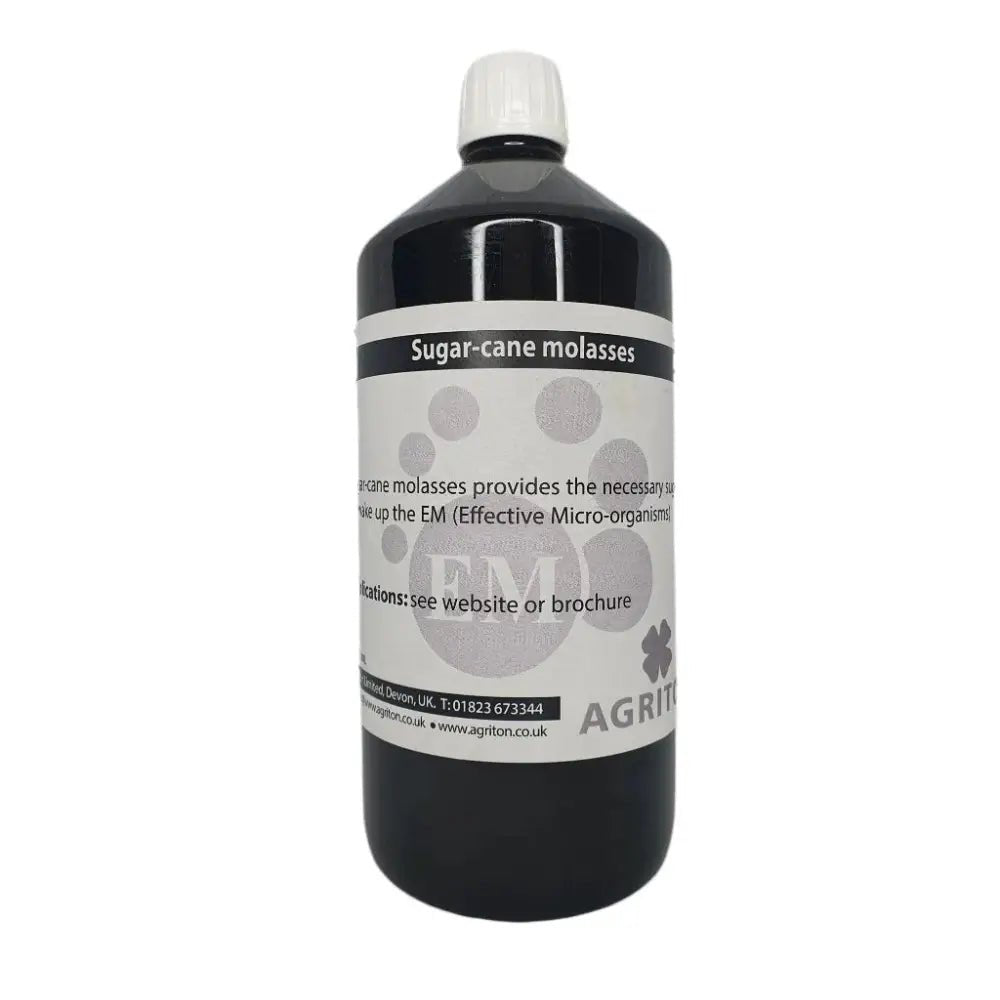
Unsulphured sugar cane molasses — microbial food for compost tea, EM activation & soil drenches
Molasses is the fuel that feeds your soil biology. Every microbial process in the soil — from nutrient mineralisation to disease suppression to mycorrhizal function — runs on carbon. Bacteria and fungi need a readily available carbon source to multiply, metabolise, and do the work that makes organic gardening function. Molasses provides exactly this: a dense, immediately available package of simple sugars, complex carbohydrates, and mineral nutrients that beneficial micro-organisms consume and convert into biological activity.
This is unsulphured sugar cane molasses — the critical distinction for garden use. Sulphured molasses contains sulphur dioxide, which is added as a preservative during processing. Sulphur dioxide is antimicrobial — it kills the very organisms you are trying to feed. Unsulphured molasses has no antimicrobial additives, making it safe and effective as a microbial food source for actively aerated compost tea (AACT) brewing, EM-1 activation, bokashi preparation, soil drenches, and any application where you are intentionally growing or feeding beneficial micro-organisms.
Beyond the sugars, molasses is a concentrated source of potassium, calcium, magnesium, iron, manganese, and B vitamins — all of which are valuable both as direct plant nutrients and as cofactors for microbial enzyme systems. A tablespoon of blackstrap molasses contains more potassium than a banana and more iron than a serving of spinach. When applied to soil as part of a compost tea or diluted drench, these minerals feed both the biology and the plants simultaneously.
What molasses is used for in organic gardening
- Actively aerated compost tea (AACT) brewing — the primary microbial food source for compost tea; the sugars feed the bacteria, fungi, and protozoa you are multiplying during the brew cycle, producing a living soil inoculant
- EM-1 activation (making activated EM / EM-A) — molasses is the fermentation substrate used to activate Dr Higa's EM-1 concentrate into a ready-to-use microbial solution; the sugars feed the lactic acid bacteria, yeasts, and photosynthetic bacteria during the activation fermentation
- EM-5 production — the plant protection spray EM-5 is made by fermenting EM-1 with molasses, vinegar, and ethanol; molasses provides the carbon source for the fermentation
- Direct soil drench — feeding soil biology — diluted molasses applied as a soil drench provides an immediate carbon source for rhizosphere bacteria and fungi; particularly useful after applying organic fertilisers to stimulate the biology that breaks them down
- Bokashi bran production — molasses is one of the key ingredients in manufacturing bokashi bran; it provides the food source for the EM organisms during the bran fermentation process
- Foliar spray additive — a small amount of molasses added to foliar spray mixes acts as a sticker-spreader and provides a carbon source for beneficial leaf-surface micro-organisms (the phyllosphere)
- Compost heap accelerator — diluted molasses poured over a compost heap provides an immediate energy source for the decomposing organisms, accelerating the breakdown of high-carbon materials
- Potassium and mineral supplement — molasses is naturally rich in potassium, calcium, magnesium, and iron; applied as a soil drench, these minerals supplement the nutrient supply alongside any fertiliser programme
Why unsulphured matters
Unsulphured Molasses (this product)
- No sulphur dioxide — safe for all microbial applications
- Bacteria, fungi, and yeasts thrive in unsulphured molasses
- Essential for compost tea brewing, EM activation, and any microbial fermentation
- Contains natural sugars, minerals, and B vitamins without antimicrobial interference
- The only type suitable for garden biology applications
Sulphured Molasses
- Contains sulphur dioxide — an antimicrobial preservative
- Sulphur dioxide kills or inhibits the very organisms you are trying to grow
- Will produce poor or failed compost tea brews
- Will inhibit or kill EM cultures during activation
- Not suitable for any microbial gardening application
The science of molasses: why microbes need carbon and what happens when you feed them
Carbon — the universal microbial fuel
Every living organism on Earth runs on carbon. For soil micro-organisms — bacteria, fungi, protozoa, nematodes — carbon is the energy source that powers cell division, enzyme production, nutrient mineralisation, and all the metabolic processes that gardeners depend on for healthy soil function. In a natural ecosystem, carbon arrives via root exudates, decomposing plant litter, and organic matter. In a container, raised bed, or intensively cropped garden, the carbon supply often cannot keep pace with microbial demand — particularly when organic fertilisers are applied and the biology needs to ramp up to process them.
Molasses solves this by providing an immediately available, energy-dense carbon source. The simple sugars (sucrose, glucose, fructose) are consumed by bacteria within hours. The more complex carbohydrates feed fungi and other organisms over a slightly longer timeframe. The result is a rapid multiplication of the microbial community — exactly what you want when brewing compost tea, activating EM, or stimulating the soil biology after a fertiliser application.
What molasses provides to micro-organisms
- Simple sugars (sucrose, glucose, fructose) — immediately metabolisable carbon and energy
- Complex carbohydrates — slower-release carbon that feeds a broader diversity of organisms
- Potassium — the most abundant mineral in molasses; essential for enzyme activation in both microbes and plants
- Calcium — required for bacterial cell wall construction and soil aggregate stability
- Magnesium — the central atom in chlorophyll and a cofactor in hundreds of enzyme systems
- Iron, manganese, copper, zinc — trace mineral cofactors for microbial and plant enzymes
- B vitamins — growth factors that accelerate microbial metabolism
Why this matters in actively aerated compost tea
- AACT brewing multiplies the micro-organisms from a compost or worm casting inoculant by thousands to millions of times
- This multiplication requires energy — carbon from molasses is the primary fuel
- Without a food source, the organisms in the tea cannot reproduce and the brew produces little benefit
- Molasses is the most widely used and effective food source for AACT brewing worldwide
- The key is sufficient aeration — the air pump must supply enough oxygen to keep pace with the biological oxygen demand created by the rapid multiplication
- A well-brewed AACT with molasses produces a living inoculant that, applied to soil or foliage, introduces billions of beneficial organisms per application
Five mechanisms of action
Rapid Bacterial Multiplication
Simple sugars in molasses are the fastest carbon source for soil bacteria. In an AACT brew, bacteria can double their population every 20–30 minutes when sugar and oxygen are both abundant. This exponential growth is the mechanism by which compost tea transforms a cup of worm castings into billions of organisms in 24–36 hours. The molasses provides the energy; the air pump provides the oxygen; the compost provides the starting organisms.
Fungal and Protozoan Support
While bacteria consume simple sugars fastest, the more complex carbohydrates in molasses also feed fungal hyphae and protozoan organisms. Protozoa are particularly important — they graze on bacteria and release plant-available nitrogen as a by-product (the "microbial loop"). A diverse compost tea with bacteria, fungi, and protozoa is far more effective as a soil inoculant than a purely bacterial brew. Using molasses alongside complex food sources (seaweed, humic acid) in your AACT recipe promotes this diversity.
EM Fermentation Substrate
When activating EM-1 concentrate into usable EM-A (activated EM), molasses is the fermentation substrate. The lactic acid bacteria in EM-1 ferment the sugars in molasses into lactic acid — the same process that turns milk into yoghurt. This fermentation drops the pH, stabilises the microbial culture, and produces a shelf-stable liquid teeming with beneficial organisms and their metabolites. Without molasses, the activation fails — the organisms have nothing to ferment.
Soil Biology Stimulation
Applied directly to soil as a diluted drench, molasses provides an immediate carbon pulse that stimulates the existing soil microbial community. This is particularly useful after applying organic fertilisers — the carbon from molasses fuels the biology that mineralises the organic nutrients into plant-available forms. The potassium, calcium, and trace minerals in the molasses are simultaneously delivered into the root zone as direct plant nutrients.
Mineral Delivery
Blackstrap molasses is one of the most mineral-dense natural liquids available. A single tablespoon typically contains approximately 300 mg potassium, 40 mg calcium, 50 mg magnesium, and 3.5 mg iron. When applied as part of a compost tea or soil drench, these minerals enter the soil solution in immediately plant-available form. The potassium content is particularly valuable — potassium is the nutrient most critical for flavour, sweetness, and fruit quality in edible crops.
Scientific References
- Ingham, E. (2005). The Compost Tea Brewing Manual (5th ed.). Soil Foodweb Inc. [AACT brewing science and methods]
- Higa, T. & Parr, J.F. (1994). Beneficial and Effective Microorganisms for a Sustainable Agriculture and Environment. International Nature Farming Research Center, Atami, Japan.
- Scheuerell, S.J. & Mahaffee, W.F. (2002). Compost tea: Principles and prospects for plant disease control. Compost Science & Utilization, 10(4), 313–338.
- Pant, A.P. et al. (2012). Vermicompost extracts influence growth, mineral nutrients, phytonutrients and antioxidant activity in pak choi. Journal of the Science of Food and Agriculture, 92(12), 2598–2607.
- Marschner, H. (2012). Mineral Nutrition of Higher Plants (3rd ed.). Academic Press. [Potassium, calcium and magnesium in plant nutrition]
How to use molasses: compost tea recipes, EM activation & soil drench guide
Sulphured molasses contains sulphur dioxide, which is antimicrobial and will kill or inhibit the organisms you are trying to grow. This product is unsulphured — safe for compost tea, EM activation, and all microbial applications. If using molasses from another source, check the label carefully for "unsulphured" or "no sulphur dioxide".
Actively aerated compost tea (AACT) recipes
Actively aerated compost tea is made by bubbling air through water containing compost or worm castings and a food source (molasses). The aeration fuels aerobic microbial multiplication, producing a living inoculant that can be applied to soil or foliage. The key to success is sufficient aeration — you need an air pump powerful enough to maintain dissolved oxygen above 6 ppm throughout the brew. A small aquarium pump is marginal for a 20-litre bucket; a dual-outlet pump or purpose-built brewer is better.
Recipe 1 — Simple AACT (20 litres)
Ingredients: 20 litres dechlorinated water (leave tap water standing 24 hours, or use rainwater) · 2 large handfuls (approx. 400 ml) worm castings or quality compost, placed in a mesh bag or old stocking · 2 tablespoons (30 ml) unsulphured molasses.
Method: Fill the bucket with dechlorinated water. Add the molasses and stir to dissolve. Suspend the mesh bag of worm castings in the water. Place the air stone or bubble snake on the bottom of the bucket and switch on the pump. Brew for 24–36 hours at room temperature. The tea is ready when it smells earthy and sweet — not sour or rotten. Remove the bag, switch off the pump, and use within 2–4 hours. Apply undiluted as a soil drench or foliar spray.
Recipe 2 — Enhanced AACT with seaweed and humic acid (20 litres)
Ingredients: 20 litres dechlorinated water · 2 large handfuls worm castings or compost in a mesh bag · 2 tablespoons (30 ml) unsulphured molasses · 1 teaspoon Dr Forest Seaweed Powder · 1 teaspoon Dr Forest Humic Acid Granules (dissolved in warm water first).
Method: Dissolve the molasses, seaweed powder, and pre-dissolved humic acid into the water. Suspend the compost bag, add the air stone, and brew for 24–36 hours. The seaweed provides trace minerals and growth hormones; the humic acid chelates minerals and stimulates fungal growth. This produces a more diverse, mineral-rich tea than molasses alone. Apply undiluted.
Recipe 3 — Fungal-dominant AACT (20 litres)
Ingredients: 20 litres dechlorinated water · 2 large handfuls worm castings or forest-floor leaf litter compost in a mesh bag · 1 tablespoon (15 ml) unsulphured molasses (reduced from the standard 2 tbsp) · 2 tablespoons Dr Forest Seaweed Powder · 1 tablespoon oat flour or ground oats · 1 teaspoon Dr Forest Humic Acid Granules.
Method: Reducing the molasses and adding complex foods (seaweed, oats, humic acid) shifts the brew toward fungal dominance rather than bacterial. Fungi need longer to multiply, so brew for 36–48 hours. Use forest-floor leaf mould or mature compost as the inoculant for the richest fungal diversity. Ideal for perennial beds, fruit trees, shrubs, and woodland plantings. Apply undiluted as a soil drench.
Recipe 4 — Small-batch AACT (5 litres)
Ingredients: 5 litres dechlorinated water · 1 handful (approx. 100 ml) worm castings in a mesh bag · 1 dessertspoon (10 ml) unsulphured molasses · ½ teaspoon Dr Forest Seaweed Powder (optional).
Method: A practical batch size for indoor growers, container gardeners, and small plots. A single-outlet aquarium air pump with a decent air stone is usually sufficient for 5 litres. Brew for 24 hours. Apply undiluted to containers, houseplants, and small beds. This batch covers approximately 5–10 medium pots or 2–3 m² of bed space.
EM-1 activation (making activated EM / EM-A)
Activated EM recipe
Ingredients: 1 litre warm dechlorinated water (30–35°C) · 30 ml EM-1 concentrate · 30 ml unsulphured molasses.
Method: Dissolve the molasses in the warm water, then add the EM-1 concentrate. Pour into a clean plastic bottle, squeeze out as much air as possible, and seal tightly. Store at room temperature (20–35°C) out of direct sunlight. The bottle will expand over the first few days as fermentation produces gas — release the pressure daily by loosening the cap briefly. After 7–14 days the liquid should smell sweet-sour (like cider vinegar). The pH should be below 3.5. The activated EM is now ready to use — dilute approximately 1:100 with water for soil drenches or foliar sprays. Use within 1 month of activation.
Direct soil drench
Molasses soil drench — feeding soil biology
Dissolve the molasses in warm water, then dilute to the full volume with cool water. Apply as a soil drench to beds, borders, containers, and lawns. This provides an immediate carbon pulse for rhizosphere biology — particularly useful 2–3 days after applying organic fertiliser to accelerate nutrient mineralisation. The potassium, calcium, and iron in the molasses supplement the mineral supply simultaneously. Avoid applying in very hot weather or to dry soil — water the soil first, then apply the drench.
Step-by-step AACT brewing
- Dechlorinate your water. Fill your bucket with tap water and leave it standing for 24 hours with the lid off — the chlorine will dissipate. Alternatively, use collected rainwater. Chlorine and chloramine kill micro-organisms and will ruin your brew. If your water supply uses chloramine (which does not dissipate by standing), aerate with the air pump for 1–2 hours before adding ingredients, or use a carbon filter.
- Add the molasses and dissolve. Measure the molasses and stir into the water until fully dissolved. Warm water dissolves molasses faster — you can pre-dissolve in a small jug of warm water before adding to the bucket.
- Add the compost or worm castings in a mesh bag. Place the compost, worm castings, or a mixture of both into a mesh bag, old stocking, or paint strainer. Suspend in the water — ideally hanging from the rim above the air stone so it does not sit on the bubbler and block airflow.
- Add any additional ingredients. Seaweed powder, humic acid, oat flour, or other complex foods can be added directly to the water (not in the bag). Stir briefly.
- Switch on the air pump and brew for 24–36 hours. The air stone or bubble snake should be producing vigorous, continuous bubbling. Do not turn the pump off during the brew — even a brief interruption allows dissolved oxygen to drop and the tea to turn anaerobic. Brew at room temperature (15–25°C). You may see foam forming on the surface — this is normal and indicates biological activity.
- Check the smell and use immediately. A good AACT smells earthy, sweet, and clean — like forest floor or mushroom compost. If it smells sour, rotten, or like sulphur, the brew has gone anaerobic — discard it (pour it on the compost heap, not on plants). Use the finished tea within 2–4 hours of switching off the pump. Apply undiluted as a soil drench or foliar spray using a watering can or coarse spray nozzle.
Use the tea within 2–4 hours of switching off the air pump. Once aeration stops, the dissolved oxygen in the tea is consumed rapidly by the billions of organisms you have just multiplied. Within hours the tea becomes anaerobic — the beneficial aerobic organisms die and are replaced by anaerobic bacteria that can harm plants and soil. There is no way to "save" a tea for later. Brew it, use it, clean your equipment. This is a living product with a shelf life measured in hours, not days.
Molasses is a companion ingredient, not a standalone product. For AACT brewing, combine with worm castings or quality compost as the microbial inoculant, and add Dr Forest Seaweed Powder and Humic Acid Granules for enhanced mineral content and fungal diversity. For EM activation, use with Dr Higa's Bokashi Bran EM-1 concentrate. For soil drenches, apply alongside your regular Dr Forest granular fertiliser programme — the molasses feeds the biology that breaks down the fertiliser. Use Grow-Kashi as a dry soil inoculant between liquid compost tea applications.
Frequently asked questions about molasses for gardening
Often bought with this
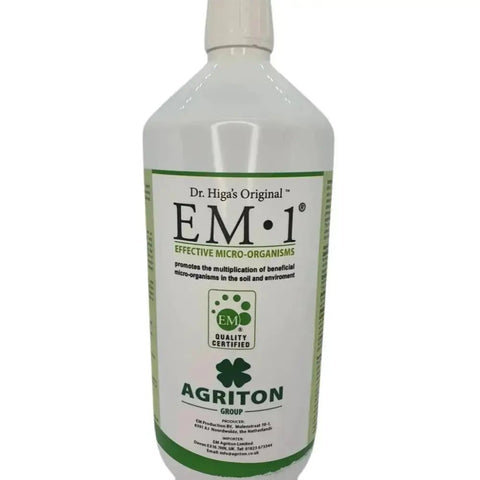
18% of buyers here also chose EM-1 Effective Microorganisms
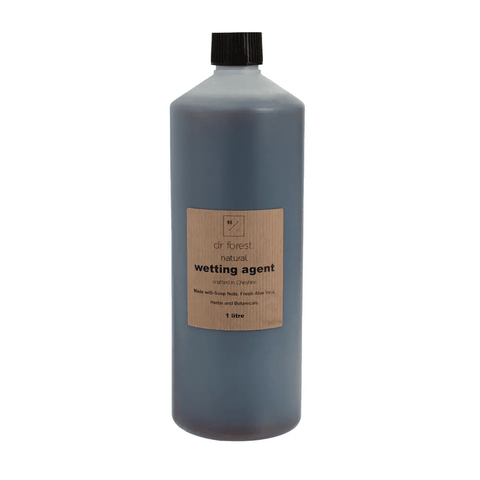
Natural Wetting Agent for Plants, Soil, Lawn & Grass
Helps water and feed soak in evenly, with less run-off.
from £14.00
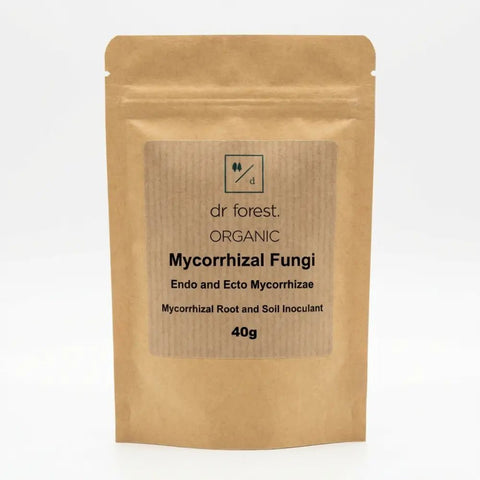
Mycorrhizal Fungi Powder | 18 Species, Endo + Ecto
A plant-based root inoculant, 18 endo and ecto species.
from £6.99


