Plant soaps and natural wetting agents that help every spray spread, stick and work harder. Plant-based, made without harsh chemistry.
-
Natural Wetting Agent for Plants, Soil, Lawn & Grass
Regular price From £14.00Regular price -
Organic Plant Soap | Potassium Soft Soap
Regular price From £12.00Regular price


What is a wetting agent?
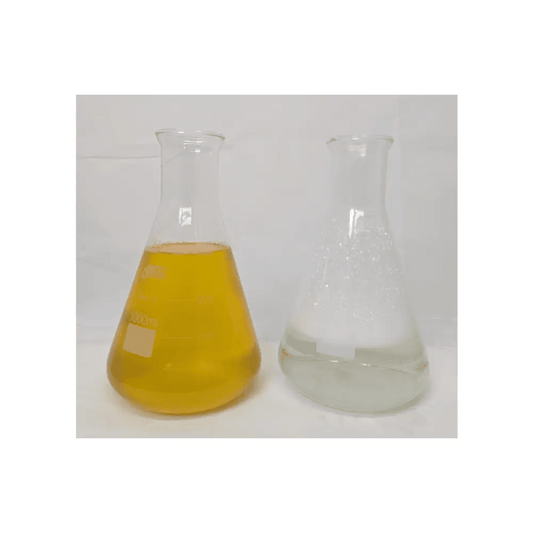
A wetting agent is a surfactant that lowers the surface tension of water so it spreads and soaks in rather than beading up. In a garden it re-wets dry compost and hydrophobic soil, and helps a spray cover leaves evenly.
A natural wetting agent, and a plant soap to go with it
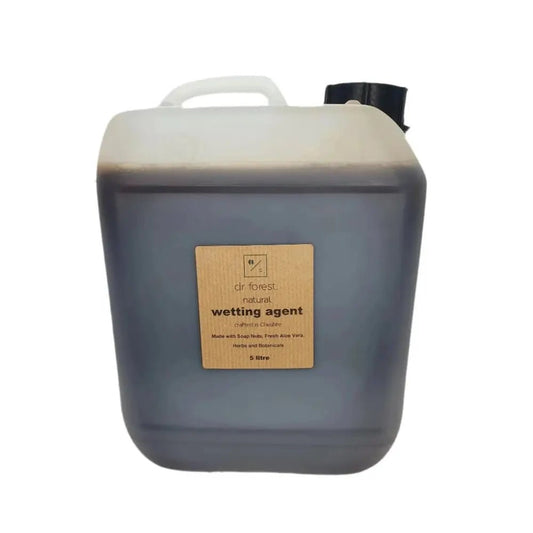
This is where to buy a natural soil wetting agent: it lowers the surface tension of water so it soaks into compost, borders and lawn soil evenly instead of beading up and running off. Next to it sits a concentrated potassium plant soap for washing foliage, both handcrafted in Stockport in small batches and made with organic ingredients.
How soil wetting agents work
As organic matter breaks down it leaves waxy, water-repellent residues that coat sand grains, peat particles and thatch. Once a growing medium dries past a certain point those coatings take over, and water sits on the surface or runs down the inside of the pot and straight out of the drainage holes. The compost looks watered. The root ball is dry, which is the problem watering and soil moisture deals with at length.
Soil wetting agents work on that interface rather than on the plant. The surfactant molecule has a water-loving end and an oil-loving end, so it bridges the two and water spreads into the pore spaces instead of beading. People search for the same thing as a water wetting agent, a soil wetting agent, or simply a surfactant, and wetting agent, surfactant or adjuvant pulls the three terms apart. It is one job under several names.
For wetting soil and improving spray coverage
Natural Wetting Agent for Plants, Soil & Lawn is the reason most people land here. Made with organic Indian soap nuts (Sapindus mukorossi) and aloe vera grown organically in-house in Stockport, and how soap nut saponins work explains why that choice holds up, as does choosing between a natural and a synthetic wetting agent. A few millilitres in a watering can lets dried-out peat-free compost take water again. The same dose in a spray tank stops solution rolling off waxy leaves.
Put your area into the wetting agent calculator to size the bottle, or read the wetting agent buying page if you are still deciding.
One caveat. The effect sits in the top 25 to 50 mm and repellency comes back, so budget for reapplying through the season. Published field programmes went again every 14 to 30 days, and those intervals are in the guide to dosing and timing.
Where a wetting agent soil drench earns its place
- Dry compost in pots, baskets and trays. Peat-free mixes are the worst offenders: bark and fibre repel water badly once they have dried out, which is the case wetting agents for pots, baskets and compost works through.
- Sandy and free-draining beds. Sand holds little water to begin with, so improving infiltration is worth more here than on clay.
- Dry patch on a lawn. Irregular areas that shed water, feel hard underfoot and stay pale through a dry spell. The lawn page goes into it properly.
- Spray coverage. A few drops in the tank stops a foliar feed beading on a glossy leaf and lets it spread into a film.
- Transplanting and liquid feeding. Getting water and dissolved nutrients into the root zone rather than around it, whether that is a liquid seedling feed at planting or any of the liquid fertilisers later in the season.
What wetting agents will not do
Water retention wetting agents are often sold on the promise that they make soil hold more moisture. That is not quite what happens. A surfactant does not increase the water-holding capacity of a soil; it restores infiltration, so more of the water you apply goes in and reaches roots rather than running off. The result can look like better retention, but the mechanism is different, and on soil genuinely short of organic matter the honest fix is compost and a soil conditioner, not a bottle.
A wetting agent is also not a fertiliser. It supplies no meaningful nutrition. If a plant is hungry, feed it — the organic fertiliser range is the place to start, or the lawn care range if it is grass you are feeding — and use the wetting agent to make sure the feed actually gets to the roots.
For washing leaves
Organic Plant Soap is a concentrated potassium soft soap built on British cold-pressed rapeseed oil, saponified with potassium hydroxide so it dissolves cleanly into water. It is a wash. Dilute, apply with a fine-mist sprayer or a cloth, and it lifts dust and sticky surface deposits off foliage, then rinses away without leaving a film. Biodegradable, with no added fragrance or dyes.
A potassium soap behaves differently from a bar of household soap. It is soft rather than hard, fully water-soluble, and it carries no fragrance, dye, brightener or synthetic preservative — the things most likely to mark foliage. Its job is routine cleaning: garden dust, road grime, hard-water marks, the general film that builds up on leaves in a town garden or under glass. That is the whole of what it is for, and clean leaves intercept more light.
The same dilution is useful on the things around the plants: pots and trays before they go back into store, hand tools, staging and greenhouse glass, where light transmission drops off fast under a season of grime.
Which one for which job
The wetting agent goes wherever water is failing to soak in or spread: dry compost in pots and baskets, dry patches on a lawn or border, the spray tank, a root drench or a compost tea, and the planting hole at transplanting. The plant soap is for washing: routine leaf cleaning, stubborn deposits on foliage, and pots, trays, tools and greenhouse glass. Rates for each job are on the two product pages and in the wetting agent calculator.
Dry patch on a lawn is a soil condition, water running off rather than soaking in, which the lawn page goes into.
Common questions
Which of the two goes in the spray tank?
The wetting agent. It is dosed for mixing into sprays and drenches. The plant soap lowers surface tension too, but its job is washing foliage.
What is the difference between a wetting agent and a plant soap?
Both are surfactants, built for different work. The wetting agent moves water into soil or across a leaf surface. The plant soap is a cleaning concentrate: it lifts dust and grime off foliage and rinses off. If water is not soaking in, use the wetting agent. If the leaves are dirty, use the soap.
Can I just use washing-up liquid?
We would not, and washing-up liquid as a wetting agent sets out why it fails. Household detergents are made for grease on crockery and carry fragrance, dye and additives never assessed against plant foliage, and the dilution is anyone's guess. Both products here have a named ingredient list and a dilution on the label.
Which size fits my garden?
Work back from area: the smallest bottle suits a small garden or a season of pots, the middle one an average lawn plus borders, the largest an allotment. Put your area into the wetting agent calculator and it sizes the bottle for you.
Does water hardness matter?
Yes, for both. Calcium and magnesium in hard water react with soap chemistry and cut performance. Rainwater is ideal. On hard tap water, use the upper end of the range.
Are they safe on every plant?
On most, at the rates above. Test a small leaf area first. Ferns, succulents and fresh transplants can react to any surfactant, so start low.
Can I use them on food crops?
Yes. Both go on at low dilution and neither leaves a persistent residue. Rinse edible leaves and fruit before eating, as you would anyway.