Probiotic/Innoculant
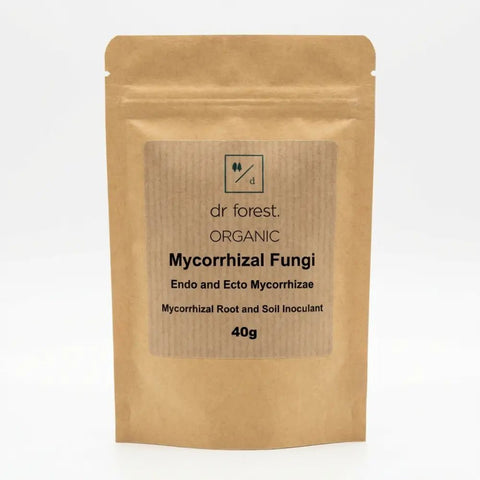
Mycorrhizal Fungi Powder | 18 Species, Endo + Ecto
A plant-based root inoculant, 18 endo and ecto species.
from £6.99
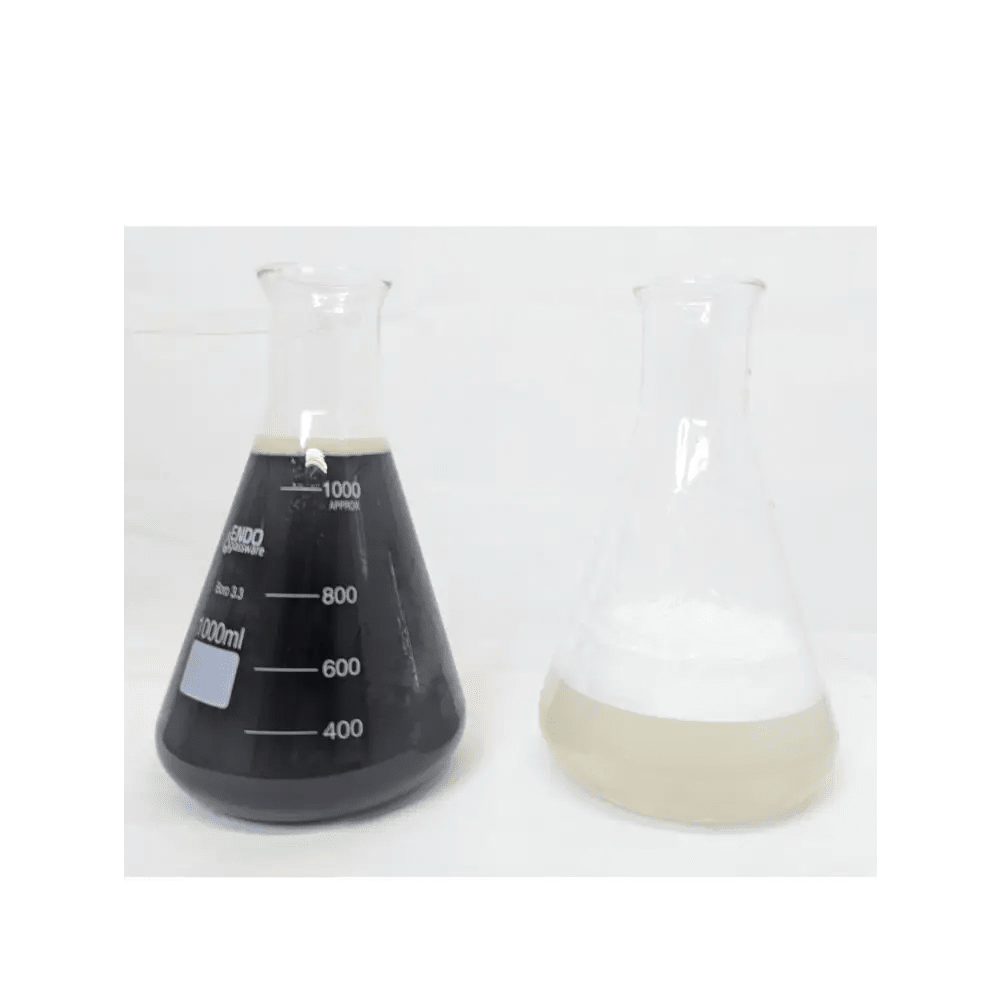
Every foliar spray is only as effective as its ability to make contact with the leaf. Water beads up on waxy leaf surfaces; nutrients and biostimulants run off before they can be absorbed. A wetting agent solves this by reducing the surface tension of the spray solution, allowing it to spread evenly across the leaf and remain in contact long enough to be taken up. The same principle applies to soil. In dry or hydrophobic ground, water can channel straight through without wetting the root zone. This product addresses both problems with a single, naturally derived concentrate.
Dr Forest Natural Wetting Agent is handcrafted in small batches in the UK, using organic Indian soap nuts (Sapindus mukorossi) and aloe vera grown organically in-house at Dr Forest HQ in Stockport. Soap nuts are the fruit of the Sapindus tree, native to the Himalayan foothills, and have long been used as a natural surfactant. The pericarp contains 10–11.5% triterpenoid saponins, amphiphilic compounds that reduce surface tension and improve wetting on the same physical principle as synthetic surfactants.
The aloe vera, grown organically at Dr Forest HQ and harvested fresh for each batch, adds polysaccharides, and a little vegetable glycerine holds the film on a leaf surface for longer before it dries. The result is a plant-derived spreader that works on foliage and in the ground.
There is a kind of brown patch that watering does not fix. The grass stays crisp while everything around it greens up, and the hose seems to run straight off. That is dry patch, a hydrophobic thatch layer shedding water before it ever reaches the roots. A lawn wetting agent, sometimes sold as a grass wetting agent, is the fix, because the problem is not how much water you are applying but whether the ground will accept it. In a UK summer it tends to show up from June onwards, on the sunniest, sandiest part of the lawn first, though that month range is our opinion rather than a measured fact: there is no verified UK seasonality data for when dry patch appears in British lawns. The same thing happens in a pot of compost that has dried right out, and in sandy or peat-rich borders in a long dry spell.
Not every dry-looking soil needs one. If water soaks in within a few seconds of hitting the surface, the ground is not repellent and a wetting agent will not do much. If a droplet sits on the surface as a bead for a minute or more, it will. Brown patches have other causes too, and a wetting agent will not touch any of them: a lawn that is simply hungry needs feeding rather than wetting, and our organic lawn fertiliser is the better answer there. There is more on telling the two apart in our wetting agent FAQ, and in our guides to what a soil wetting agent does and when your garden needs one and fixing dry patch on a lawn.
These get conflated, and they are not the same thing. A wetting agent lowers the surface tension of water so the ground will accept it. It does not hold water there afterwards, and it will not reduce how often you need to water. If the problem is that a sandy or thin soil dries out too fast rather than refusing to wet at all, the thing that helps is the soil's own capacity to hold moisture, which is what organic matter and a clay amendment such as montmorillonite clay address. Products sold as combined wetting and water-retention treatments are usually a surfactant plus a polymer; this is the surfactant half, sold honestly as what it is.
Six ingredients, and here they all are.
No fragrance, no colourants, no petroleum or silicone surfactants, no animal-derived inputs.
Worth being straight about: saponins are not inert either. They are biologically active molecules, which is why they are studied for so many uses beyond wetting. Used at the rates on this page they are a surfactant and nothing more, but "natural" is not the same as "has no effect on anything", and we would rather say so than imply otherwise.
Sapindus mukorossi, commonly known as the Indian soapberry or washnut, is a deciduous tree in the family Sapindaceae, native to the Himalayan foothills. The fruit pericarp contains 10–11.5% triterpenoid saponins. Each saponin molecule has a water-repelling backbone with one or more water-attracting sugar chains attached, so one end of the molecule is at home in water and the other is not. That split personality is the whole of the mechanism.
Dissolved in water, saponins gather at the surface, where the water meets the air, and lower its surface tension. Lower surface tension means the solution spreads across waxy surfaces such as leaf cuticles instead of pulling itself into beads. The same property is what makes them useful in the ground: soil turns water-repellent when waxy organic coatings build up on the soil particles, and lowering the surface tension of the water lets it wet those coated surfaces instead of running past them.
On repellent ground, water applied to the surface does not wet it. It finds the cracks, runs along pot walls, and leaves the middle of the root zone dry however long you stand there with the hose. Reducing the surface tension is what lets the water make contact with those waxy coatings and move down through the profile instead of around it.
A droplet that beads and rolls off has almost no time in contact with the leaf, and whatever it was carrying ends up on the ground. Spread across the surface as a film, the same volume stays put for longer and dries more slowly, which is the whole point of adding a spreader to a foliar feed.
It does not feed the plant, hold water in the soil, or fix a lawn that is brown for any reason other than water repellency. It is a physical aid to getting water and dissolved inputs where you intended them to go. Everything else on this page follows from that one function, and nothing on this page claims more than it.
This is a naturally derived concentrate containing saponins that settle over time. Shake or stir vigorously before measuring and diluting. Soft water (rainwater, filtered, or dechlorinated) gives best results. Hard water can reduce saponin effectiveness.
Rates below are given in teaspoons and in millilitres. One level teaspoon is 5 ml. A standard 9 litre watering can takes 45 ml, which is nine teaspoons, and covers 9 square metres at the lawn rate, and at the top of the soil drench range.
Add to any foliar spray to improve leaf coverage and absorption. Mix with seaweed, fulvic acid, or foliar fertilisers. Apply as a fine mist to both upper and lower leaf surfaces. The saponins reduce surface tension, allowing the spray to spread and adhere rather than beading off.
When: early morning or late evening, never in strong midday sun. A spread film on a hot leaf in full sun dries too fast to be absorbed and can mark the foliage. How long for: use it in every foliar spray for as long as you are spraying. There is nothing to build up and nothing to rest between.
Apply to dry or hydrophobic soil and growing media. Particularly effective for peat-based composts that repel water once dried out. Water the solution across the surface and allow it to soak through. The reduced surface tension enables even moisture distribution throughout the root zone.
First, on a badly dried pot: if the compost has shrunk away from the sides, water once with plain water to settle it back against the walls, then apply the diluted solution. Otherwise the solution simply runs down the gap. How long for: a container that has dried right out usually takes two or three waterings with the solution before it wets evenly again. Once it does, go back to plain water and use the wetting agent again only when it next dries out hard.
Water newly transplanted seedlings and plants with a dilute solution so that water makes immediate contact with the roots rather than running around the root ball. Particularly valuable when planting into dry soil, or when the root ball has dried out in transit.
When: at the time of planting, as the first watering in. How long for: once is enough. Water normally after that.
Apply to lawns suffering from dry patch or a hydrophobic thatch layer, the brown areas that stay crisp however much you water them. The reduced surface tension lets water move down through the thatch and into the root zone. Particularly useful after scarification or aeration, when the exposed soil surface can dry out and turn water-repellent.
When: early morning or evening, on a cool or overcast day, never on turf in strong midday sun. Water the treated area in with plain water afterwards, roughly another litre per square metre, so the solution carries down into the thatch rather than sitting on it. How long for: in the UK the useful window is roughly May to September, when the ground actually dries out enough to turn repellent. Applying in a wet spring achieves nothing. Established dry patch rarely clears on one application. The RHS cultural programme for dry patch is spiking and hollow-tine aeration with thorough watering, repeated once a month for three to four months. On wetting agents themselves the RHS says only that repeat treatment is likely to be necessary, in conjunction with those cultural methods. So read the monthly rhythm as the cultural programme the wetting agent accompanies: apply monthly through the dry spell alongside spiking and thorough watering, and keep watering normally in between. A wetting agent lets water in; it does not supply it.
Add to compost teas, aerated brews, or microbial inoculants to improve application spread. Improves soil contact and distribution of biological inputs.
When: at the point of application rather than at the start of the brew, and apply the brew the same day.
Judge it on water, not on colour. The morning after treating, put the hose or can on the treated ground and watch what the water does. If it now sinks in where it previously beaded and ran to the edges, the wetting agent has done its job. Green-up is a separate and slower thing: it follows over the following week or two, and only where the grass crowns are still alive. Where the grass has actually died off, the patch will need reseeding once the ground is accepting water again.
Hard water contains calcium and magnesium ions that can interact with saponins and reduce their surfactant effectiveness. For best results, use rainwater, filtered water, or water that has been left to stand and dechlorinate. If only hard tap water is available, the product will still work. You may just need the higher end of the dilution range.
Use alongside Organic Seaweed Extract Powder for foliar sprays where leaf coverage matters, with Fulvic Acid Powder for chelated foliar feeding, and with any Dr Forest crop-specific fertiliser applied as a liquid feed. On a lawn, pair it with Organic Lawn Fertiliser: the wetting agent gets the water in, the feed does the growing.
9% of buyers here also chose Mycorrhizal Fungi Powder
A plant-based root inoculant, 18 endo and ecto species.
from £6.99
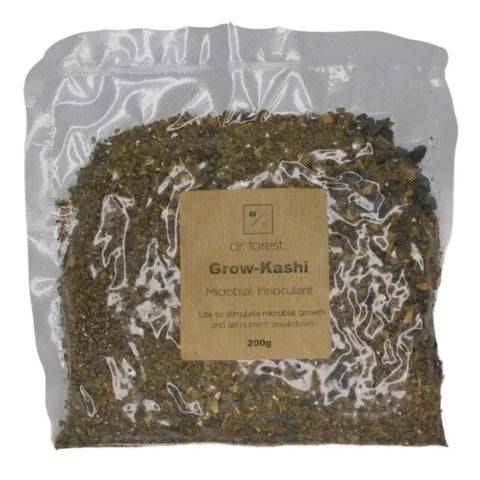
A bokashi soil conditioner to build living soil.
from £7.50