Fertiliser
Rock Phosphate Fertiliser UK | 31% P · 46% Ca | Soft Micronised
Slow-release phosphorus and calcium for roots.
from £6.99
Free UK Delivery on Orders Over £40


Dr Forest
Couldn't load pickup availability
Dr Forest customers rate us 4.89/5 · 3,250+ reviews across Shopify, Amazon, Google and eBay
Sulphate of potash is a chloride-free potassium fertiliser — 50% K₂O plus 18% sulphur — that feeds fruiting, flowering and root crops without the chloride load of cheaper potash. Potassium drives sugar transport, fruit ripening, flower colour, drought tolerance and disease resistance. Most budget potash supplies it as potassium chloride, which builds up in soil and damages sensitive crops. Dr Forest's is naturally mined potassium sulphate (K₂SO₄), certified for use in organic production under Regulation (EC) 834/2007 and handmade in small batches in Stockport.
At 50% K₂O and 18% sulphur this isn't a diluted compound or a blend — it's pure potassium sulphate in a uniform granulate that spreads evenly and dissolves on contact with soil moisture. Two essential macronutrients, immediately available, with no chloride, no nitrogen and no phosphorus to upset a carefully balanced feeding programme.
Every Dr Forest product is made by hand in small batches at our workshop in Stockport, Greater Manchester. Recyclable packaging throughout, ingredients chosen for quality rather than cost, and no slaughterhouse by-products anywhere in the range.
Potassium is the most abundant cation in plant tissue and the single most important nutrient for fruit quality. It never becomes part of an organic molecule — instead it works as a free ion, regulating water pressure, activating over 60 enzymes, balancing electrical charge and moving sugars from leaves into developing fruit. Plants short of potassium produce smaller, blander fruit with poorer shelf life and weaker resistance to disease and stress.
Unlike nitrogen, which drives leafy growth and is easily over-applied, potassium can't really be made excessive in a practical garden. It is the nutrient most often under-supplied in container growing and intensive vegetable production.
Roughly 96% of the world's potassium fertiliser is sold as potassium chloride, or muriate of potash. It's cheap and concentrated. But the chloride ion it carries isn't inert — it accumulates in soil, raises salinity and damages sensitive crops directly. The choice between chloride and sulphate as the accompanying anion has measurable consequences for crop quality.
A two-year field trial by Koch et al. (2022) compared K₂SO₄ and KCl on two potato cultivars. Potassium sulphate held higher starch and ascorbic acid (vitamin C), while KCl-treated tubers built up more reducing sugars in storage — the precursors to acrylamide during cooking. The KCl treatment also carried more lipid-derived off-flavour compounds.
In pineapple, swapping KCl for K₂SO₄ at 20% less total potassium produced larger fruit and better bromatological quality, including total soluble solids and vitamin C (Arias-Vázquez et al., 2018). The sulphate-fed plants won on less total potassium — source matters as much as quantity.
Potassium sulphate adsorbs to soil particles more strongly than KCl, so it leaches less (Tisdale et al., 1999). In containers, where leaching is limited, that matters. Chloride from KCl accumulates in the root zone, raising osmotic potential and reducing water uptake. Sulphate ions don't carry that risk.
Sulphur is essential for the amino acids cysteine and methionine — without them protein synthesis stalls. It's a structural part of coenzyme A and thiamine and is needed for chlorophyll. Sulphur deficiency caps nitrogen efficiency: adding N to a sulphur-short soil gives diminishing returns. Every application here delivers 18% S alongside the potassium.
Adequate potassium thickens cell walls, increases cuticle wax and activates pathogenesis-related (PR) proteins. Potassium-sufficient plants show fewer fungal problems including powdery mildew, botrytis and fusarium wilt. The mechanism is mostly physical — stronger walls are harder for fungal hyphae to penetrate — backed by faster enzymatic defence.
Potassium is the main ion controlling stomatal aperture. When it's adequate, guard cells close stomata quickly under water stress to cut transpiration — which makes potassium the single most important nutrient for drought tolerance. Well-supplied plants also recover faster from frost, since potassium lowers the freezing point of cell sap and protects membranes.
A level teaspoon of granulate is roughly 5g. The granules are free-flowing — broadcast by hand or spreader, top-dress around plants, or stir into compost and potting mixes. Always water in after a soil application so the potassium reaches the root zone.
Mix thoroughly through compost or potting soil before planting. Provides baseline potassium and sulphur for the first 4–6 weeks. Ideal for tomatoes, peppers, strawberries and other fruiting crops.
Scatter granules evenly over the soil surface and water in well. Use the higher rate for heavy-fruiting crops at peak production. Work lightly into the top centimetre of soil where you can.
Broadcast evenly across the soil surface and water in. Lower rate for maintenance; higher rate for heavy-fruiting crops, new plantings, or where soil potassium is known to be low.
Apply in spring for active growth and in autumn to harden turf for winter. Water in immediately. Potassium improves drought tolerance, wear resistance and winter colour.
The granulate is fully water-soluble, but it dissolves more slowly than a fine grade. Stir well, or dissolve in warm water and leave to stand for a few minutes before topping up. For a foliar spray, dissolve completely and strain through fine mesh first to protect your sprayer.
Dissolve, then apply at the base of the plant. Ideal for topping up potassium when demand peaks. Lower rate for maintenance, higher rate when plants are in full production.
Apply to both leaf surfaces in early morning or late evening. Foliar potassium is absorbed quickly and can ease deficiency within days. Dissolve fully and strain before spraying.
Pair with Dr Forest crop feeds — Tomato, Rose & Flower and Fruit & Vegetable — where extra potassium is wanted during peak fruiting. Combine with Seaweed for biostimulant activity and Cal-Mag where calcium is also needed. Zero nitrogen means it won't disturb bloom-phase ratios.
New to potassium minerals? See our guide to polyhalite, a multi-nutrient potassium mineral, and why tomato leaves turn yellow — often a potassium or magnesium signal.


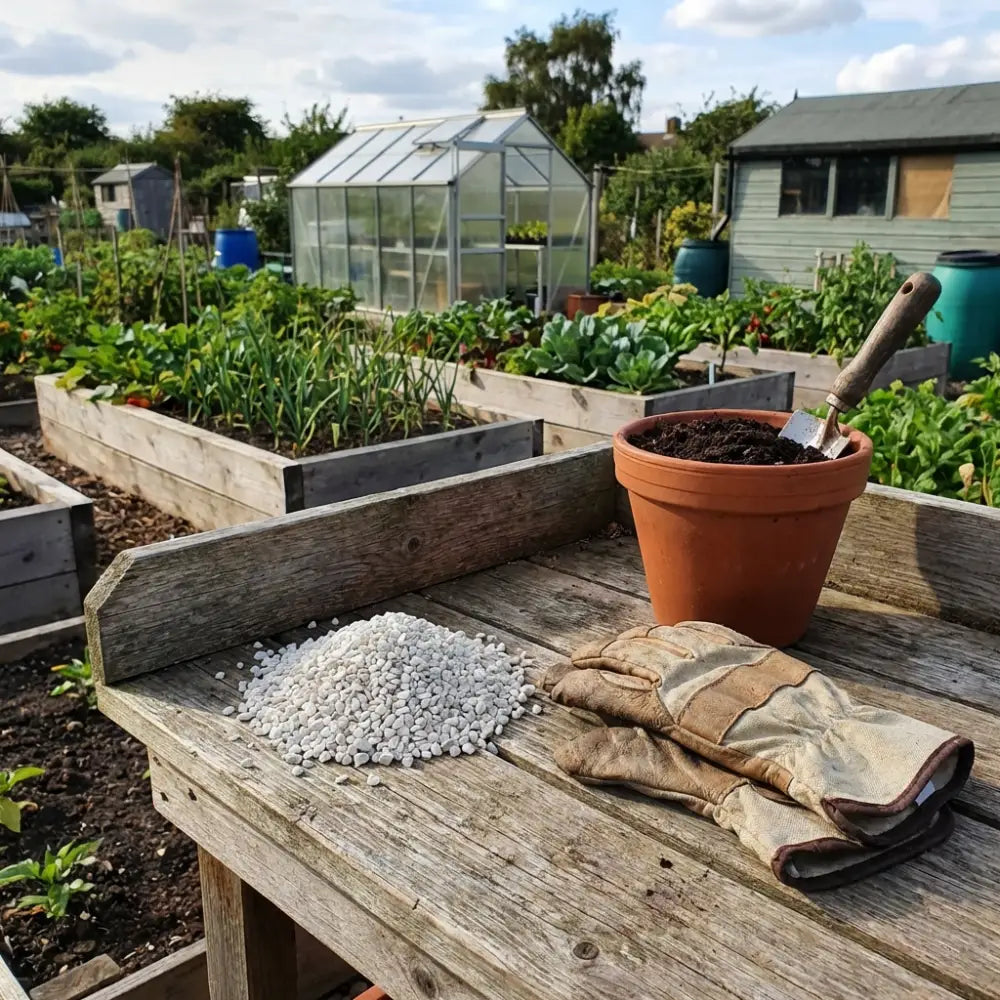

Slow-release phosphorus and calcium for roots.
from £6.99

A 0-5-10 PK feed for the final weeks of fruiting.
from £11.00