




Fertiliser
Organic Tomato Feed 3-4-6 | Slow-Release Tomato Plant Food
A slow-release 3-4-6 feed for tomatoes.
from £11.50
You're £29.51 away from free UK delivery
Customer highlight
I'm impressed. I already see a difference in my Autumn onions and they have perked up quite nicely. Good delivery times.
Editorial highlight from marketplace and store reviews — separate from the full review list below.
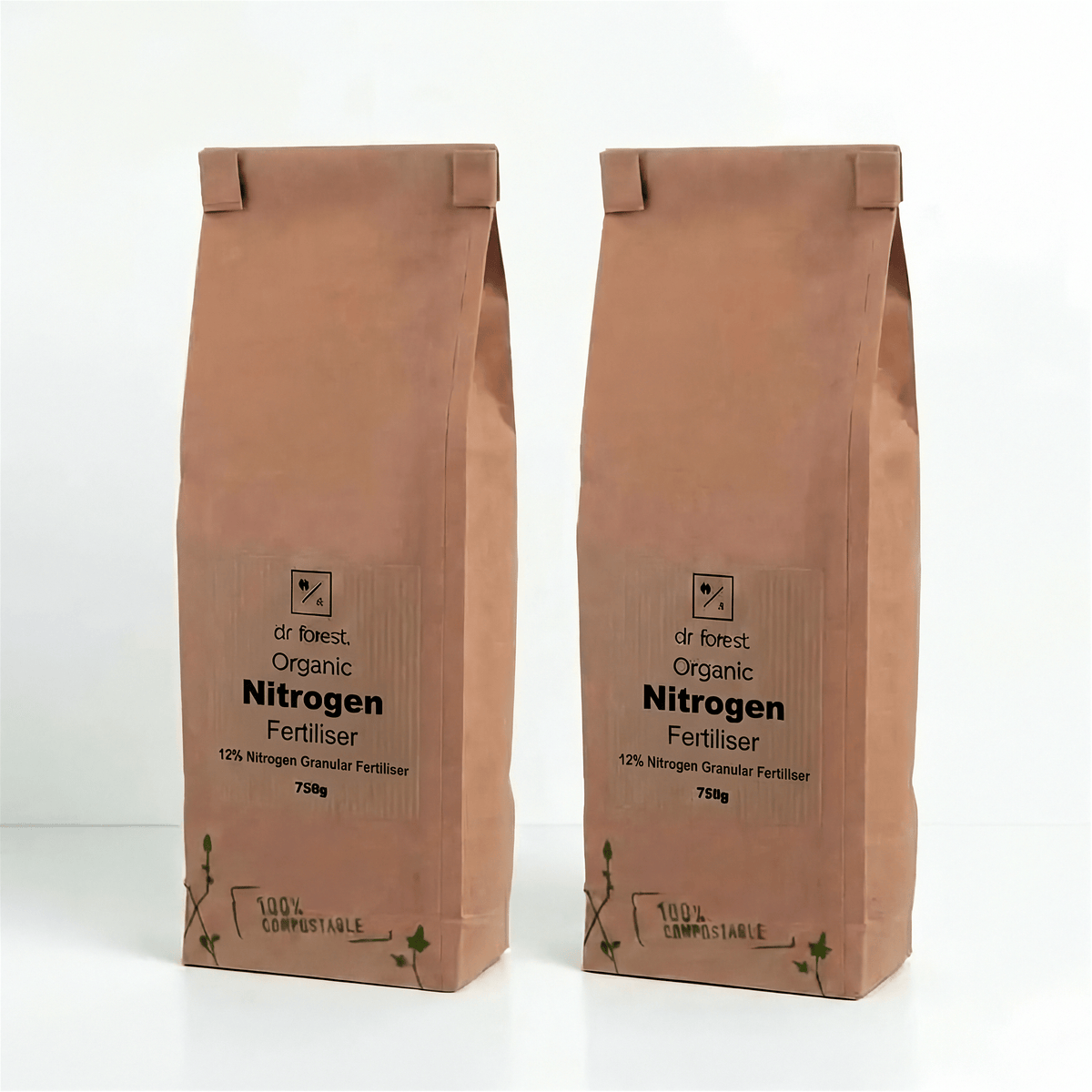
High Nitrogen Fertiliser is a 13% nitrogen granule made from fermented plant sugars, with the nitrogen held in amino acids and proteins rather than as a mineral salt. Roughly half becomes available in the first fortnight and the rest over the following weeks, so one dressing feeds for around six weeks. Use it for leaf and stem: brassicas, leafy veg, sweetcorn and lawns.
Part of our nitrogen fertilisers. For nitrogen in a watering can, see Liquid Nitrogen Fertiliser 10% N.
This is a concentrated 13% nitrogen feed, so it is used at much lower rates than a balanced blend or a soil conditioner. Scatter the granules evenly, keep them off leaves and stems, and water in well. Apply to moist soil during active growth. Less, more often, beats one heavy dose.
One application feeds for around six weeks: roughly half the nitrogen releases in the first fortnight, the rest over the following weeks. Because of that, do not reapply more often than every five to six weeks. Across all uses, a single dressing sits between 20 and 55 g per m² (a rounded handful is roughly 30–40 g). Match the rate to how hungry the crop is, using the guide below.
Scatter over the bed and rake or fork lightly into the top 5–10 cm a few days before sowing or planting leafy and hungry crops. Use the lower rate on already-fertile soil, the higher rate where growth has been weak or the bed is freshly dug.
The hungriest leafy crops: brassicas (cabbage, cauliflower, calabrese and broccoli, Brussels sprouts, kale), leeks, sweetcorn, courgettes, squash and pumpkins, rhubarb, and spinach and chard. Scatter around the plants, keep granules off the foliage, work in lightly and water in. Two to three feeds across the season is usually plenty; stop once growth is strong and well coloured.
Lettuce and salad leaves, beetroot and chard tops, leafy herbs, and any plant showing pale lower leaves or slow, stalled growth. Lighter, more frequent feeding suits fast salad crops better than one heavy dose.
Spread as evenly as you can on a still day and water in well. The fast fraction greens the lawn up, the slow tail keeps it fed for weeks. Avoid applying in drought or to dry turf, and stop feeding nitrogen by late summer so you are not pushing soft growth into autumn.
For a new lawn, work into the top 5 cm of the prepared seedbed before sowing or laying turf. For overseeding, scatter over the area after seeding and water in thoroughly. The slow release feeds through establishment without scorching young roots.
Tomatoes, peppers, chillies, aubergines, beans and peas need nitrogen only to build their early leaf framework. Feed during vegetative growth, then stop at first flower and switch to a high-potash feed such as Sulphate of Potash, or too much nitrogen pushes leaf at the expense of fruit.
A single spring application drives strong early foliage. Follow with a balanced or high-potash rose feed for the flowering flush, and avoid further nitrogen later in the season.
Mix into the compost when potting up leafy plants, or lightly top-dress established pots and water in. Containers hold a small soil volume, so keep to the lower rate and do not over-feed.
Even with a low salt index, too much nitrogen drives soft, sappy growth that flops and resists flowering and fruiting; very heavy doses on dry soil can scorch. Stick to the rates above, water in, and reach for a balanced feed once leafy growth is established.
Figures from published research are not a trial of this product.
Which to choose: these granules feed for weeks from one dressing. Liquid Nitrogen Fertiliser 10% N is for a quick watering-can feed, and the Organic Lawn Fertiliser 10-3-3.5 is made for turf.
13% of buyers here also chose Organic Tomato Fertiliser
A slow-release 3-4-6 feed for tomatoes.
from £11.50
Fully soluble kelp for foliar or root feeding.
from £6.50
