



Soil Conditioner
Malted Barley | 250+ WK Diastatic Malt for Soil
Diastatic malted barley to feed soil enzymes and microbes.
from £10.99
Kelp meal (this product, granular)
Liquid seaweed extract or soluble powder
Customer highlight
An excellent 'base' fertilizer for an organic soil mix with all the most important ingredients such as bio-char, seaweed and a great mineral mix, highly recommended product.
Editorial highlight from marketplace and store reviews — separate from the full review list below.
Dr Forest Scottish Seaweed Fertiliser is a granular Ascophyllum nodosum kelp meal from northern Scotland, used at 50 to 100 g per m² on beds every six weeks or 5 to 10 ml per litre in potting mixes, in 750 g, 1.5 kg, 3 kg, 4.5 kg and 9 kg bags.
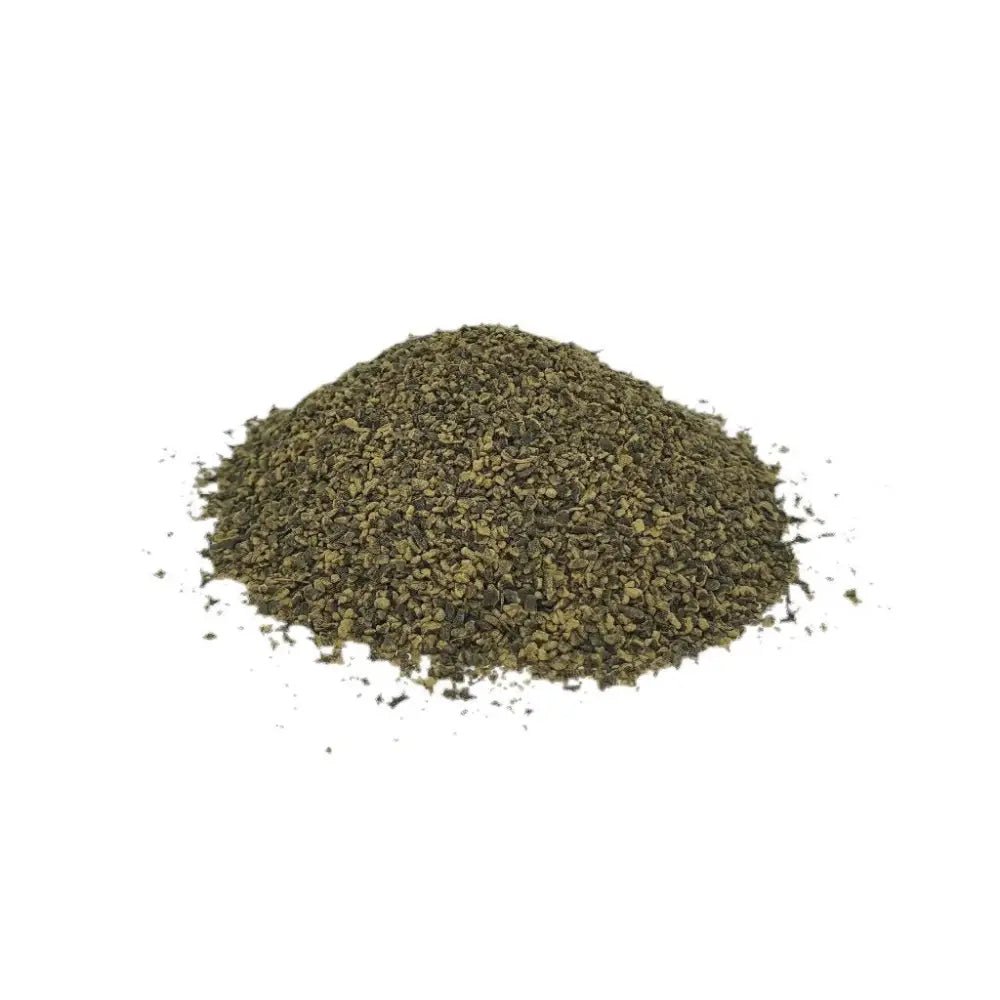
Kelp meal is whole brown seaweed, dried and ground into a granular meal that you work into soil rather than dissolve in water. It breaks down over several weeks as soil organisms digest it, releasing alginates, betaines, mannitol and trace elements into the root zone. This one is harvested from the cold waters of northern Scotland, slowly dried and ground into a meal for potting compost, beds and top-dressing pots.
It is a soil builder and a biostimulant with a modest NPK, so it goes on alongside a proper fertiliser and supplies what the fertiliser does not: trace minerals, carbon for soil biology, and the seaweed compounds linked to better tolerance of dry spells and cold. Single ingredient, nothing added.
Kelp meal and seaweed meal are the same thing: dried whole seaweed, ground. Seaweed granules and seaweed pellets are usually the same material at a coarser grade. This product is a meal; it goes on dry. For drenches and foliar sprays there is a separate soluble seaweed powder, and the two work well together.
Dr Forest is a small-batch organic fertiliser business in Stockport, Greater Manchester. This kelp meal is a single Scottish ingredient, weighed and packed by hand at the workshop, with nothing synthetic added. New to seaweed in the garden? Start with What is seaweed fertiliser? Made by Growers. Backed by Science.
Kelp meal is brown seaweed harvested from the shore, dried and milled. Around the North Atlantic, including the Scottish coast, the dominant harvested species is knotted wrack, Ascophyllum nodosum, an intertidal brown seaweed the literature describes as very effective at accumulating nutrients and minerals from seawater (Pereira et al., 2020). Most published research on seaweed in horticulture uses this species, so it is the one the figures below describe.
An extract pulls the soluble fraction out and discards the rest. A meal keeps the whole plant: the alginate cell walls, the fibre, the ash and the minerals bound in the tissue. That is why meal conditions soil and extract mostly does not. Craigie (2011), reviewing sixty years of seaweed use in agriculture, put it plainly: the old view that seaweed works simply because of the nutrients in it is no longer tenable. The action comes from the bioactive compounds, and in a meal they arrive slowly as it breaks down. For the wider case see Benefits of seaweed fertiliser for plants.
| Component | Share of dried seaweed | Role in the garden |
|---|---|---|
| Alginic acid (alginate) | 28% | Binds soil particles, holds water, chelates metals |
| Fucoidans | 11.6% | Sulphated polysaccharide; food for soil microbes |
| Mannitol | 7.5% | Sugar alcohol; osmoprotectant and microbial carbon |
| Laminarin | 4.5% | Storage glucan; microbial carbon |
| Betaines (four identified) | ~0.01–0.02% | Osmoprotectants linked to stress tolerance |
Polysaccharide figures are from Shukla et al. (2019) for dried A. nodosum; betaine figures are from MacKinnon et al. (2010), who confirmed glycine betaine, δ-aminovaleric acid betaine, γ-aminobutyric acid betaine and laminine and found the levels vary with season and frond colour. These are species values from the literature, not a batch analysis of this bag.
Battacharyya et al. (2015, Scientia Horticulturae) report that alginic acid shows soil-conditioning properties and chelates metal ions into high-molecular-weight polymers; the cross-linked network improved the soil's water retention capacity and stimulated root growth and soil microbial activity. In the garden: a sandy bed that holds water a little longer, a heavy one that is easier to work after a season or two.
The same review notes that alginic acid promoted hyphal growth and elongation of arbuscular mycorrhizal fungi, with better phosphorus nutrition as a result. Renaut et al. (2019, Microbial Biotechnology) applied an A. nodosum product to the soil of tomato and pepper plants and found root, shoot and fruit biomass all significantly increased, with measurable shifts in the bacterial and fungal communities on the roots and in the surrounding soil.
Seaweed does contain cytokinins, auxins and abscisic acid-like growth substances (Khan et al., 2009, Journal of Plant Growth Regulation). But Wally et al. (2013, same journal) measured them and concluded the levels in seaweed products are insufficient to cause significant effects at the rates applied. What the extract did instead was nudge the plant's own cytokinin and abscisic acid biosynthesis. The defensible claim is that compounds in seaweed appear to switch on pathways the plant already has.
Battacharyya et al. (2015) collect the stress work: spray applications of A. nodosum extract improved tolerance of freezing temperatures; under drought, treated plants showed significantly delayed wilting, lower water use, higher leaf water content and better recovery; under salinity of 0.15 S m⁻¹, treated grass grew better above and below ground. The betaines quantified by MacKinnon et al. (2010) are the compounds most often credited. These are extract studies, so treat the effect from a slow-release meal as directional.
Pei et al. (2024, PLOS ONE) pooled 73 field studies of seaweed products on crops and found an average yield increase of 15.17% over controls, with root application alone giving 11.10%. Quality moved too: vitamin C up 18.07%, sugar-to-acid ratio up 38.32%, starch up 19.65%, protein up 11.45%. Root and tuber crops responded most, at 21.19%. These are field trials in China, so read them as the size of effect seaweed products can have in a trial rather than a promise about a particular bed.
The peer-reviewed work is weighted towards liquid extracts, because that is what most trials have tested. Controlled trials of dried whole seaweed meal dug into garden soil are scarce. You will not find a clean number for "kelp meal at 75 g/m² on a Stockport allotment", and we would rather say so than invent one.
Figures describe the published literature on brown seaweed products and are not yield guarantees for this product.
This is a dried, ground seaweed meal, not a powder and not a liquid. Scatter the granules over the soil surface or mix into growing media. It breaks down gradually through microbial activity over several weeks, releasing its nutrients, trace elements and bioactive compounds slowly into the root zone. Water in after application to begin the breakdown process. A tablespoon is approximately 10–12 g of seaweed meal. Store unused meal in a sealed bag in a cool, dry place.
Seaweed meal provides trace elements, growth-regulating compounds and soil-conditioning compounds, but its NPK content is modest. It is not a substitute for a balanced NPK fertiliser. Use it alongside a Dr Forest fertiliser programme: the fertiliser provides the macronutrients (nitrogen, phosphorus, potassium) and the seaweed meal provides everything else. Main course and side dish; you need both.
Mix thoroughly into potting compost, growing media or home-made soil blends before planting. The seaweed meal provides slow-release trace minerals, biostimulant compounds and a carbon source for soil biology throughout the growing season. Use the higher rate (10 ml/L) for peat-free media, which are often mineral-poor. Compatible with all Dr Forest fertilisers: the seaweed complements NPK feeds by supplying the trace elements they lack.
Sprinkle evenly over the soil surface in pots, containers and raised beds. Water in well after application. The granules will break down on the surface over the following weeks. Use the lower rate (1 ml/L) for small pots; the higher rate (3 ml/L) for large containers and hungry crops. Particularly useful for plants that have been in the same container soil for several months, as the trace minerals replenish what the plants have extracted. If you have not top-dressed before, this guide covers the method.
Scatter over the soil surface of beds, borders and vegetable plots. Fork or rake lightly into the top few centimetres if possible, or simply water in well. Apply from spring through autumn. Use alongside your regular NPK fertiliser. Seaweed meal is not a replacement for NPK but a complement that supplies the trace elements, growth-regulating compounds and soil-conditioning compounds that NPK fertilisers do not contain.
Scatter evenly over the lawn and water in well. The fine granules will settle between the grass blades and break down at the soil surface. Seaweed meal improves lawn root depth, drought tolerance and soil biology. Combine with Nitrogen Meal for a complete organic lawn feeding programme: the nitrogen drives green-up and the seaweed provides trace minerals, stress tolerance and soil conditioning.
Mix into the backfill soil when planting trees, shrubs, roses and hedging. The growth-regulating compounds and trace minerals support root establishment, and the alginic acid improves water retention around the new root zone. Combine with Phosphorus Meal in the planting hole for a complete root establishment feed.
Sprinkle seaweed meal between layers of compost material. The trace minerals enrich the finished compost, the nitrogen content supports decomposition, and the moisture-retaining alginic acid helps maintain the even moisture levels that compost micro-organisms need. The finished compost will contain a broader mineral profile than unsupplemented compost.
For a quick liquid feed, steep a few handfuls of seaweed meal in water for 24–48 hours, stirring occasionally. Strain and apply the liquid as a root drench; it will contain dissolved minerals, growth-regulating compounds and organic compounds. This is not as concentrated or immediately available as the Dr Forest Seaweed Powder dissolved in water, but it is a practical way to use seaweed meal as an occasional liquid feed.
Use alongside Nitrogen Meal on lawns for a complete organic lawn programme. Combine with Phosphorus Meal in planting holes for root establishment. Mix into potting soil alongside Dr Forest Organic All Purpose Fertiliser 4-4-4 for a mineral-complete growing medium. For liquid seaweed applications, use Dr Forest Seaweed Powder; the two products (meal for soil building, powder for liquid drenches) are complementary, not interchangeable. Add to compost heaps alongside Molasses for faster, mineral-richer composting. The Humic, Fulvic & Seaweed Trio pairs the soluble powder with the two humic substances if you want the liquid side of the programme in one box.
Keep sealed in a cool, dry place out of direct sunlight. Reseal the bag after use; the meal takes on moisture if left open. Properly stored it keeps for several years.
Almost everything you grow in soil: vegetables, fruit, flowers, shrubs, lawns and pots. Root and tuber crops are a particularly good place to start: potatoes, carrots, beetroot and parsnips take well to the alginates and slow mineral release. Work 50–100 g per m² into beds every six weeks, or 5–10 ml per litre into potting mixes, and use it alongside a proper fertiliser, not instead of one.
It depends what you want it to do. To build soil, a whole dried meal like this one keeps the alginates and fibre that liquid extracts throw away, and one application carries a bed for about six weeks. For a quick leaf or root boost in pots and grow bags, a liquid seaweed or soluble powder works faster. Whichever you choose, check the species and where it comes from: Dr Forest Scottish Seaweed Fertiliser is Ascophyllum nodosum from northern Scotland, slowly dried and ground, with nothing added, used at 50 to 100 g per m² on beds every six weeks. Neither form replaces a balanced fertiliser.
Here. Dr Forest Scottish Seaweed Fertiliser, a Scottish kelp meal, is packed by hand in small batches in Stockport and comes in 750 g, 1.5 kg, 3 kg, 4.5 kg and 9 kg bags, used at 50 to 100 g per m² on beds every six weeks and posted to any UK address. If you'd rather feed through the can, the same range has a soluble seaweed powder and a liquid seaweed. The meal is the one for building soil; the other two are quicker, shorter-lived boosts.
14% of buyers here also chose Organic Malted Barley
Diastatic malted barley to feed soil enzymes and microbes.
from £10.99


