


How Humic & Fulvic Acid Pair compares
Full guide and scienceBoth fractions
- Humic stays in the soil; fulvic stays in solution
- Two 250 g packs, two dilutions
- The usual two-jar order, sold as one
One fraction only
- Buy humic granules or fulvic powder on their own if you only want one job
- The seaweed trio adds Brix+ when you want the biostimulant as well
Customer highlight
Supercharge your compost teas/ extracts.
Using to add humic acids to soil drenches, in autumn and winter. Also use in spring and summer to add fulvic acids, using the same product. Great stuff, with unlimited shelf life, that will add soil organic matter to the soils.
Editorial highlight from marketplace and store reviews — separate from the full review list below.
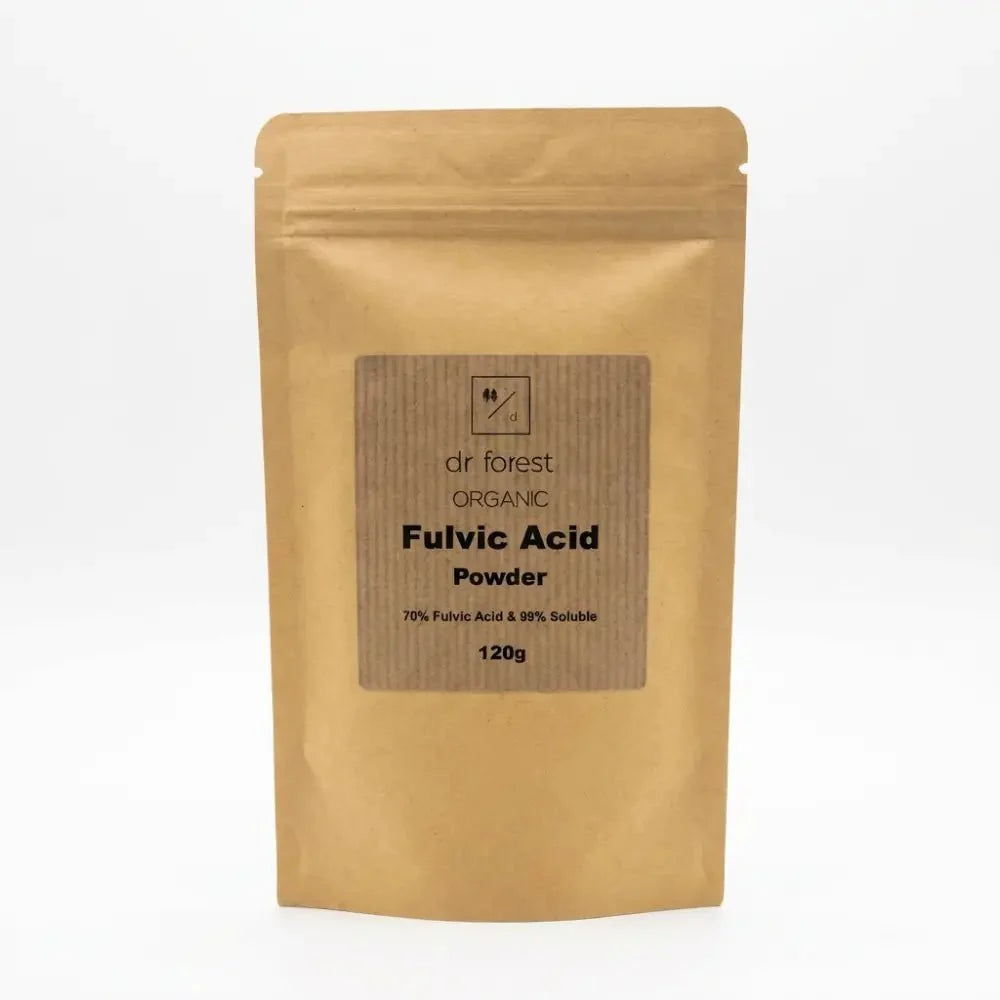
Humic granules and fulvic powder, two soil fractions sold together
Humic granules and fulvic powder, sold together, because they are two fractions of the same material doing rather different jobs, and most people who want one turn out to want both. The larger humic molecules stay in the soil. The fulvic fraction stays in solution and moves nutrients. The Humic and Fulvic Acid collection already covers the chemistry; this page is the two jars.
The humic fraction holds nutrients against leaching, buffers pH swings and, over seasons rather than weeks, helps a thin soil hold together and hold water. The fulvic fraction is small enough to remain fully in solution, which is what lets it chelate nutrients and carry them where roots and leaves can take them up. What is in the pair: Humic Acid Granules, 70% — 250 g, fully water-soluble; Fulvic Acid Powder, 70% — 250 g. Both dissolve for watering on, or for use as a drench. Each carries its own dilution rate, unchanged in the pair. About half the people who buy either one already buy the other, so this simply removes a step. More in Humic and Fulvic Acid, the humic vs fulvic guide and Bundles & Kits. Terms in the growing glossary.
Pick a size on the product form. Each size is a full set of the named packs below — not a single bag.
- Entry (250 g each (500 g total)): Humic Acid Granules — 250 g; Fulvic Acid Powder — 250 g
- Mid (500 g each (1 kg total)): Humic Acid Granules — 500 g; Fulvic Acid Powder — 500 g
- Large (1 kg each (2 kg total)): Humic Acid Granules — 1 kg; Fulvic Acid Powder — 1 kg
Rates stay on each component listing. The size picker only changes how much of each pack you get.
Both are also sold on their own — Humic Acid Granules · Fulvic Acid Powder
What the two fractions are for
- Humic and fulvic acid as a pair when you already use both
- Soil-first: humic granules watered in, working between feeds
- Solution-first: fulvic powder in a can or a dilute foliar, as that listing allows
- Not a replacement for a proper NPK feed
Both fractions
- Humic stays in the soil; fulvic stays in solution
- Two 250 g packs, two dilutions
- The usual two-jar order, sold as one
One fraction only
- Buy humic granules or fulvic powder on their own if you only want one job
- The seaweed trio adds Brix+ when you want the biostimulant as well
Dr Forest packs this in Stockport, Greater Manchester. Mineral-derived (leonardite / humic fractions); not a plant meal. Made with organic ingredients; we do not call it certified organic. Made by Growers. Backed by Science.
Humic and fulvic acid: size, solubility, and what that means in soil
Humic and fulvic acid are both alkali-soluble fractions of decomposed organic matter. The practical difference is molecular size. Humic molecules are larger, tend to stay in the soil, and are the ones tied to cation exchange, nutrient retention and a slower change in soil physical behaviour. Fulvic molecules are smaller, remain in solution across a wide pH range, and are the ones used as chelators.
Nardi et al. (2009) is the review we keep citing on bacterial biomass and mycorrhizal colonisation under humic substances. Canellas et al. (2015) covers horticultural biostimulant use. Neither paper is a reason to skip feeding the soil.
This pair is not a human supplement. Garden use only.
Humic fraction in the soil
Larger molecules, nutrient holding, slower physical change.
Fulvic fraction in solution
Smaller molecules, chelation, movement to roots and leaves.
Not a feed
Nitrogen, phosphorus and potassium still have to come from a fertiliser.
Two dilutions
Each listing keeps its own rate. The pair does not average them.
References
- Nardi, S. et al. (2009). Physiological effects of humic substances on soil bacteria and mycorrhizae. Soil Biology and Biochemistry.
- Canellas, L.P. et al. (2015). Humic and fulvic acids as biostimulants in horticulture. Scientia Horticulturae, 196.
- Lehmann, J. et al. (2011). Biochar effects on soil biota and nutrient retention. Soil Biology and Biochemistry, 43(9).
- Craigie, J.S. (2011). Seaweed extract stimuli in plant science and agriculture. Journal of Applied Phycology, 23(3).
- Wang, Y. et al. (2023). Combined organic–mineral fertilisation meta-analysis, 7,859 data pairs. Science of the Total Environment.
- Ferro, N.D. et al. (2022). Organic vs mineral-only systems and soil organic carbon. Agronomy.
How to use Humic & Fulvic Acid Pair
Dissolve each product at the rate on its own page — humic and fulvic are not one spoonful. For soil, water humic in first, then fulvic on its schedule. If you foliar, use only the foliar figures on each listing (humic is crop-specific g/L; fulvic tomato foliar is on the fulvic page) — do not spray a strong soil drench on leaves. Soft light; this pair does not replace fertiliser.
Humic granules and fulvic powder have different dilutions. Use the figure on each product page. Do not invent a combined spoonful.
These are soil and plant products. They are not food-grade supplements for people.
Humic granules
- Humic first if you are watering both into soil: Humic Acid Granules.
- Fulvic on its own schedule: Fulvic Acid Powder.
- Keep feeding with a proper NPK. This pair does not replace it.
- Terms: glossary.
Add seaweed: Humic, Fulvic & Seaweed Trio. Add a foliar amino: four-part set. Base feed: All Purpose 4-4-4.
Humic & Fulvic Acid Pair: questions
Two soluble fractions of decomposed organic matter. Humic for the soil; fulvic in solution. Full chemistry on each product page.
Often, but jar-test and follow each dilution. The pair is not a premix.
No.
No. Garden use only.
Made with organic ingredients. We do not call it certified organic.
Yes.
Stockport, Greater Manchester.
If you already use Brix+, yes. If you only want the two fractions, this pair is the honest buy.
Yes. At today's prices (October 2026) every size costs about 10–11% less than buying the same products separately. The smallest size is £18.75 against £20.98 bought one by one, a saving of £2.23. Check each product page for current single prices.
Not in the bundle. The sizes are fixed: 250 g each (500 g total); 500 g each (1 kg total); 1 kg each (2 kg total). If you want different amounts, buy the products on their own pages and mix the sizes as you like.
Yes. Each one is sold on its own: Humic Acid Granules, Fulvic Acid Powder.


