Fertiliser
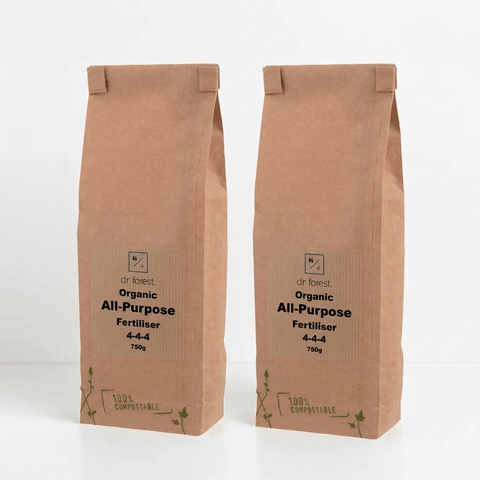
All Purpose Fertiliser 4-4-4
True all-purpose 4-4-4 for veg, fruit, flowers and containers.
from £12.00
Your basket is empty
Not sure where to start? These are our three best sellers.
 Organic All Purpose Fertiliser 4-4-4from £12.00
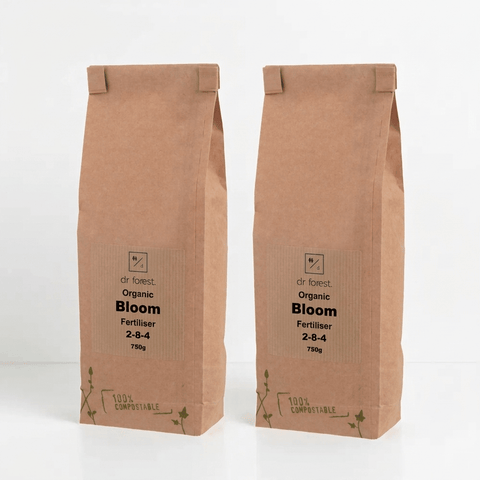
 Bloom Fertiliser 2-8-4from £12.00
 Mycorrhizal Fungi Powderfrom £6.99
Have an account?
Log in to check out faster.
Your basket
Customer highlight
A good product in the sense that it’s very easy to apply as it completely dissolves in water. A good price and rapid postage. All I’ve seen is growth!
Editorial highlight from marketplace and store reviews — separate from the full review list below.
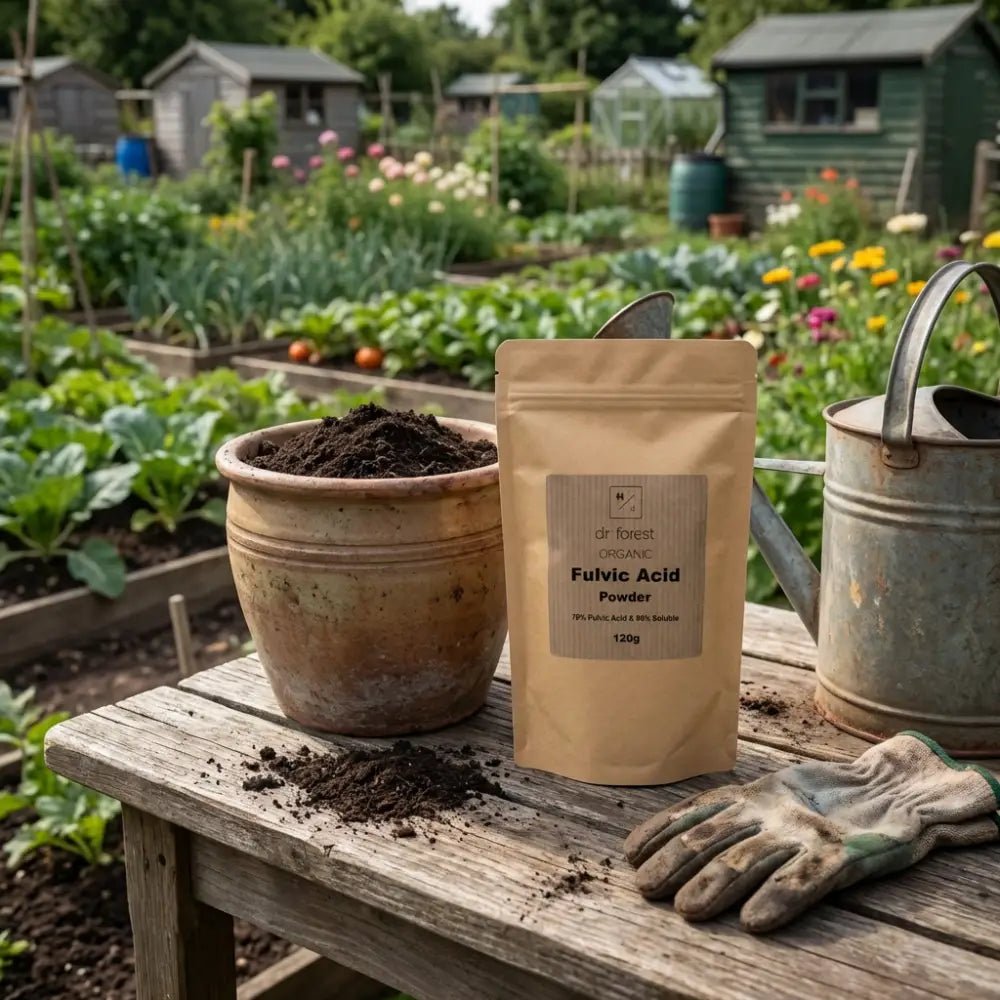
Fulvic Acid Powder for Plants is a 70% fulvic acid powder that dissolves in cold water and carries trace nutrients into leaves and roots. Its carboxyl and hydroxyl groups hold iron, zinc, manganese and copper in mobile forms, so a plant can use nutrients that are already in the pot but locked up. Fertiliser is the meal. Fulvic is the fork.
Part of our humic and fulvic acid range. New to it? Read What is fulvic acid?
| Spec | This powder | Why it matters |
|---|---|---|
| Fulvic content | 70% by mass | Concentrated active fraction in the jar |
| Solubility | 99% cold water | Clean foliar / fertigation mixes |
| Extraction | Enzymatic, ambient | Gentler than harsh alkaline heat processes |
Hard UK tap water binds calcium and magnesium to fulvic before it reaches the leaf. Prefer rainwater; if you only have hard tap, stand 24 hours or lightly pre-acidify. Mix fresh and use within 24 hours.
Foliar: 0.5–1 g/L (many crops sit near 0.8 g/L).
Soil drench: 0.5–1 g/L.
Seed sprouting: 80 mg per litre (0.08 g), on kitchen paper kept damp with the solution until the seeds sprout, as in the Zhang 2021 tomato trial. Far weaker than a spray.
Start at the low end. Going past the optimum can reverse the effect.
Worked at 0.8 g per litre, the rate the tomato trial favoured, with the full 0.5 to 1 g range alongside.
| Pack | Litres at 0.8 g/L | Litres at 0.5 to 1 g/L | Cost per litre at 0.8 g/L |
|---|---|---|---|
| 60 g | 75 L | 60 to 120 L | about 8.7p |
| 120 g | 150 L | 120 to 240 L | about 5.3p |
| 250 g | about 312 L | 250 to 500 L | about 4.2p |
| 500 g | 625 L | 500 to 1,000 L | about 3.2p |
| 1 kg | 1,250 L | 1,000 to 2,000 L | 2.8p |
Cost per litre worked from October 2026 prices.
Crop-by-crop tables, trial citations, hormesis notes and common mistakes: How to apply fulvic acid: rates and method.
Humic Acid Granules for the soil-side job; or the humic & fulvic pair. Not sure which molecule you need? Humic vs fulvic: which you need.
Hard tap water binds calcium and magnesium to fulvic before it reaches the leaf, so use rainwater where you can. More in How to apply fulvic acid.
Which to choose: fulvic is the soluble fraction for sprays. Humic Acid Granules build soil structure and exchange capacity, and the Humic and Fulvic Acid Pair gives you both. See humic vs fulvic acid.
True all-purpose 4-4-4 for veg, fruit, flowers and containers.
from £12.00
Flowering-stage 2-8-4 — more blooms without a jungle of leaves.
from £12.00