
Fertiliser
Scottish Seaweed Fertiliser | Ascophyllum Kelp Meal
Scottish kelp meal, trace minerals and biostimulants.
from £10.89
Crushed high diastatic power malt (this product)
Malt extract, roasted malt or fine malt powder
Customer highlight
I use malted barley weekly and I just see mycelium growing everywhere and improved plant strength.
Editorial highlight from marketplace and store reviews — separate from the full review list below.
Malted barley for soil is barley grain that has been germinated, dried gently enough to keep its enzymes active, and crushed so those enzymes reach the soil. In moist soil the starch-, protein- and phytate-digesting enzymes built up during malting go to work on the organic matter around them, and the sugars and amino acids they release feed the bacteria and fungi that do the rest. Dr Forest supplies a high diastatic power malt, minimum 250 Windisch-Kolbach units, coarsely crushed and bagged in small batches in Stockport, Greater Manchester.
It is not a fertiliser; it carries very little nitrogen, phosphorus or potassium of its own. What it adds is speed. Applied alongside an organic feed such as All Purpose 4-4-4, it helps turn that feed into plant-available nutrients sooner. No-dig and living soil growers use it as a regular top dress; allotment holders use it to wake up a compost heap or a sluggish worm bin.
Malted in Germany to brewing standards, then crushed and packed in small batches at the Dr Forest workshop in Stockport, Greater Manchester. Plant-based, a single ingredient, and one of the simpler ways into the approach described in What is living soil? Made by Growers. Backed by Science.
A barley grain is a starch store wrapped round an embryo. Steep it and let it germinate for a few days and the grain manufactures the enzymes needed to dissolve its own reserves: α- and β-amylase to break starch into sugars, limit dextrinase and α-glucosidase to finish the job, β-glucanases to open the cell walls, and proteases to release amino acids from storage protein (Gupta et al., 2010; Panahi et al., 2026). Phytase, which frees phosphorus from phytate, climbs as much as tenfold over eight days of germination (Bouajila et al., 2020).
The maltster then stops germination by drying the grain, and this is where malts diverge. Drying at around 45–55 °C lets a good part of these enzymes survive; kilning at 80–85 °C and beyond, as for a coloured or roasted malt, inactivates most of them (Panahi et al., 2026). A diastatic malt is one dried carefully enough to keep its enzymes working. Ours is kilned for enzyme survival rather than flavour, which is why it is sold on diastatic power rather than colour. The wider case for dry inputs like this is in What are organic dry amendments?
Diastatic power (DP) is the brewing measure of a malt's starch-degrading enzyme activity. The MEBAK reference method incubates malt extract with starch at 20 °C for 30 minutes and titrates the maltose produced; the result is given in Windisch-Kolbach units (°WK) and mainly reflects β-amylase (MEBAK, 2018; Panahi et al., 2026). This malt is specified at a minimum of 250 WK. DP does not measure proteases or phosphatases directly, but all of these enzymes are built in the same germination and survive or fail the same kilning, so a high DP is a fair proxy for an intact enzyme set.
| Enzyme group | Acts on | Releases | Source |
|---|---|---|---|
| α- and β-amylase, limit dextrinase, α-glucosidase | Starch and dextrins | Maltose and glucose | Gupta et al., 2010 |
| Proteases (cysteine proteases, carboxypeptidases) | Storage proteins | Peptides and amino acids | Panahi et al., 2026 |
| β-glucanases | Cell-wall β-glucan | Soluble glucans and glucose | Panahi et al., 2026 |
| Phytase | Phytate | Orthophosphate | Bouajila et al., 2020 |
These enzymes exist to digest the grain's own reserves, and the starch and protein they act on fastest in soil is the barley itself. The longer list sometimes attributed to malt (cellulase, urease, chitinase, arylsulphatase) is not well supported by the malting literature, and we do not claim it.
On contact with moisture the amylases convert the grain's starch into maltose and glucose. Kuzyakov, Friedel and Stahr (2000, Soil Biology and Biochemistry) reviewed what happens when easily available carbon is added to soil: microbial activity rises and turnover of existing soil organic matter changes with it, immediately or very shortly after the addition. They call it the priming effect. That is the mechanism behind the white mycelium you see a few days after a top dress.
The proteases developed in malting (Panahi et al., 2026) cleave storage protein into peptides and amino acids, which microbes take up and, after mineralisation, return as plant-available ammonium. Applied with a protein-rich dry feed, they give the feed's organic nitrogen an early push while the soil's own proteases build up.
Between 30% and 65% of the phosphorus in a typical soil is held in organic forms, and none of it is available to a plant until a phosphatase has broken it down to orthophosphate (Manzoor et al., 2022, Frontiers in Plant Science). Germinating barley builds phytase for exactly this job, with activity rising five- to tenfold over eight days and phytate falling by over 90% (Bouajila et al., 2020). Those enzymes arrive in the soil with the grain.
β-glucanases break down the β-glucan that makes up much of the barley cell wall (Panahi et al., 2026), so the grain is dismantled quickly rather than sitting on the surface as an intact seed. It is also why crushed malt is worked into the top centimetre: it absorbs water fast, swells, and will crust if left in a layer.
Free enzymes do not last long in soil. Burns et al. (2013, Soil Biology and Biochemistry) describe extracellular enzymes being adsorbed onto clay and humic substances, where some are stabilised, or broken down by the microbes they feed. What malt adds is a short pulse, which is why the rates here are weekly for containers and every six weeks for beds.
The enzyme biochemistry above is well established. What does not yet exist, as far as we can find, is a peer-reviewed trial of malted barley as a garden amendment with yield or soil-biology outcomes. Reports of faster establishment, livelier worm bins and quicker compost come from growers, ourselves included. Treat them as experience rather than proof, and treat malt as an accelerator for a feeding programme that is already sound.
This product is pre-crushed to expose the enzyme-rich interior of the grain. Apply directly as a top dressing or mix into soil; no grinding required. For an even finer application you can process it further in a coffee grinder or food processor, but this is not necessary for most uses. A tablespoon is approximately 8–10 g of crushed barley. Once crushed or ground the enzymes are exposed to moisture and begin activating, so for maximum freshness use within a few weeks of opening.
Malt speeds up the breakdown of organic matter that is already there. Give it something to work on: a dry organic feed, compost, worm castings or a living soil mix. On bare, hungry soil it will feed the microbes for a week and not much else.
Mix thoroughly into potting compost, living soil blends or growing media before planting. The enzymes begin working as soon as the soil is watered, catalysing the breakdown of every organic ingredient in the mix (compost, worm castings, neem, seaweed) into plant-available nutrients. This is particularly effective in living soil systems where the goal is to have nutrients cycling from the moment the plant goes in.
Sprinkle evenly over the soil surface and water in well. Lightly mix the barley into the top centimetre of soil after application; if left sitting on the surface it can form a hard crust as it absorbs moisture and dries. You may notice white mycelium (fungal threads) appearing on the soil surface after application. This is a positive sign that the soil biology is actively colonising and digesting the barley. Regular weekly top dressing maintains a constant enzyme supply throughout the growing cycle.
Scatter over the soil surface and lightly rake or fork into the top 2–3 cm. Water in well. Apply alongside your regular organic fertiliser programme: the enzymes from the barley catalyse the breakdown of the fertiliser's organic nitrogen, phosphorus and sulphur into plant-available forms, so each fertiliser application gets going sooner.
Sprinkle a small amount around the base of each transplant and water in. The enzyme-driven nutrient release and microbial stimulation gives new roots an active soil to grow into. Particularly useful for seedlings, rooted cuttings and plants moved from small pots to their final positions.
Add malted barley to the top of your worm bin as a regular feed. The enzymes accelerate the breakdown of food waste and bedding material, while the sugars and proteins in the grain provide a concentrated food source for worms and the associated micro-organisms. In our experience, and that of growers who use it regularly, worm numbers and castings production both pick up.
Sprinkle between layers of compost material. The enzymes and sugars accelerate the decomposition of the starches, proteins and cell-wall material in the heap, so it heats up and breaks down faster.
After a top dressing you may notice white fungal threads (mycelium) on the soil surface. This is beneficial fungi colonising and digesting the barley, which is exactly what you want. Do not scrape it off. If it becomes dense enough to form a crust, break it up with a light scratch and water in.
Malted barley is the accelerator; the other inputs are what it accelerates. Apply alongside a Dr Forest granular feed such as All Purpose 4-4-4 or Bloom 2-8-4 and the enzymes get to work on the feed's organic nitrogen and phosphorus. Pair it with Grow-Kashi for the biological side: Grow-Kashi brings the organisms, malt brings the sugars and enzymes that feed them. In worm bins, use it alongside Bokashi Bran scraps. In a living soil build, mix it in with Mineral Mix and Seaweed Meal.
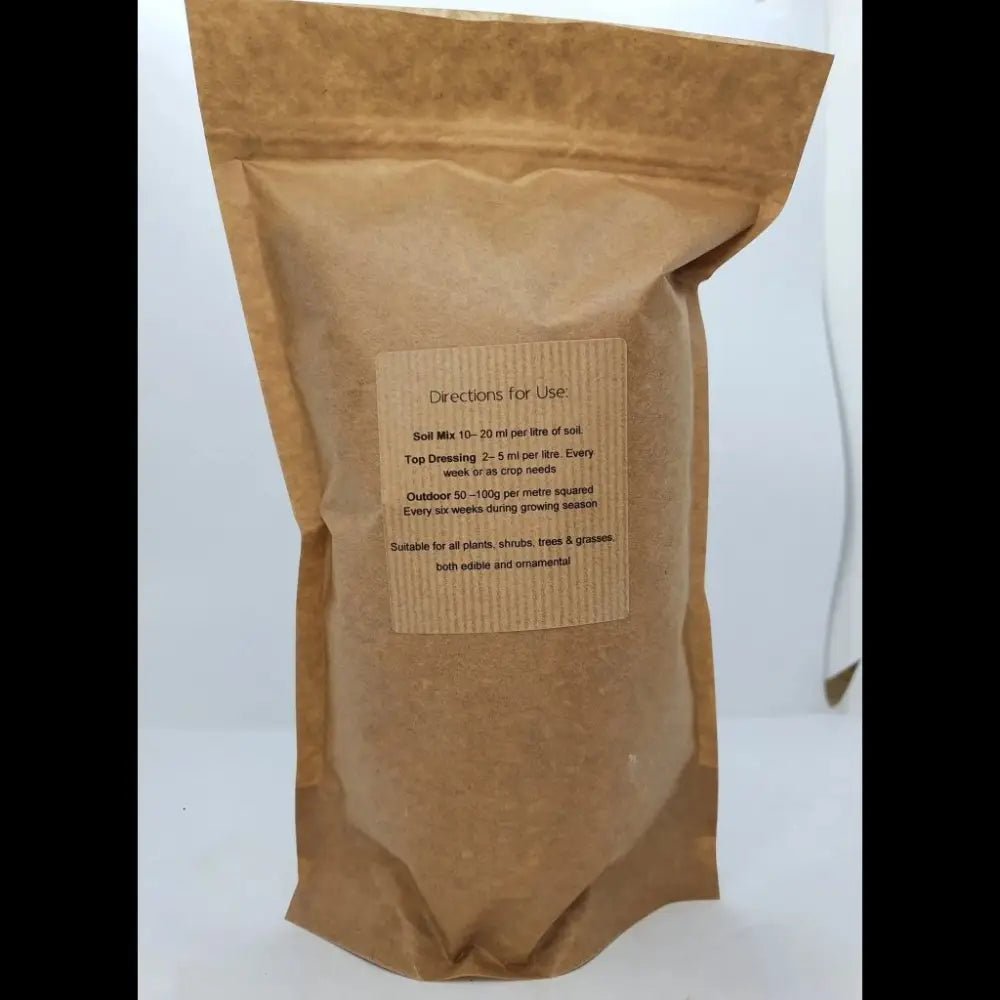
Something for the enzymes and microbes to work on: a dry organic feed, compost, worm castings or a living soil mix. Malted barley is a short pulse of easy sugars, protein and active enzymes, so it gets soil bacteria and fungi multiplying quickly, but on bare, hungry soil it will feed the microbes for a week and not much else. That's why the rates are weekly for containers (2–5 ml per litre of soil as a top dressing) and once at mixing for soil blends (10–20 ml per litre). It pairs naturally with a granular feed such as All Purpose 4-4-4.
17% of buyers here also chose Natural Wetting Agent for Plants, Soil & Lawn
Scottish kelp meal, trace minerals and biostimulants.
from £10.89
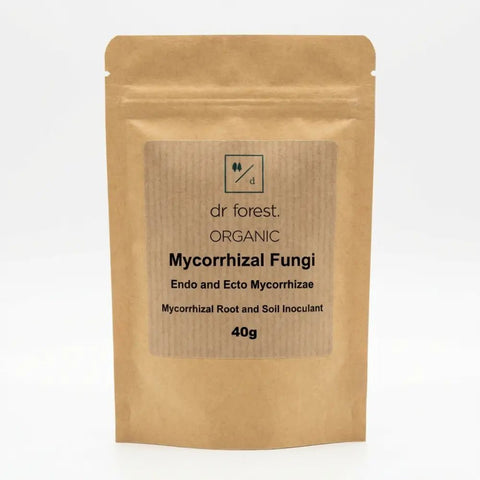
A root inoculant, 18 endo and ecto species.
from £6.99