What is the best organic fertiliser for vegetables?
A balanced feed with a slight potassium lead suits most of a mixed plot. Leafy crops want more nitrogen, fruiting crops more potassium, and the differences are worth respecting once the plot gets past a few beds.
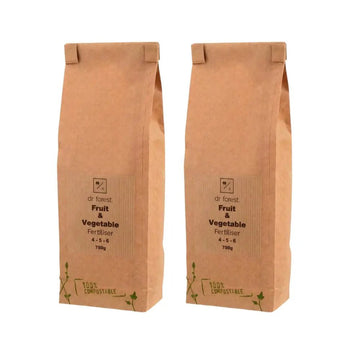
Handcrafted in Stockport
Crop-Specific Fertilisers
Crop blends tuned to how each crop feeds across a season. From £11.50
Shop crop feedsStart with the soil, then choose the feed
Compost or well-rotted manure worked in before planting does more for a vegetable bed than any bagged feed, because it improves structure and water holding as well as supplying nutrients. It is also the cheapest thing in the garden. A bagged fertiliser is what you add on top of that, to cover the specific demand of a crop in a specific season.
Matching the feed to the crop
| Crop | What it wants | A sensible choice |
|---|---|---|
| Mixed plot or allotment bed | Balanced, slight potassium lead | A 4-5-6 across the whole bed |
| Salads, spinach, brassicas | Nitrogen led | A balanced 4-4-4, or a nitrogen feed early |
| Tomatoes, chillies, peppers | Potassium led from flowering | A 3-4-6, or a crop-specific blend |
| Potatoes and root crops | Steady release across bulking | A crop-specific potato feed |
| Strawberries and soft fruit | High potash for sugars | A high-potash crop blend |
There is no single rate for organic fertiliser. Analysis varies from under 1% nitrogen in garden compost to 13% in a concentrated feed, so the rate on the pack is the one that matters.
Timing across the season
Work a feed in before planting, then top dress through the season as the crop grows. Heavy feeders want feeding more often rather than more heavily at once: the short end of whatever range the pack gives.
Ease off in the last few weeks before harvest. There is nothing to gain from feeding a crop you are about to pick, and on leafy crops it can leave nitrate in the leaf.
Calcium is the one people forget
Blossom end rot in tomatoes and peppers, and tipburn in lettuce, are calcium supply problems, and they are usually caused by irregular watering rather than by a shortage of calcium in the soil. A feed that carries calcium helps, but even watering helps more. It is worth knowing before you buy anything sold as a cure.
Tuned by crop
Crop-Specific Fertilisers
Crop-specific blends built around how a single crop actually feeds across a season, rather than one generic ratio applied to everything.
Five crop blends · Every ingredient named · Rates published
Shop crop feedsMore organic fertiliser questions
What is the best organic fertiliser for roses and flowers?What is the best organic fertiliser high in potassium?How often should you apply organic fertiliser?Sources
- Royal Horticultural Society. How to feed plants. rhs.org.uk
- Royal Horticultural Society. Organic matter: how to use it in the garden. rhs.org.uk
Soil notes
Get the evidence, not the marketing
Occasional notes from Stockport on feeding, soil structure and what the research actually supports, including the things that turn out not to work.
No spam. Unsubscribe in one click. See our privacy notice.