



Fertiliser
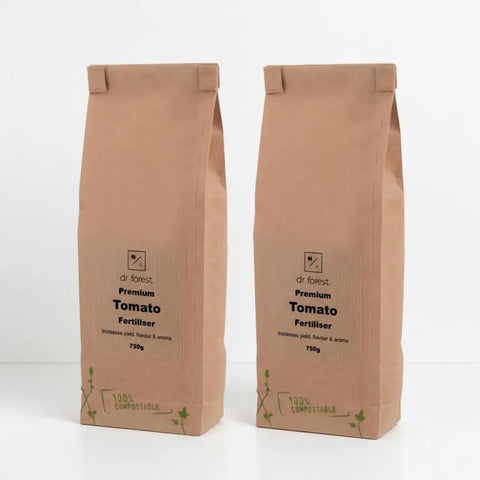
Tomato Feed 3-4-6 | Slow-Release, Made with Organic Ingredients
A slow-release 3-4-6 feed for tomatoes.
from £11.50
Dr Forest Potato Fertiliser 3-5-8 — slow-release powder
Typical liquid potato feed — diluted concentrate
Customer highlight
Iv used dr forest potato fertilizer on multiple varieties of normal potato and sweet potatos iv noticed the foliage has explored the stems are nice and thick aswell another great product from Dr forest great service and great knowledge about what fertilizers you need get some before its gone
Editorial highlight from marketplace and store reviews — separate from the full review list below.
Dr Forest Potato Fertiliser is a 3-5-8 organic potato fertiliser: a slow-release, high-potash powder for earlies and maincrops in beds, grow bags and pots. Potassium helps the tuber turn sugar into starch, so the formula leans on K and keeps nitrogen moderate. It is blended in small batches in Stockport from 20 ingredients, each one listed on the Ingredients tab.
The main potash sources are sulphate of potash and Yorkshire polyhalite, with no muriate of potash (potassium chloride), which trials link to lower starch. Alongside it sit 7% calcium, 2.4% magnesium, plant meals, Scottish seaweed, British biochar and a living microbial culture. It goes in at planting and at earthing up, then every 3–4 weeks while the tubers bulk.
Dr Forest was founded in 2020 in Stockport, Greater Manchester, and is named after Joe's grandfather, Dr Forrest, a GP in a Lancashire mining town near Preston who kept a back-garden plot for the runner beans he turned into piccalilli for family and friends. This premium organic plant food comes in compostable kraft packs. More on the potash in polyhalite vs sulphate of potash. Made by Growers. Backed by Science.
Twenty ingredients, each with a job. The polyhalite is mined in North Yorkshire, the seaweed meal hand-harvested in Scotland, and the biochar, rapeseed meal and clay minerals are British. Each card shows how quickly it releases.
The main nitrogen carrier, at 12% N. Soil microbes break the protein down over the weeks after planting, so nitrogen arrives steadily. A surge while tubers are forming pushes growth into the haulm.
A heat-processed plant meal with about 15% P₂O₅ and 9% CaO, and not a rock phosphate. The quicker of the two phosphate sources, there for stolon growth and tuber set after emergence.
50% K₂O in sulphate form, dissolving straight away to give the young crop its first potash. Also sold on its own as Sulphate of Potash.
23% calcium and 18.6% sulphur, both available at once. A neutral salt, so it adds calcium without raising soil pH.
20.9% Mg, milled fine to weather readily. Magnesium sits at the centre of every chlorophyll molecule and helps move sugar from leaf to tuber.
One crystal carrying 14% K₂O, 17% CaO, 6% MgO and sulphate, mined more than a kilometre down in workings that run out under the North Sea. It releases more slowly than sulphate of potash, so supply carries on after the fast sources are spent. More on what polyhalite is.
Dried, milled lucerne: gentle nitrogen and organic matter that soil life works through over the season.
31% P₂O₅ and 49% CaO. It dissolves slowly, so it is the phosphate still on hand when maincrops are bulking in August.
20% Mg and the quickest of the three magnesium sources. It dissolves within weeks in moist soil and covers the early season while the other two build.
More than 60 trace elements, plus alginates that help the ridge hold its structure and moisture.
The pressed meal left after oil extraction. Microbes release its nitrogen gradually and use it as a carbon source.
Modest nitrogen and potash, plus chitin from shed skins, which feeds the soil microbes that break it down.
Humic substances hold micronutrients in forms roots can use, and reviews link them to more lateral root growth and better nutrient uptake. Fulvic acid is the smaller, more soluble fraction.
Charcoal made for soil, fermented before blending. Its porous structure lasts, and in a 45-week study of manure-amended soil the highest biochar rate cut nitrogen leaching by 11% and dissolved phosphorus by 69% (Laird et al., 2010).
Clay surfaces hold potassium, calcium and magnesium and release them gradually, most usefully on light, sandy soils.
The soluble fraction of seaweed, carrying cytokinins, auxins and betaines, though how they work in the field is still being pinned down.
Weathers slowly, releasing iron, zinc, copper, manganese and silicon over years.
A mixed culture of bacteria and yeasts, lactic acid bacteria among them, that gets the meals and minerals breaking down in the soil. Also sold as EM-1 Effective Microorganisms.
A source of silicon, which plants lay down in their cell walls, where it stiffens the tissue.
Comfrey is the gardener's traditional potash plant, nettle brings iron and silica, and yarrow and chamomile are the classic compost herbs. Count it as a biological extra; it adds little in the way of nutrients.
This product is a milled powder with a bulk density of 1 g/ml, so grams and millilitres are interchangeable. Never apply it in direct contact with seed tubers: always mix it into the surrounding soil with a 10 cm gap. Water thoroughly after application. For best results, mix 1:1 with compost before applying.
| Situation | Rate (g = ml) | Frequency | Notes |
|---|---|---|---|
| Potting mix preparation | 5–7.5g per litre | Once at planting | 5g/L enriched mixes. 7.5g/L plain or peat-free. |
| Container top-dressing | 1.5–2.5g per litre of pot volume | Every 3–4 weeks | 1.5g/L earlies. 2–2.5g/L maincrops. |
| Situation | Rate (g = ml) | Frequency | Notes |
|---|---|---|---|
| Initial soil preparation | 125–175g per m² | Once before planting | Fork into top 15–20cm. 175g/m² for depleted beds. |
| Outdoor top-dressing | 100–150g per m² | Every 3–4 weeks | 100g/m² earlies. 150g/m² maincrops through bulking. |
| Single plant at planting | 30–45g per plant | Once at planting | Mix into planting hole. 10cm gap from tuber. |
| Single plant top-dressing | 20–35g per plant | Every 3–4 weeks | Ring 10–15cm from stem. Time with earthing up. |
| Stage | Timing | Rate & frequency | Goal |
|---|---|---|---|
| Bed / container prep | 2–4 weeks before planting | Beds: 125–175g/m². Pots: 5–7.5g/L | Build nutrient-rich root zone |
| At planting | At time of planting | 30–45g per planting position | Localised nutrition for emerging stolons |
| First earthing up | 3–4 weeks after emergence | Beds: 100–150g/m². Pots: 1.5–2.5g/L | K and P into tuber initiation zone |
| Active bulking | 4–6 weeks after tuber initiation | Same, every 3–4 weeks | Sustained K for starch accumulation |
| Ripening & curing | Haulm yellowing | Stop or single low-rate application | Allow skin set; excess N reduces storage life |
Use Dr Forest Seaweed Powder as a fortnightly foliar. Apply Dr Forest Liquid Gypsum as a root drench for additional calcium during tuber initiation. Use the Dr Forest All-Purpose 4-4-4 for companion plantings.
Cool, dry place out of direct sunlight. Keep sealed. Effective for at least 18 months.
Potatoes are easy to grow and easy to grow badly. Most of the difference is timing: which type you plant, when, how evenly the ridge stays moist and when you stop feeding. Written for UK gardens and allotments.
Short season (10–12 weeks). Full base dressing, then 1 top-dress at first earthing up; a second only if the season is long. Lifted before starch builds fully, they need less potash than maincrops.
Waxy varieties bred for firm texture. Moderate feeding keeps the waxy character. Harvest when the haulm just begins to yellow.
What this formula was designed for. Floury varieties are bred for high starch but only get there with potassium supplied steadily through a long bulking period. Full programme, upper rates.
Versatile varieties that respond well to standard rates. Wilja and Estima are second earlies, the rest maincrops. Sarpo Mira has exceptional blight resistance and benefits from the full maincrop programme.
Grown for flavour and looks rather than weight of crop; Pink Fir Apple, for one, is a late maincrop. A bigger dose won't turn a light-cropping variety into a heavy one.
Chitting (pre-sprouting) gives first and second earlies a 2–3 week head start; it matters less for maincrops. Stand tubers upright in egg boxes in a cool (8–10°C), bright room from late January and plant when sprouts are 1.5–2.5cm long. A chitting tuber runs on its own starch and needs no fertiliser.
A dry spell while tubers are forming leaves fewer of them; drought followed by a soaking gives cracked, knobbly or hollow ones. Tubers usually start forming around the time the first flower buds appear, and from then through bulking steady moisture counts most.
Check daily from June; a full-grown plant can drink a bag dry on a warm afternoon. Water until it drains through, and after every top-dress.
A good soak two or three times a week in dry weather beats a daily sprinkle that only wets the surface. Aim at the base of the ridge.
Calcium travels with water, and most of that goes to the leaves. Tubers take theirs from the soil right around them, through small roots on the stolons and tubers (Palta, 2010), so feed into the ridge and keep it moist.
| Month | Task | Feeding |
|---|---|---|
| Jan–Feb | Order seed tubers. Chit earlies at 8–10°C, bright but out of direct sun. | None |
| March | Prepare beds 2–4 weeks before planting. Plant first earlies mid-March in mild areas, late March elsewhere. | Fork in 125–175g/m² base dressing |
| April | Plant second earlies and maincrops (maincrops until early May). Prepare containers. | 30–45g per planting hole. Containers: 5–7.5g/L charged compost |
| May | First earthing up when shoots reach 15–20cm. Keep the soil moist. | First top-dress (100–150g/m²) during earthing up |
| June | Second earthing up. Lift earlies when the flowers open or the haulm begins to yellow. | Continue top-dressing every 3–4 weeks |
| July | Lift first and second earlies. Watch the blight forecast in warm, humid weather. | Maincrops: upper end, every 3 weeks |
| August | Reduce watering slightly in the last 2 weeks before lifting. Cut the haulm if blight appears. | Final top-dress for maincrops |
| Sep–Oct | Lift maincrops on a dry day, leave on the soil 1–2 hours to dry, then store cool, dark and ventilated in hessian or paper sacks. | None |
Very dark, lush haulm with few flowers is the sign. Skip the next top-dress, reduce rates and stretch the interval to 5–6 weeks.
Water and feed evenly through bulking. Big-tubered maincrops such as King Edward and Maris Piper suffer most; the cavity is harmless.
Earth up thoroughly, re-cover ridges after heavy rain and store the crop in the dark. Green potatoes should not be eaten.
Keep the ridge moist for the first few weeks after tubers form, don't lime ahead of potatoes and choose a scab-resistant variety if your ground is prone. If your pH runs high, see our guide to changing soil pH. The marks are skin-deep.
No fertiliser keeps blight away. Grow resistant varieties (Sarpo Mira, Sarpo Axona, Carolus) and follow the Hutton Criteria forecast. If blight appears, cut the haulm to ground level at once and don't compost it; tubers are usually fine if the haulm comes off promptly.
A tuber is a starch store the plant fills with sugar made in its leaves, and texture and flavour depend on how well that filling went. Flavour starts as precursors the plant builds, mainly sugars, amino acids, RNA and lipids, which cooking turns into the compounds you taste; variety, growing conditions and storage all shift them (Jansky, 2010).
Potatoes hold more potassium than any other major nutrient, about 1.7% of dry matter, and a 30 t/ha crop removes around 250 kg of it per hectare (Torabian et al., 2021; Koch et al., 2020). A high nitrogen supply can delay or suppress tuber formation (Koch et al., 2020). Hence a K:N ratio of 2.7:1, with 5% phosphate for tuber set.
| Compound | What it does | Feeding link | Source |
|---|---|---|---|
| Starch and dry matter | Floury or waxy texture | Potassium activates starch synthase; potassium chloride gave about 2% less starch than sulphate | Nitsos & Evans, 1969; Torabian et al., 2021; Naumann et al., 2020 |
| Sugars | Sweetness; browning when roasted or fried | Exported from the leaves to the tuber, an export that magnesium shortage holds back | Jansky, 2010; Hauer-Jákli & Tränkner, 2019 |
| Glutamate and 5'-nucleotides | Savoury (umami) depth; tracked panel flavour-intensity scores (R² 0.83) | Differed mainly by variety in this study, which did not test feeding | Morris et al., 2007 |
| Tuber calcium | Cell-wall strength; low levels linked to hollow heart and internal brown spot | Taken up from the soil around the tuber | Palta, 2010; Naumann et al., 2020 |
In the classic study, adding potassium strongly raised starch synthase activity in potato and other crops, and the sweet corn enzyme could not work without it (Nitsos & Evans, 1969); potato reviews link potassium to higher starch (Torabian et al., 2021). In tubers, the rate of potassium arriving tracked starch production more closely than the total held (Lindhauer & De Fekete, 1990). Hence fast sulphate of potash, slower polyhalite and a top-dress every 3–4 weeks.
In a German trial reported by Naumann et al. (2020), potassium chloride cut starch by about 2% and starch yield by about a tonne per hectare compared with the sulphate form, and a second review found the sulphate better for dry matter and starch (Torabian et al., 2021).
High nitrogen can delay tuberisation and favours stems over tubers (Koch et al., 2020). Too little is no answer either: a lower nitrogen supply can raise reducing sugars by 60–100% (Naumann et al., 2020), which matters if you roast or fry. So 3%, released gradually as the meals and minerals break down.
Phosphorus has a significant effect on tuber setting, especially early in growth (Koch et al., 2020): calcined plant meal covers the first weeks, rock phosphate the late season.
Calcium moves with water in the xylem and little of that water reaches the tubers, which rely on roots growing from the stolons and the tubers themselves. In-season calcium raised tuber calcium and lowered hollow heart, internal brown spot and bruising in Palta's work (Palta, 2010).
Under magnesium shortage, sucrose transport from leaves to sink organs is inhibited and sugars pile up in the leaves (reviewed by Hauer-Jákli & Tränkner, 2019). In a potato the main sink is the tuber.
Across 56 studies, organic systems carried 32–84% more microbial biomass and activity than conventional ones (Lori et al., 2017). In a 45-week column study of manure-amended soil, biochar cut nitrogen leaching by 11% and dissolved phosphorus by 69% (Laird et al., 2010). Humic substances are linked to more lateral root growth (Canellas et al., 2015); seaweed carries growth-active compounds whose mode of action is still poorly understood (Khan et al., 2009).
Across three field experiments, polyhalite improved potato skin appearance only moderately, and mainly when applied after the haulm had been desiccated; earlier applications did not change the peel's mineral make-up (Keren-Keiserman et al., 2019). So we don't promise better skins. Nor better taste from growing organically: over four years and eight varieties, organic tubers were lower in nitrate and higher in vitamin C, but glycoalkaloids ran higher in some and taste panels found no significant difference (Hajšlová et al., 2005).
| Study | Scope | Finding |
|---|---|---|
| Naumann et al. (2020) | Review; KCl data from one German trial (2003) | Potassium chloride: starch about 2% and starch yield about 1 t/ha lower than sulphate |
| Palta (2010) | Review of the author's calcium research | In-season calcium: higher tuber calcium, less hollow heart and internal brown spot |
| Hajšlová et al. (2005) | Eight varieties, four harvests | Organic: lower nitrate, more vitamin C; no significant taste difference |
Figures describe the published literature on these ingredient classes and are not product-specific yield guarantees.
For beds and allotments, fork 125–175 g per m² into the top 15–20 cm before planting (175 g for depleted ground), then top-dress at 100–150 g per m² every 3–4 weeks: 100 g for earlies and 150 g for maincrops through bulking. For single plants, mix 30–45 g into the planting hole, keeping it 10 cm from the tuber. In containers and grow bags, top-dress at 1.5–2.5 g per litre of pot volume every 3–4 weeks. Feed generously for big maincrop tubers, but don't overdo the nitrogen.
48% of buyers here also chose Organic Tomato Fertiliser
A slow-release 3-4-6 feed for tomatoes.
from £11.50
A balanced 4-5-6 feed for fruit and veg.
from £11.50
A balanced slow-release feed for chillies and peppers.
from £11.50


