What is slow-release organic fertiliser?
A feed whose nutrients are locked in natural materials that soil organisms have to break down first. Nothing dissolves on contact, so the nutrient arrives over weeks.
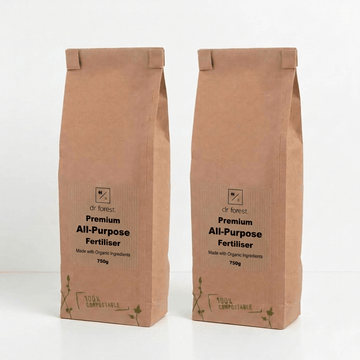
Handcrafted in Stockport
Premium Organic Fertilisers
Granular blends that release over weeks rather than on contact. From £6.25
Shop organic fertilisersSlow-release is not the same as coated
Two quite different things get sold under this label. A coated synthetic granule releases its soluble contents through a polymer shell, at a rate set by moisture and temperature acting on the coating. An organic feed has no coating at all: the nutrients are chemically bound inside proteins, meals and minerals, and soil organisms have to mineralise them.
The practical difference is that the organic version is governed by soil biology. Warm, moist, well-aerated soil releases quickly. Cold or waterlogged soil barely releases at all.
What controls the speed
Soil temperature is the biggest factor. Microbial activity falls away as the ground cools and very nearly halts below about 4°C, which is why a feed applied in early spring sits inert until things warm up. Moisture is next: dry soil has little microbial activity, which is why every rate says to apply to moist soil and water in.
Soil texture matters more than most people expect. Nitrogen mineralises at measurably different rates in sandy and clay soils given identical material, so the same product does not behave identically in two gardens.
What that means in practice
Feed before the plant needs it rather than when it already looks hungry. Apply to moist soil. Do not reapply because nothing has happened after ten days, because nothing was going to. And do not expect a granular feed to do anything useful in winter.
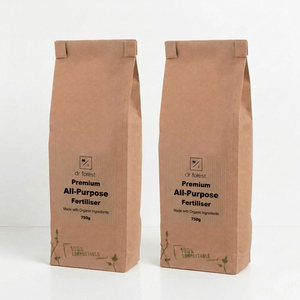
From the Dr Forest range
Premium Organic Fertilisers
Granular blends built to release over six to eight weeks, with the full ingredient list and the rate on every bag.
Releases over 6 to 8 weeks · Low scorch risk · Every ingredient named
Browse the organic fertiliser rangeMore organic fertiliser questions
How long does organic fertiliser take to work?How often should you apply organic fertiliser?What is organic fertiliser?Sources
- Cassity-Duffey, K. et al. (2020). Nitrogen mineralization from organic materials and fertilizers: predicting N release. Soil Science Society of America Journal 84(2), 522–533. doi.org
- Cassity-Duffey, K. et al. (2020). Effect of soil texture on nitrogen mineralization from organic fertilizers in four common southeastern soils. Soil Science Society of America Journal 84(2), 534–542. doi.org
- Geisseler, D. et al. (2021). Nitrogen mineralization from organic fertilizers and composts: literature survey and model fitting. Journal of Environmental Quality 50(6), 1325–1338. doi.org
Soil notes
Get the evidence, not the marketing
Occasional notes from Stockport on feeding, soil structure and what the research actually supports, including the things that turn out not to work.
No spam. Unsubscribe in one click. See our privacy notice.