The complete Dr Forest organic range in one place — finished crop-specific blends alongside the single-ingredient fertilisers and minerals we build our formulations around.
-
Organic All Purpose Fertiliser 4-4-4 | Plant Food for Veg, Fruit & Flowers
Regular price From £12.00Regular price -
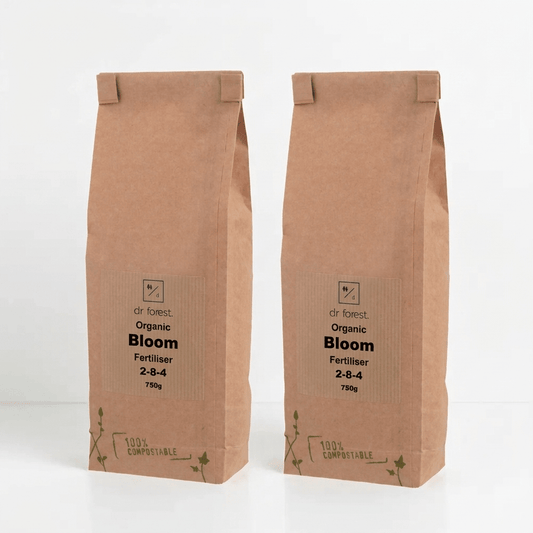
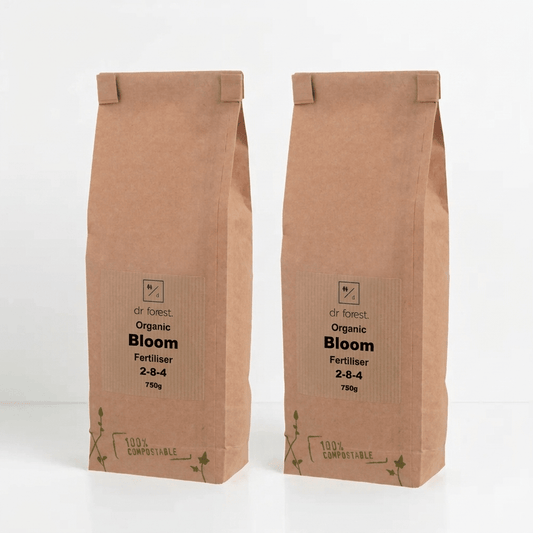
Organic Bloom Fertiliser 2-8-4 | High Phosphorus Flower Feed
Regular price From £12.00Regular price -
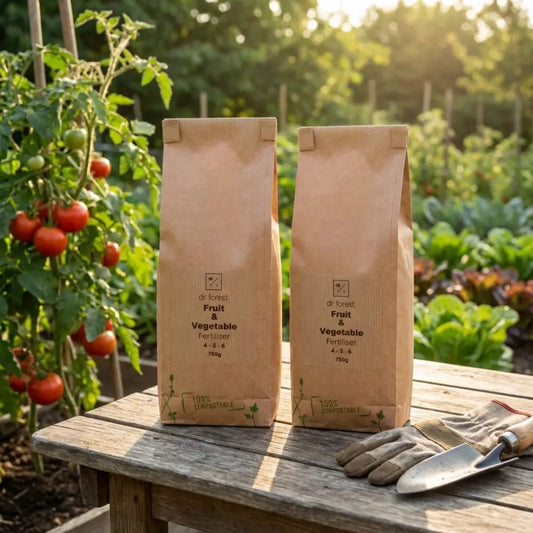
Fruit & Vegetable Fertiliser (Veg Feed) 4-5-6
Regular price From £11.50Regular price -
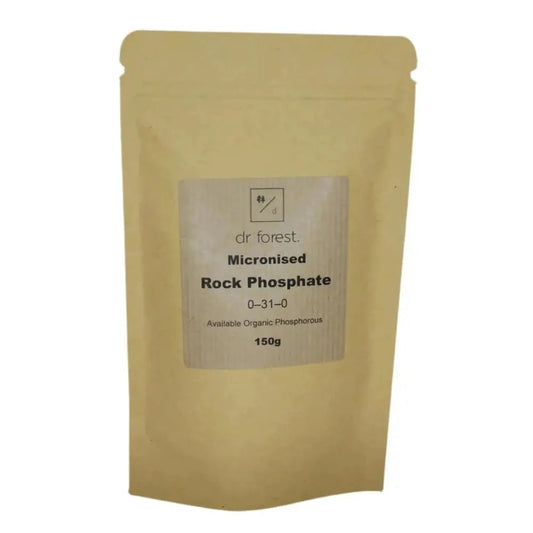
Rock Phosphate Fertiliser | 31% P₂O₅, 49% CaO, Micronised
Regular price From £6.99Regular price -
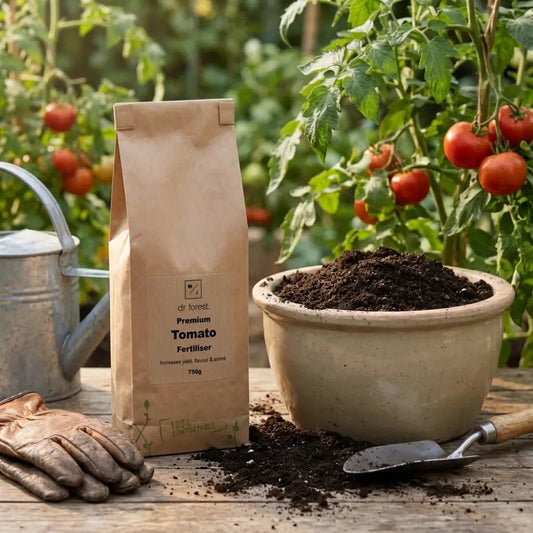
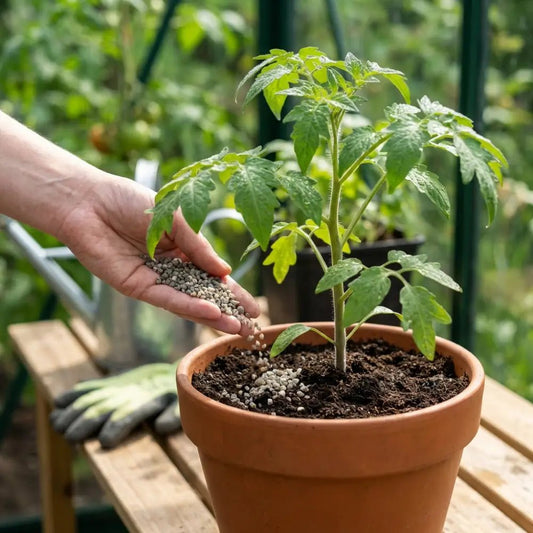
Organic Tomato Feed 3-4-6
Regular price From £11.50Regular price -
High Potash Fertiliser | Sulphate of Potash 50% K₂O
Regular price From £6.25Regular price -
Polyhalite Fertiliser | 4-in-1 Mineral (K, Ca, Mg, S)
Regular price From £10.49Regular price -
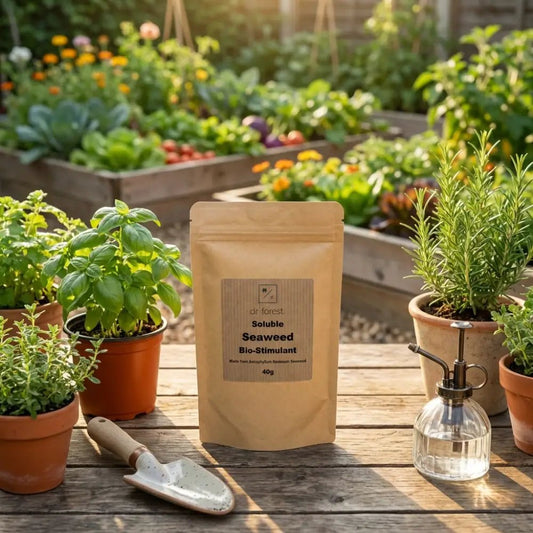
Seaweed Extract Powder | Soluble Organic Fertiliser
Regular price From £6.50Regular price -
Alfalfa Meal Pellets | Organic Plant Feed
Regular price From £12.00Regular price -
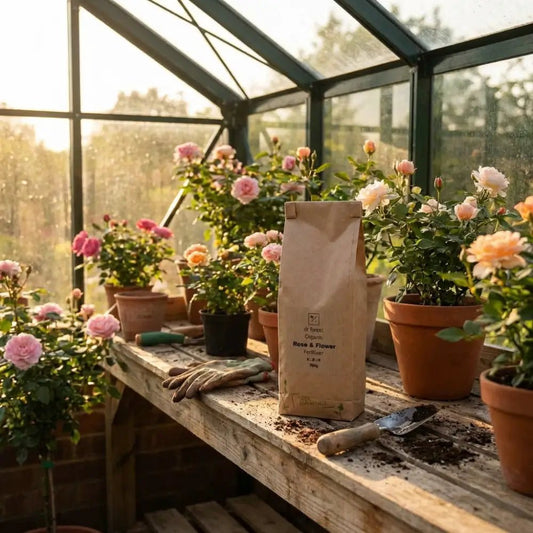
Organic Rose Feed 5-3-5
Regular price From £11.50Regular price -
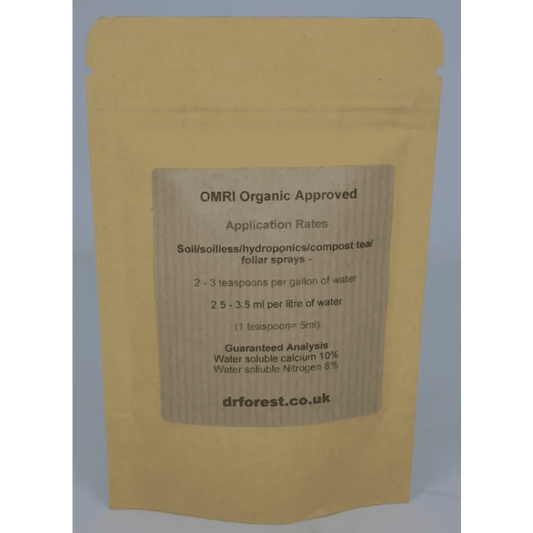
Amino Chelated Calcium | 100% Soluble
Regular price From £7.00Regular price -
Organic Nitrogen Fertiliser | 13% N Plant-Based | High-Nitrogen Plant Feed | Dr Forest
Regular price From £12.99Regular price -
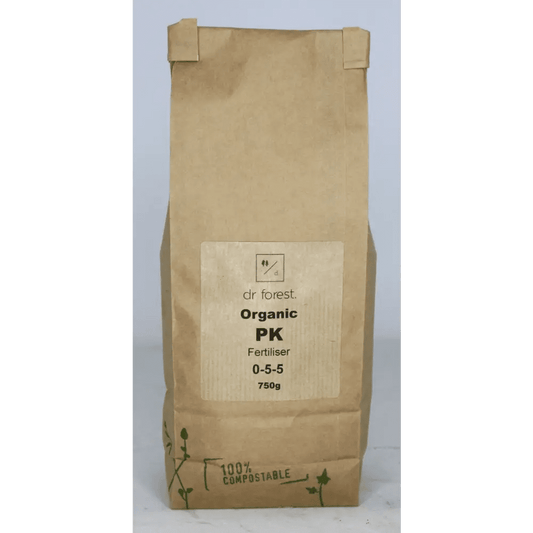
PK Fertiliser 0-5-5 + Calcium | Organic
Regular price From £13.99Regular price -
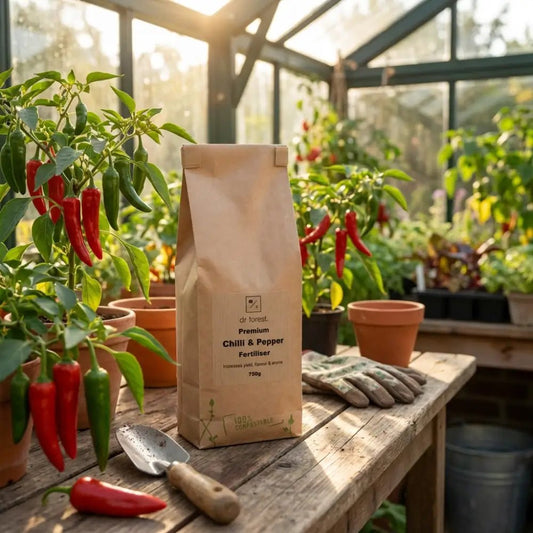
Chilli & Pepper Fertiliser | Organic Feed
Regular price From £11.50Regular price -
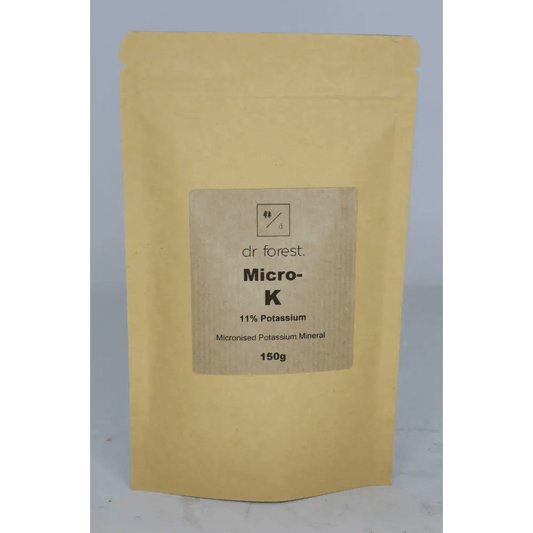
Potassium Rich Fertiliser 11% K₂O | Organic Potassium Plant Food
Regular price From £6.99Regular price -
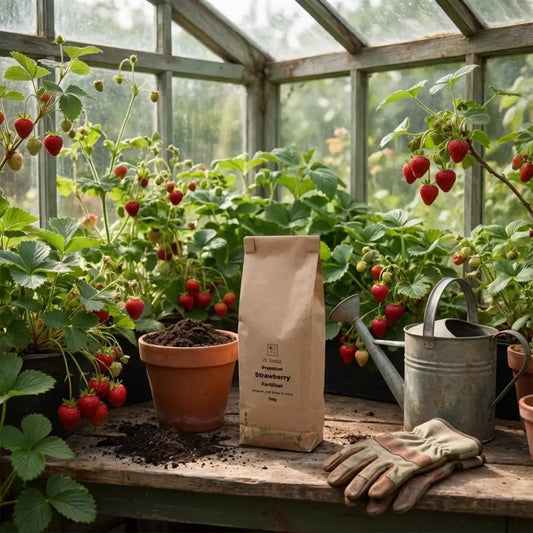
Strawberry Feed | High Potash Plant Food
Regular price From £11.50Regular price -
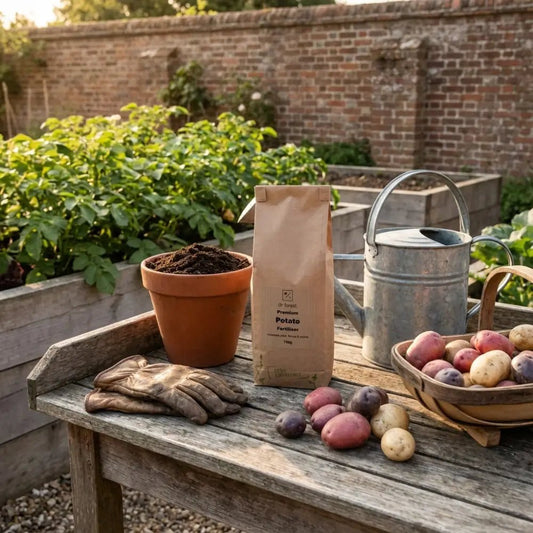
Organic Potato Fertiliser | Slow Release Feed
Regular price From £11.50Regular price -
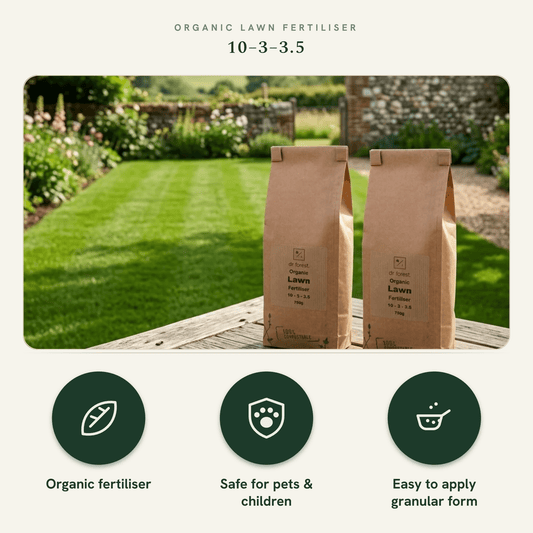
Organic Lawn Fertiliser 10-3-3.5 | High Nitrogen Grass Feed | Dr Forest
Regular price From £12.65Regular price -
Kieserite | 25% MgO | Organic Magnesium Fertiliser
Regular price From £10.49Regular price -
Granulated Gypsum | Clay Soil Conditioner & Calcium Sulphur Feed
Regular price From £10.49Regular price -
All Purpose, Bloom & Mineral Mix Trio
Regular price £31.95Regular price£35.99Sale price £31.95Sale -
All Purpose & Bloom Feed Pair
Regular price £21.50Regular price£24.00Sale price £21.50Sale





















Organic fertiliser: two ways to feed a garden
The whole range in one place: finished crop blends alongside the single-ingredient fertilisers and minerals the blends are built from. Pick a blend and let one bag cover a crop for the season, or pick the individual nutrients and build the programme yourself.
All of it is organic fertiliser in the plain sense: plant nutrients from named plant and mineral sources, with the analysis printed on the bag rather than hidden behind a wording like "organic base". Some behaves like a natural plant food you scatter and leave alone; the rest is a set of organic mineral fertilisers you dose one element at a time. If you have been comparing organic fertilisers and finding the same three bags everywhere, this is the alternative.
The crop blends
Each of these crop-specific fertilisers is tuned to how a single crop actually feeds across a season, not to a generic NPK ratio. All are hand-blended in small batches in Stockport and packed in compostable paper.
- Tomato Fertiliser 3-4-6: high potassium with calcium, for fruit set, flavour and the steady calcium supply that keeps blossom end rot away.
- Rose Fertiliser 5-3-5: built around repeat flowering, depth of colour and fragrance.
- Chilli & Pepper Fertiliser: aimed at flavour, aroma and heat, not just fruit count.
- Strawberry Fertiliser: high potash to support sugars and aroma in the fruit.
- Potato Fertiliser: slow-release feeding across tuber bulking.
- Fruit & Vegetable Fertiliser 4-5-6: one bag for a mixed bed or allotment.
- All Purpose 4-4-4: balanced, for veg, flowers, shrubs and trees.
- Bloom 2-8-4: high phosphorus, for the flowering and fruiting stage.
- Lawn Fertiliser 10-3-3.5: high nitrogen for grass, gentle enough not to scorch.
The single ingredients
The same inputs used in the blends, offered straight, for correcting one thing at a time.
- Potassium and multi-minerals: Yorkshire polyhalite supplies potassium, calcium, magnesium and sulphur in a single granule; sulphate of potash is chloride-free 50% K₂O. If you are choosing between them, this guide walks through when each one is the right call. Also micronised potassium for fast correction.
- Phosphorus: micronised rock phosphate for slow-release phosphorus and calcium, and PK with calcium and micronutrients for the fruiting stage.
- Nitrogen: Organic Nitrogen Fertiliser for leafy growth and alfalfa meal pellets, which are organically grown and carry triacontanol alongside their nitrogen. Why that matters: the organic fertiliser with a built-in growth hormone.
- Calcium and magnesium: amino-chelated calcium for fast uptake, kieserite, and granulated gypsum for calcium and sulphur without a pH shift, which also opens the structure of clay and so sits alongside the rest of the soil conditioners.
- Biostimulant: soluble seaweed extract, which layers on top of any of the above.
Choosing a fertiliser by nutrient
Most gardeners arrive knowing the symptom rather than the element. This is the short version of what the main plant nutrients do and which mineral fertiliser to reach for.
Nitrogen fertiliser
Nitrogen drives leaf and stem: a shortage shows as pale, undersized older leaves, an excess as soft growth and little fruit. The nitrogen fertiliser options here are the Organic Nitrogen Fertiliser and the alfalfa meal pellets above; the full set, liquid included, is in Nitrogen Fertilisers. High nitrogen fertilisers suit lawns, leafy greens and anything you cut and come again.
Potash and potassium
Potassium, still called potash, governs flowering, fruiting, sugars and water regulation, so a high potash fertiliser is the standard answer for tomatoes, strawberries and chillies from midsummer. Sulphate of potash is the concentrated route; polyhalite is gentler, carrying potassium with calcium, magnesium and sulphur; micronised potassium acts quickest. All of them are compared in Potash & Potassium Fertilisers.
Phosphorus fertiliser and PK
Phosphorus matters at two moments: root establishment and flower initiation. Micronised rock phosphate is the slow form, releasing across seasons rather than weeks, and the options are compared in Phosphorus Fertilisers. A PK fertiliser is the faster route through the fruiting stage, and Bloom 2-8-4 is the blended version of the same idea. It is easy to over-apply and slow to leave the soil, so be conservative.
Magnesium fertiliser
Magnesium sits at the centre of the chlorophyll molecule, which is why a shortage reads as yellowing between the veins of older leaves while the veins stay green. Kieserite is the granular magnesium fertiliser here. Magnesium leaches from light or frequently watered ground, and tomatoes in containers run short of it most often; magnesium deficiency in tomato plants covers what it looks like and how to put it right.
Slow release fertiliser, and why the range is built this way
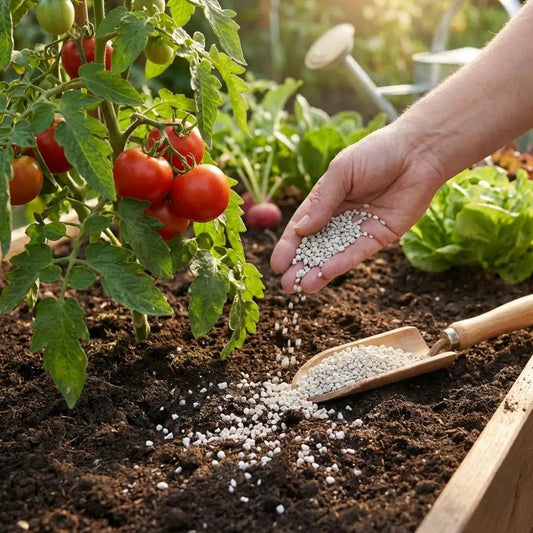
A slow release fertiliser feeds by breaking down in the soil rather than dissolving on contact, at a rate set by moisture, temperature and soil biology. The plant is fed roughly when it is growing rather than all at once on the day you applied it: fewer applications, no flush of soft growth, no salt accumulating in a container. The trade-off, stated plainly, is that it will not rescue a plant short of something this week. That is what the liquid feeds are for.
Fertiliser for growing organic food
Most of this range is bought for food: tomatoes, potatoes, strawberries, beans, an allotment bed with six things in it. Every input is named, plant or mineral in origin, and nothing synthetic goes onto ground you will eat from.
Organic fertiliser UK: made by the people who sell it
Dr Forest blends the crop feeds and packs everything on this page in Stockport, in batches small enough that each carries its own analysis. We are the manufacturer, not a reseller, so the ingredient list on the label is the ingredient list in the bag.
What runs through all of it
- Slow release, no spikes. Granular feeds break down gradually across the season. No surge, no root burn, no salt building up in the pot.
- It feeds the soil as well as the plant. Organic ingredients give the bacteria, fungi and worms something to work on, which is what builds fertility that lasts past this season.
- Every ingredient named. No "organic base" hiding on the label.
- Compostable packaging on every blend.
- Safe around children, pets, bees and birds. No synthetic chemicals.
Where to use it
Pots, grow bags, raised beds, allotments, no-dig beds and living soil. Rates and frequencies are on each product page. New to organic feeding? Start here. Working out quantities for liquid feeds? Use the liquid fertiliser calculator.
If you would rather shop by crop, start with Tomatoes & Edibles, Vegetables & Allotment, Fruit Trees & Soft Fruit or Rose & Flower Fertilisers. For a programme built only from plant and mineral inputs, the Vegan Fertiliser collection lists exactly those products.
Common questions
Blend or single ingredient: which should I buy?
A blend if you want one bag to cover a crop for the season. Single ingredients if you have a specific deficiency to fix, or you are building your own programme and want to control each element. If you are unsure, start with a blend.
Can I use these in pots and grow bags?
Yes, all of it. Pots, grow bags, raised beds, allotments and open ground.
How is this different from a supermarket organic feed?
Two things. The blends are multi-input, so a single bag carries N, P and K plus calcium, magnesium, sulphur and a full trace element set, rather than NPK alone. And every ingredient is named on the label. For a worked comparison against the feeds most people already own, see five UK tomato feeds compared.
Are they safe around children, pets and bees?
Yes. Made with organic ingredients, with no synthetic chemicals, plant protection products or harmful additives.
How long does a bag last?
It depends on the crop and the area, and the rate is on each product page. As a rough guide, a 1.5kg bag of a crop blend covers a season for a small greenhouse or a raised bed.
When in the year should I apply?
Granular blends generally go on as growth starts and the soil warms; single minerals when a soil test or the plant tells you something is short. Rates are on every product page, and how often to apply organic fertiliser goes into the timing in more detail.
Shop by ingredient.

Yorkshire polyhalite

Liquid gypsum

Humic acid

Mycorrhizal fungi

Fulvic acid

Scottish seaweed

Sulphate of potash
