How long does organic fertiliser take to work?
Granular feeds usually begin in two to six weeks and carry on for six to eight. Liquids act in one to two weeks. Everything slows sharply as the soil cools and nearly stops below about 4°C.
Looking for the full answer? See our organic fertiliser FAQ. If you only need one bag, start with All Purpose 4-4-4. To browse the range, open organic fertilisers.
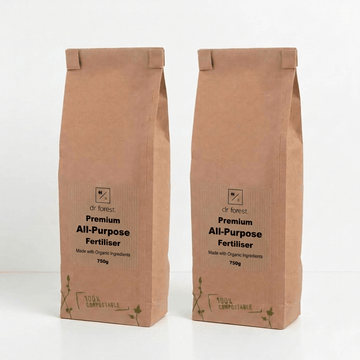
Handcrafted in Stockport
Premium Organic Fertilisers
Granular blends feeding across six to eight weeks. From £6.25
Shop organic fertilisersHow long each type takes
| Type | Starts working | Keeps feeding |
|---|---|---|
| Dry granular meal or blend | 2 to 6 weeks | 6 to 8 weeks |
| Concentrated protein extract | 7 to 10 days | 3 to 4 weeks |
| Liquid or steeped feed | 1 to 2 weeks | 2 to 3 weeks |
| Compost or well-rotted manure | Months | A season and beyond |
| Soluble synthetic, for comparison | Days | 1 to 2 weeks |
Why the range is so wide
Because release is biological, not chemical. The same bag applied to warm, moist, well-structured soil in June and to cold, wet soil in March will behave completely differently. Soil texture matters too: nitrogen mineralises at different rates in sandy and clay soils given the same material.
The figures above are what to expect in a normal British growing season, roughly April to September. Outside that window, assume the slow end or nothing at all.
What to do while you wait
Feed ahead of demand rather than in response to it. Work a granular feed in a few weeks before a crop's peak growth, not on the day it starts looking pale.
If a plant genuinely needs help now, a liquid feed is the right tool. Steeped comfrey, nettle or seaweed will act within a week or two, which is not instant but is a good deal faster than a granule.
Do not double up. The commonest mistake is applying again after two weeks because nothing visible has happened. Nothing was going to. Reapplying at that point just doubles the eventual dose.
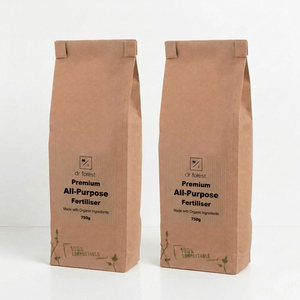
From the Dr Forest range
Premium Organic Fertilisers
Granular blends that start within a few weeks and feed on for six to eight, so one application covers a good stretch of the season.
Feeds for 6 to 8 weeks · Low scorch risk · Published rates
Browse the organic fertiliser rangeMore organic fertiliser questions
What is slow-release organic fertiliser?How often should you apply organic fertiliser?What are the advantages and disadvantages of organic fertiliser?Sources
- Cassity-Duffey, K. et al. (2020). Nitrogen mineralization from organic materials and fertilizers: predicting N release. Soil Science Society of America Journal 84(2), 522–533. doi.org
- Cassity-Duffey, K. et al. (2020). Effect of soil texture on nitrogen mineralization from organic fertilizers in four common southeastern soils. Soil Science Society of America Journal 84(2), 534–542. doi.org
- Geisseler, D. et al. (2021). Nitrogen mineralization from organic fertilizers and composts: literature survey and model fitting. Journal of Environmental Quality 50(6), 1325–1338. doi.org
Soil notes
Get the evidence, not the marketing
Occasional notes from Stockport on feeding, soil structure and what the research actually supports, including the things that turn out not to work.
No spam. Unsubscribe in one click. See our privacy notice.