

Fertiliser
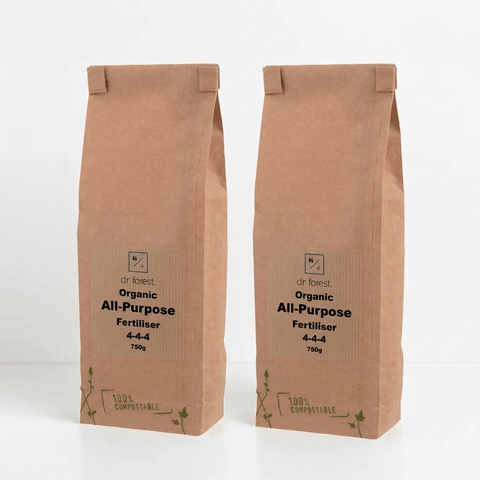
All Purpose Fertiliser 4-4-4
True all-purpose 4-4-4 for veg, fruit, flowers and containers.
from £12.00
Your basket is empty
Not sure where to start? These are our three best sellers.
 Organic All Purpose Fertiliser 4-4-4from £12.00
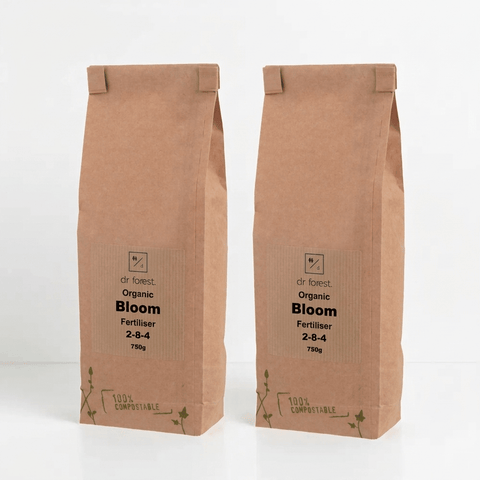
 Bloom Fertiliser 2-8-4from £12.00
 Mycorrhizal Fungi Powderfrom £6.99
Have an account?
Log in to check out faster.
Your basket
Customer highlight
I’ve literally written a book about these guys products! Every single thing I’ve tried is amazing and this one is no different!! I use as a folia spray and a soil drench. The L-amino is the amino u want to have and the fulvic/humic is great too stop nutritiant lock out. As it holds ions locking together but lose enough it can be used:) so if you’re feeding heavy it’s a must. It does have a smell but it doesn’t last for long. I wouldn’t say it’s an unpleasant smell. Like fermenting smell
Editorial highlight from marketplace and store reviews — separate from the full review list below.
Quicker green-up and better recovery after frost, drought or heat, from a spray of ready-made amino acids. Plants normally build every amino acid themselves from nitrate or ammonium. Spraying the finished amino acids on the leaf hands them the parts ready-made, and the 5.78% nitrogen adds a small, fast top-up.
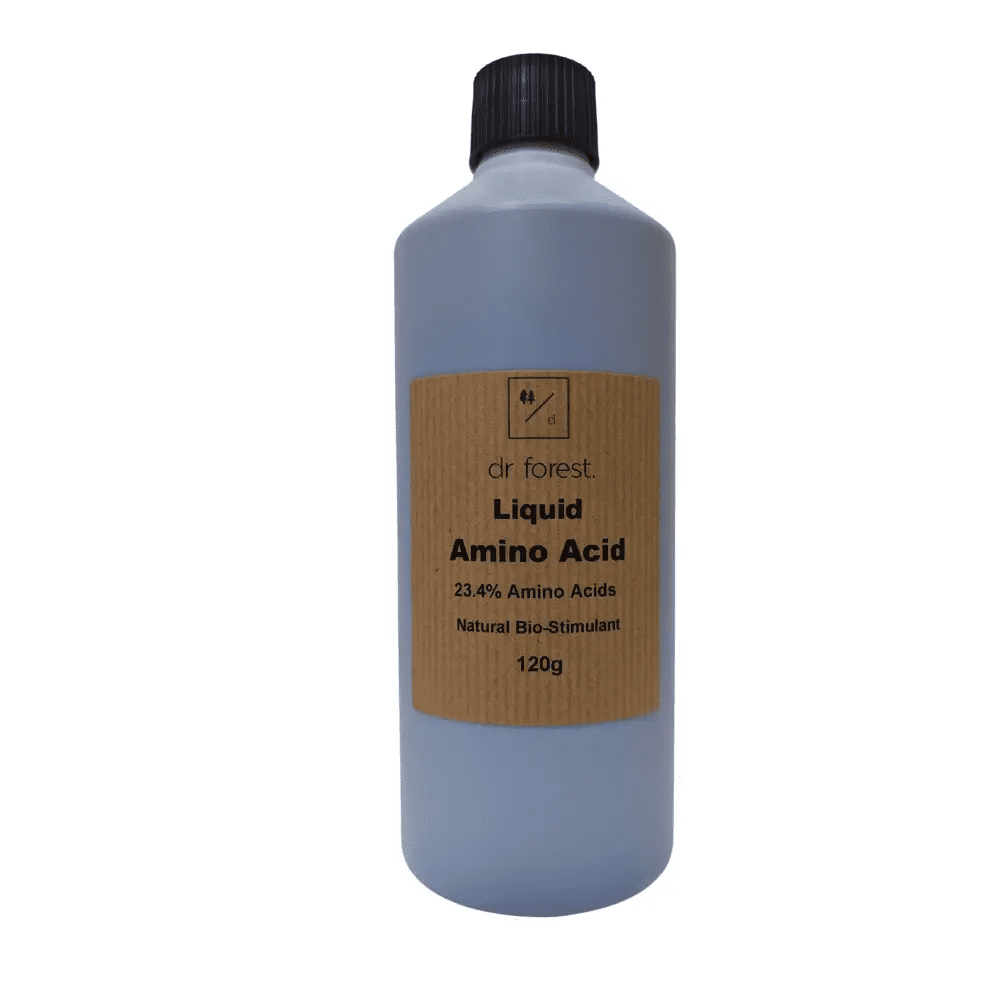
The liquid carries 40% total amino acids (400 g/L), 28.27% free amino acids (282.7 g/L) that a leaf can take up as they are, and 5.78% nitrogen. The amino acids come from plant protein broken down by enzymes, which keeps them in the form a plant can use, at pH 4.5–5.5 for foliar work. Plant-based, packed in Stockport.
Shake, measure 3 ml per litre and spray every 10–14 days on anything with leaves, or 4 ml per litre after a stress event. Keep a base fertiliser in place for nitrogen, and keep watering: it works alongside both. For drenches, seed soaks and fertigation, use the Organic Amino Acid Fertiliser powder; the two are compared below.
Short version: liquid for the sprayer, powder for everything else. The longer argument for amino acids, and which type to buy, is in Amino acid biostimulants: what actually works.
Bottled and labelled in small batches in Stockport. A plant-based, vegan-friendly biostimulant with the amino acid content printed on the label. Part of the Dr Forest biostimulant range.
Proteins are chains of amino acids. Cut a plant protein back into its units and you have a protein hydrolysate: a mix of free amino acids and short peptides. How it is cut matters. Colla et al. (2015, Scientia Horticulturae) note that acid hydrolysis at high temperature partly or wholly destroys tryptophan, cysteine, serine and threonine, and converts many other amino acids from the L-form to the D-form, which loses its biological activity. Enzymatic hydrolysis runs below 60 °C and keeps a higher proportion of L-amino acids (Colla et al., 2017, Frontiers in Plant Science). This product comes from plant protein, broken down the enzymatic way.
| Analysis | Value | Note |
|---|---|---|
| Total amino acids | 40% (400 g/L) | Free amino acids plus short peptides |
| Free amino acids | 28.27% (282.7 g/L) | Ready for uptake without further breakdown |
| Nitrogen (N) | 5.78% | Carried in the amino acids, organic form |
| pH | 4.5–5.5 | Mildly acidic; suits foliar application |
| Source | Plant protein | Enzymatic hydrolysis; L-amino acids; no animal by-products |
Du Jardin (2015, Scientia Horticulturae) defines a plant biostimulant as any substance or microorganism applied to plants to enhance nutrition efficiency, abiotic stress tolerance and/or crop quality, regardless of its nutrient content. By that definition the amino acids are the biostimulant and the 5.78% nitrogen is a modest extra.
Ertani et al. (2009, Journal of Plant Nutrition and Soil Science) applied protein hydrolysates to maize seedlings and measured more root and leaf growth together with higher nitrate reductase and glutamine synthetase activity, two of the enzymes that turn nitrate into amino acids. The authors read that as a stimulus to nitrate assimilation.
Proline accumulates in many plant species under environmental stress and helps hold cellular redox balance and energy status steady (Szabados and Savouré, 2010, Trends in Plant Science). Colla et al. (2017) report maize treated with a protein hydrolysate under salt stress carrying higher potassium and proline than untreated plants, and lettuce keeping higher photosystem II activity at 25 mM NaCl.
Fernández and Eichert (2009, Critical Reviews in Plant Sciences) reviewed foliar uptake: stomata can significantly increase it, and humidity, temperature and light all affect how well a solute gets in, but the mechanisms are not fully understood. That is why the directions say early or late, in humid conditions, on both leaf surfaces.
Tryptophan is the starting material for the main auxin, indole-3-acetic acid, by several tryptophan-dependent routes (Mano and Nemoto, 2012, Journal of Experimental Botany). Ertani et al. (2009) found gibberellin-like and weak auxin-like activity in the hydrolysates they tested. Whether a foliar spray shifts hormone levels inside the plant is less settled, so treat this as a minor contributor at most.
Colla et al. (2017) describe a rooting trial in which tomato cuttings treated with a protein hydrolysate grew 35% more root dry weight, 24% more root length and 26% more root surface area than untreated cuttings. The same review notes that amino acids are the second most abundant compound plants release from their roots, and that over 80% of rhizosphere microbes can use them, which is why a drench feeds the soil biology as well as the plant.
Li, Van Gerrewey and Geelen (2022, Frontiers in Plant Science) pooled 1,087 paired observations from 180 open-field studies. Biostimulants raised yield by 17.9% on average (CI 16.7–19.0%); protein hydrolysates sat in a middle group of four categories at 14.8–17.1%, and foliar applications averaged about 17%. Effects were largest on poor soils and where water was scarce. In soybean, Teixeira et al. (2018, Frontiers in Plant Science) raised field yield by at least 22% by treating the seed with single amino acids or a mix of four; sprayed on the leaves alone, only glutamate raised yield. These figures describe the literature; results on your plot will vary.
Rates are in millilitres per litre of water: 3 ml/L is the everyday rate, so 15 ml (three 5 ml medicine spoons) makes a 5 litre sprayer. A syringe is more accurate for the smaller amounts.
This is a foliar specialist: the liquid format, pH 4.5–5.5, and high free amino acid content suit leaf uptake. It also works as a soil drench; foliar spray is the main method. Shake well before use. Apply in morning or evening when the sun is not intense, to minimise the risk of leaf scorch and maximise stomatal uptake.
Shake well. Mix 3 ml per litre of water and apply as a fine foliar spray to both upper and lower leaf surfaces. Apply in the early morning or late evening when stomata are open and evaporation is minimal. This is the standard maintenance rate for routine biostimulant application throughout the growing season, from planting through harvest. Suitable for all plants: vegetables, fruit, herbs, roses, ornamentals, lawns, shrubs, and trees.
Apply at 4 ml/L as a recovery spray immediately after a stress event: frost damage, hail damage, herbicide stress, drought recovery, or heat shock. The elevated rate delivers a larger dose of pre-formed amino acids to a plant whose own protein synthesis machinery is impaired. Can also be applied before an anticipated stress event (forecast frost or heatwave).
At 10 ml/L, this rate delivers a concentrated dose of amino acid-form nitrogen that the leaf takes up directly. Use when you see nitrogen deficiency symptoms: pale green or yellowing lower leaves, reduced growth rate, stunted development. The amino acid nitrogen is taken up through the leaf as free amino acids, so it is available without first being converted from nitrate or urea. Use it to correct a deficiency, and go back to 3 ml/L once it is resolved. Not sure it is nitrogen? Why are my tomato leaves turning yellow? walks through the look-alikes.
Apply with a sprayer or watering can fitted with a rose. Use it for green-up and as a recovery spray after heavy use, drought, or scalping. Combine with Dr Forest Brix+ for a dual biostimulant foliar programme on lawns.
Foliar is the main method. As a soil drench, apply at 3–5 ml/L and water into the root zone. The amino acids will be absorbed by roots and also feed rhizosphere micro-organisms. If you primarily want a soil-applied amino acid product, the Amino Acid Fertiliser powder (which also contains iron and potassium) is the better choice.
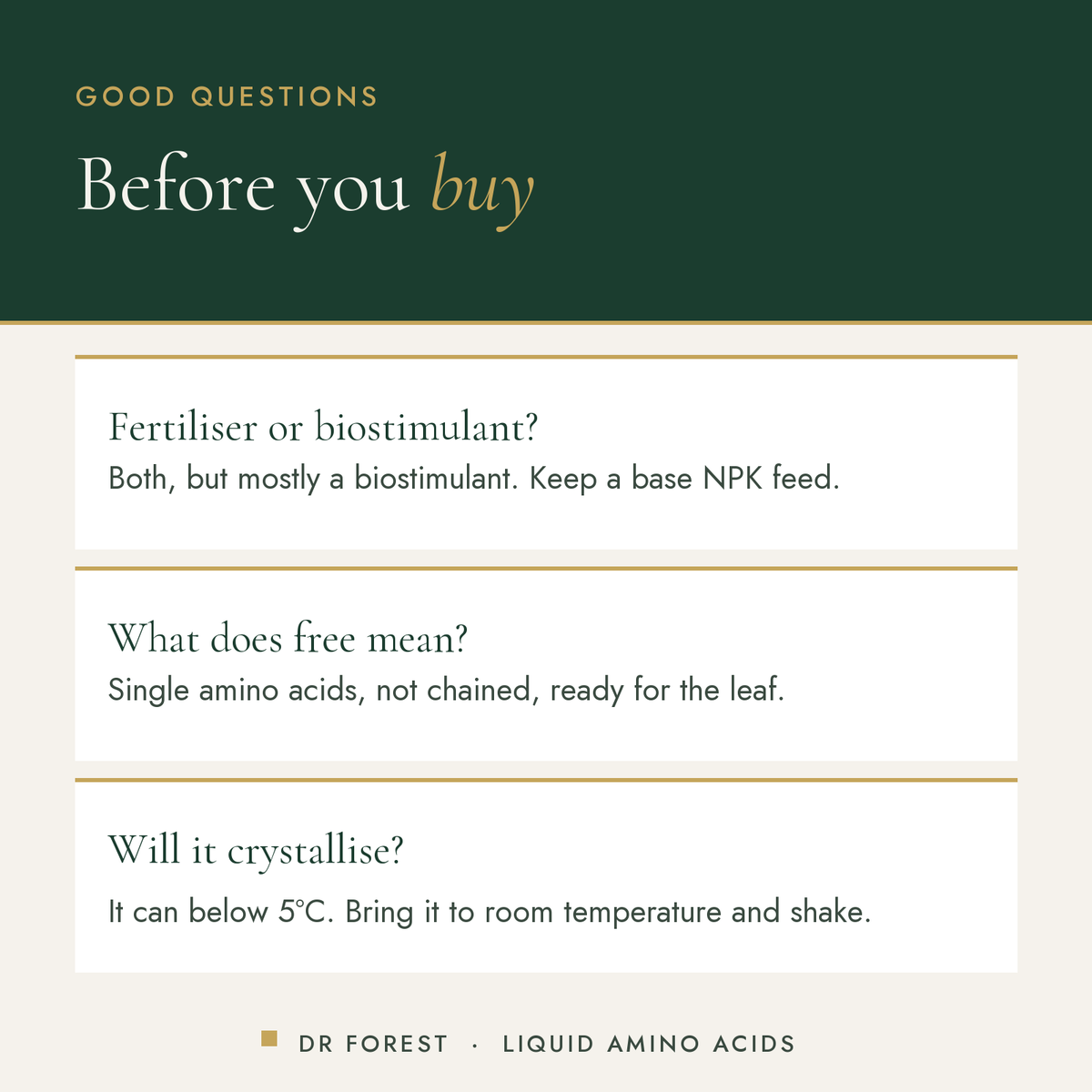
Do not mix with strongly alkaline products. Do a jar test to confirm compatibility with other products before tank mixing. Do not pre-mix or store in diluted form; make fresh each time. Store frost-free in a cool, dark place. At temperatures below 5°C the product may crystallise. Avoid contact with eyes and skin. Keep out of reach of children. If swallowed, seek medical advice. Shelf life approximately 2 years when stored correctly in the original unopened packaging.
Tank-mix with Brix+ for a combined amino acid and growth hormone foliar programme: the amino acids provide the building blocks, the Brix+ triacontanol and cytokinins provide the signals. Add to Seaweed Powder foliar sprays for complementary trace minerals and polysaccharides. Use alongside Wood Vinegar soil drenches on alternate weeks. Feed with Dr Forest granular fertilisers as the base NPK and use this spray on top of that programme.
True all-purpose 4-4-4 for veg, fruit, flowers and containers.
from £12.00
Flowering-stage 2-8-4 — more blooms without a jungle of leaves.
from £12.00