
Fertiliser
Sulphate of Potash | 50% K₂O Organic Potash
50% K2O, concentrated potash for fruit and flower.
from £6.25
Polyhalite is a naturally occurring mineral fertiliser that supplies four macronutrients — potassium, calcium, magnesium and sulphur — from a single Yorkshire crystal. It's mined from beneath the North Yorkshire coast at Boulby — the world's only currently operating commercial polyhalite mine — and arrives in the bag exactly as it left the ground: crushed, screened, granulated. No chemical processing, no synthetic additives. Because it's a sulphate-based potash mineral with virtually zero chloride, it's particularly valuable for chloride-sensitive crops like tomatoes, strawberries, potatoes and salad leaves.
This is the mineral that underpins every Dr Forest crop-specific blend — the primary source of potassium, calcium, magnesium and sulphur across the range, because nothing else delivers all four in slow-release form from a single natural input. Think of it as a multi-nutrient upgrade on sulphate of potash: the same chloride-free potash, plus the calcium, magnesium and sulphur most garden soils also need. Approved for EU organic production under EC 834/2007, with one of the lowest carbon footprints of any commercial fertiliser. Now available as a straight, so you can apply the same mineral directly to your soil.
Every Dr Forest product is blended and packed by hand in small batches at our workshop in Stockport, Greater Manchester. Recyclable packaging throughout. Ingredients chosen for quality, not cost. New to polyhalite? Read our full guide — what is polyhalite and how does it work — linked from the Science tab.
Polyhalite (K₂Ca₂Mg(SO₄)₄·2H₂O) is a hydrated sulphate of potassium, calcium and magnesium. It formed during the Permian period when a vast shallow ocean — the Zechstein Sea — evaporated under hot, arid conditions across what is now northern Europe. As the water retreated, dissolved minerals concentrated into dense crystalline layers and were sealed underground for 260 million years. The world's largest known deposit sits beneath North Yorkshire, estimated at over two billion tonnes.
This polyhalite is extracted from Boulby Mine on the North Yorkshire coast — over 1,200 metres beneath the North Sea. It undergoes no chemical separation or industrial refining. Just mining, crushing, screening and granulation. That minimal processing gives it one of the lowest carbon footprints of any commercially available fertiliser at roughly 0.034 kg CO₂ per kg of product.
Want the full background — how polyhalite formed, how it's mined and how it compares to other potash sources? Read our companion guide, what is polyhalite, on the Dr Forest blog.
| Nutrient | Content | Form |
|---|---|---|
| Potassium (K₂O) | 14% | Sulphate |
| Calcium (CaO) | 17% | Sulphate |
| Magnesium (MgO) | 6% | Sulphate |
| Sulphur (SO₃) | 48% | Sulphate |
All four nutrients are present as sulphates — the form plants absorb directly through the roots. The crystalline structure means these sulphates dissolve at different rates depending on soil moisture and temperature, creating a natural slow-release effect that pre-mixed soluble salts cannot replicate.
Transport and leaching of Ca, Mg, K and S after polyhalite application is significantly lower than after equivalent soluble salts, because the sulphate ions in polyhalite adsorb more strongly to soil particles. Trials consistently show a higher residual effect into the following season — the mineral keeps feeding subsequent crops, which improves both economics and soil biology over time. In container growing and raised beds, where leaching is a constant problem, this extended availability matters.
University of Nottingham research confirmed that 50–60% of the sulphur in polyhalite is immediately plant-available, with the remainder releasing gradually across the growing season. This staggered release pattern matches the way plants actually take up nutrients — demand rises through vegetative growth, flowering and fruiting. A single application at planting can supply nutrients for months rather than days.
A landmark meta-analysis published in Agronomy Journal (2025) combined data from 921 replicated field trials across 47 crops in 33 countries, conducted between 2014 and 2023. Polyhalite raised yields by 3.8–16.3% over NP controls. Crops with the strongest responses were potato, peanut, onion and oilseeds — all of which have high calcium and sulphur demand.
Most calcium amendments — lime, dolomite — raise soil pH significantly, which makes them unsuitable for acid-loving plants or already-alkaline soils. Polyhalite delivers calcium as calcium sulphate (gypsum form), which is pH-neutral. So you can correct calcium deficiency — preventing blossom end rot in tomatoes, bitter pit in apples, tip burn in lettuce — without disturbing your soil pH at all.
Field trials show polyhalite application positively influences soil microbial biomass carbon and FDA hydrolase activity — both indicators of a biologically active, healthy soil. The calcium and sulphur content improve cation exchange capacity and aggregate stability, creating better habitat for beneficial soil organisms. On wheat, treatments using 100% K from polyhalite produced the highest soil organic carbon and microbial activity compared to conventional fertiliser programmes.
Polyhalite contains no nitrogen and no phosphorus. It supplies potassium, calcium, magnesium and sulphur. For a complete feeding programme, use it alongside a nitrogen and phosphorus source — a Dr Forest crop-specific blend (Tomato, Rose & Flower, Fruit & Veg) or an all-purpose NPK fertiliser.
Mix thoroughly into compost or potting soil before planting. The slow-release profile gives baseline calcium, magnesium, potassium and sulphur for the first 8–12 weeks. Ideal for all container crops.
Scatter granules evenly across the surface and water in. The slow-release profile means less frequent applications than with soluble alternatives. Particularly valuable for tomatoes, peppers and other heavy-feeding fruiting crops.
Broadcast evenly across the soil surface and water in well. Lower rate for general maintenance, higher rate for heavy feeders, new plantings or clay improvement. Apply at planting and as a mid-season top-up.
Apply and water in. Potassium hardens turf for winter, calcium improves soil structure, sulphur supports colour and density. Polyhalite is the mineral used in professional turf nutrition programmes at the highest level.
The calcium in polyhalite displaces sodium on clay particles, improving aggregate structure, drainage and workability. Unlike lime, it doesn't alter pH — so it's safe on all soil types. Work into the top 10–15cm where you can.
Polyhalite is the natural partner for any nitrogen-led feed. Pair with Dr Forest All-Purpose 6-6-6 for general gardens, the crop-specific blends (Tomato, Rose & Flower, Potato) for targeted feeding, or Seaweed Powder for biostimulant activity. The calcium content also pairs well with Humic Acid Granules for long-term soil structure building.
50% K2O, concentrated potash for fruit and flower.
from £6.25
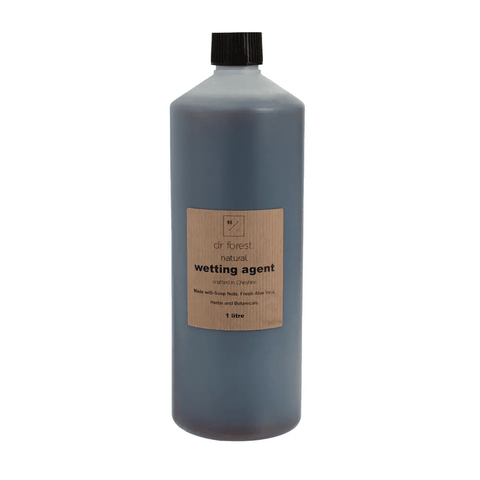
Helps water and feed soak in evenly, with less run-off.
from £14.00