What is the best organic fertiliser?
There is no single best, and any brand telling you otherwise is selling. There is a best for each job, and the list below is short enough to work through in a minute.
Looking for the full answer? See our organic fertiliser FAQ. If you only need one bag, start with All Purpose 4-4-4. To browse the range, open organic fertilisers.
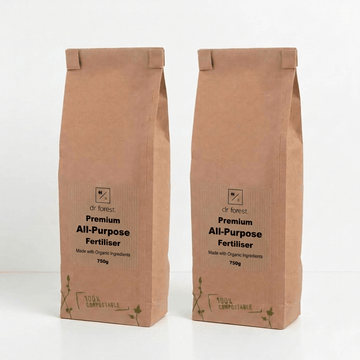
Handcrafted in Stockport
Premium Organic Fertilisers
Blends for each job, and the single ingredients behind them. From £6.25
Shop organic fertilisersBest for what, exactly
The question has no answer in the abstract, in the same way that there is no best tool in a toolbox. What there is, is a short list of jobs and a sensible answer to each.
| The job | What to reach for | Why |
|---|---|---|
| Building the soil | Garden compost, well-rotted manure | Organic matter in bulk. Nothing bagged competes on this |
| General growth, mixed planting | A balanced blend, around 4-4-4 | No nutrient pushed, hard to overdo |
| Fruiting crops from flowering | A potassium-led blend, around 3-4-6 | Potassium drives fruit set, sugars and quality |
| Lawns and leafy crops | A concentrated nitrogen feed | Leaf and stem run on nitrogen |
| Roses and flowers | Around 5-3-5 | Strong canes plus potassium for bloom |
| Fixing one specific shortage | A single ingredient | More precise than any blend |
If you want one bag and no thinking
A balanced multi-input blend around 4-4-4 is the sensible default. It covers vegetables, flowers, shrubs and trees, it is difficult to overdose, and it carries calcium, magnesium and sulphur alongside the headline three, which most general feeds leave out. Put compost underneath it and you have covered most of what a garden asks for.
If you are growing tomatoes, chillies or strawberries specifically, buy the crop blend instead. The difference between a generic feed and a potassium-led one shows up clearly in fruit.
How to judge a claim of best
Be wary of anything sold as best for everything, of a headline NPK with no ingredient list behind it, and of feeds sold mainly on their living-organism content. A 2025 meta-analysis of commercial mycorrhizal inoculants found they frequently do not deliver what the label promises.
The checks that do work are dull: is every ingredient named, is the rate published for beds and for pots, and does the analysis include more than three numbers.
From the Dr Forest range
Premium Organic Fertilisers
Balanced blends, crop-specific feeds and the single ingredients behind them, with every input named and the rate published on each product page.
23 blends and single ingredients · Every ingredient named · Rates published
Browse the organic fertiliser rangeMore organic fertiliser questions
What is 4-4-4 organic fertiliser?What is the best organic fertiliser for vegetables?Sources
- Royal Horticultural Society. Fertilisers: types and uses. rhs.org.uk
- Koziol, L. et al. (2025). Meta-analysis reveals globally sourced commercial mycorrhizal inoculants fall short. New Phytologist 245(4). doi.org
Soil notes
Get the evidence, not the marketing
Occasional notes from Stockport on feeding, soil structure and what the research actually supports, including the things that turn out not to work.
No spam. Unsubscribe in one click. See our privacy notice.