Wetting Agent
Natural Wetting Agent for Plants | Soap Nuts
Helps water and feed soak in evenly, with less run-off.
from £14.00
Free UK Delivery on Orders Over £40


Dr Forest
Couldn't load pickup availability
Dr Forest customers rate us 4.96/5 · 3,543+ reviews & ratings across Shopify, Amazon, Google, Trustpilot and eBay
This is not a factory product. It is a living fermented fertiliser made by hand in small batches at our workshop in Stockport — minerals, plant extracts, and beneficial microorganisms brewed together over months of anaerobic fermentation. The result is a bloom-stage supplement that delivers phosphorus and potassium for flowering and fruiting alongside active microbial cultures that inoculate the root zone with beneficial bacteria, yeasts, and fungi.
The formula contains zero nitrogen — deliberately. Nitrogen pushes vegetative growth, which is exactly what you do not want during flowering and fruiting. The zero-N design means you can use this product right through late bloom and into harvest without risking unwanted leaf growth, delayed ripening, or diluted fruit sugars. The fermentation process — inspired by the Jadam method — dissolves mineral nutrients into biologically active forms while the EM-1 culture produces vitamins, enzymes, organic acids, and plant growth-promoting compounds. If you are in early flower and want some nitrogen alongside PK, we recommend supplementing with Micro-Amino amino acid chelated micronutrients.
The production is a two-stage fermentation process. Stage one: micronised rock phosphate, sulphate of potash, potassium mineral, aloe vera, humic acid, and filtered water are fermented anaerobically for a minimum of three months at room temperature. This extended fermentation dissolves the rock minerals into biologically active, plant-available forms — the same principle as the Jadam liquid fertiliser (JLF) method. Stage two: organic banana peel, EM-1 culture, molasses, and Supa Cera C powder are added and fermented at 25°C+ for approximately two weeks. The final liquid is strained through a 200-micron sieve and bottled.
It has a strong, distinctive smell — this is completely normal and indicates active biological cultures. The odour dissipates rapidly after dilution and application. If the smell is neutral or absent, the product may have been compromised — contact us for a replacement.
Every batch of this bloom booster is fermented by hand at our workshop in Stockport, Greater Manchester. The aloe vera is grown organically in-house at Dr Forest HQ. No two batches are chemically identical — this is a living product, not a factory formulation. Supplied in recycled plastic bottles.
Conventional liquid fertilisers dissolve mineral salts in water — fast-acting but biologically dead. Fermented fertilisers take a fundamentally different approach: minerals are broken down by microbial activity over weeks or months, producing a complex liquid that contains not just plant-available nutrients but also the living organisms, enzymes, organic acids, and growth-promoting compounds generated during fermentation. The result is a product that feeds both the plant and the soil biology simultaneously.
EM-1 (Effective Microorganisms) is a defined consortium of beneficial microbes developed by Professor Teruo Higa: phototrophic bacteria, lactic acid bacteria, yeasts, actinomycetes, and beneficial fungi. These organisms coexist in a stable culture and produce a range of bioactive compounds during fermentation — organic acids that lower pH and solubilise minerals, enzymes that break down organic matter, antioxidants that protect plant cells, and plant growth-promoting substances including vitamins and hormone-like compounds. Applied to soil, they colonise the rhizosphere and compete with pathogenic organisms for space and resources.
The three-month first-stage fermentation follows the Jadam liquid fertiliser (JLF) principle: rock minerals placed in anaerobic conditions with water and organic acids are slowly dissolved by microbial activity and acid production. Micronised rock phosphate — normally slow to release in soil — is converted into plant-available phosphorus forms through this extended biological processing. The resulting liquid contains phosphorus in organic acid complexes that are immediately accessible to plant roots, rather than the locked-up mineral forms that characterise raw rock phosphate.
Aloe vera contains salicylic acid — the plant hormone that triggers systemic acquired resistance (SAR), the plant equivalent of an immune response. It also contains saponins (natural biosurfactants that improve leaf wetting and soil penetration), polysaccharides (that feed soil microorganisms), and a range of vitamins and amino acids. Used in Korean Natural Farming and other biological agriculture systems, aloe vera extract is a documented plant growth promoter and defence elicitor. The aloe vera in this product is grown organically in-house at Dr Forest HQ in Stockport.
Humic acid is a high-molecular-weight organic compound that chelates mineral cations (keeping them plant-available in the soil solution), increases cell membrane permeability (improving nutrient uptake), and acts as a carbon food source for beneficial soil microorganisms. In this formulation, the humic acid serves dual functions: it helps solubilise the rock minerals during fermentation, and it enhances the biological activity of the finished product when applied to soil.
Potassium governs sugar transport from leaves to fruit, regulates stomatal opening (water management), and activates over 60 enzymes involved in plant metabolism. This formulation delivers potassium from two sources: sulphate of potash (fast-acting, chloride-free) and a potassium-bearing mineral (slow-release). The dual-source approach provides both immediate availability for rapid fruit development and sustained background supply throughout the reproductive phase.
The critical distinction: this product arrives containing active, living microorganisms. Conventional liquid fertilisers are sterile chemical solutions — they feed the plant but do nothing for the soil biology that sustains long-term fertility. A fermented fertiliser inoculates the root zone with beneficial organisms while simultaneously providing mineral nutrition. Each application builds the biological workforce in the soil, improving nutrient cycling, disease suppression, and organic matter breakdown for future seasons.
Bloom Booster is designed to be used alongside your base Dr Forest fertiliser (Tomato, Rose & Flower, Fruit & Veg, etc.) during the flowering and fruiting stage. It does not replace the base feed — it adds phosphorus, potassium, microbes, and biostimulants on top of your existing programme.
Strain through a fine sieve or muslin cloth before adding to a sprayer — although pre-strained through 200 micron, additional straining prevents any residual particles from clogging nozzles. Apply as a fine mist to both leaf surfaces in early morning or late evening. The aloe vera saponins improve leaf wetting.
Dilute and apply directly to the root zone. This is the preferred method for delivering the beneficial microorganisms to the soil. The living EM culture colonises the rhizosphere on contact. No straining required for watering can application.
Begin applications at the first sign of flowering. Continue weekly through fruit set, fruit development, and right up to harvest. Because this formula contains zero nitrogen, there is no risk of pushing unwanted vegetative growth or delaying ripening during late bloom — you can keep applying through the final weeks when nitrogen-containing products would need to be stopped. For early flower when some nitrogen is still beneficial, supplement with Micro-Amino amino acid chelated micronutrients alongside this product.
Use as a bloom-stage supplement alongside Dr Forest Tomato 3-4-6, Rose & Flower 5-3-5, Bloom 2-8-4, or any Dr Forest base fertiliser. Pair with Cal-Mino for chelated calcium during fruit development — the combination of PK from the bloom booster and Ca from Cal-Mino covers the full mineral demand of fruiting. Add Seaweed Powder fortnightly for additional biostimulant activity.

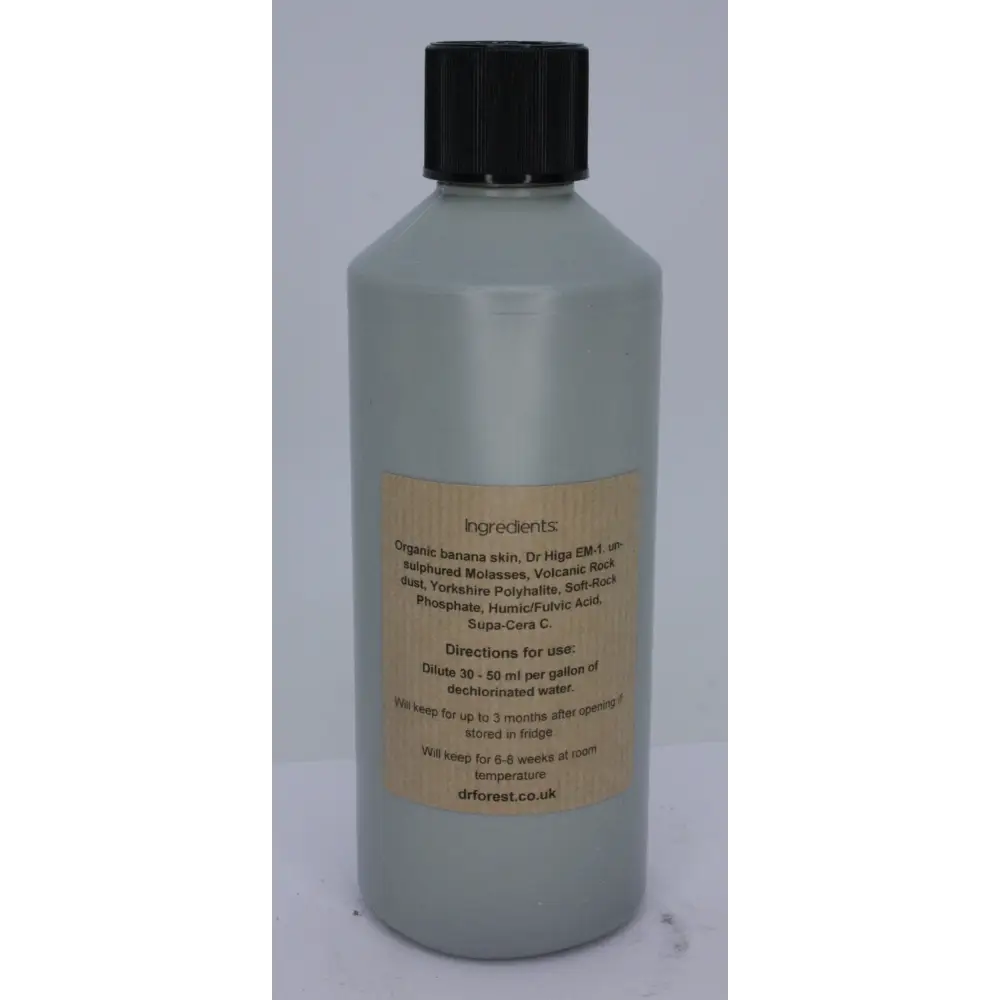

Helps water and feed soak in evenly, with less run-off.
from £14.00

Liquid veg and bloom feeds for the whole season.
from £13.50