


Fertiliser
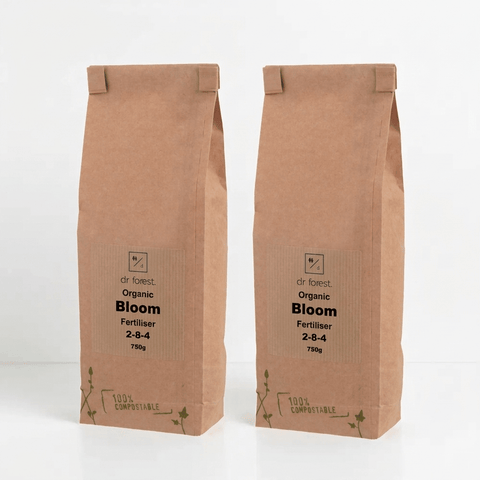
Organic Bloom Fertiliser 2-8-4 | Flower & Fruit Stage Feed
High-phosphorus 2-8-4 for flowering and fruiting.
from £12.00
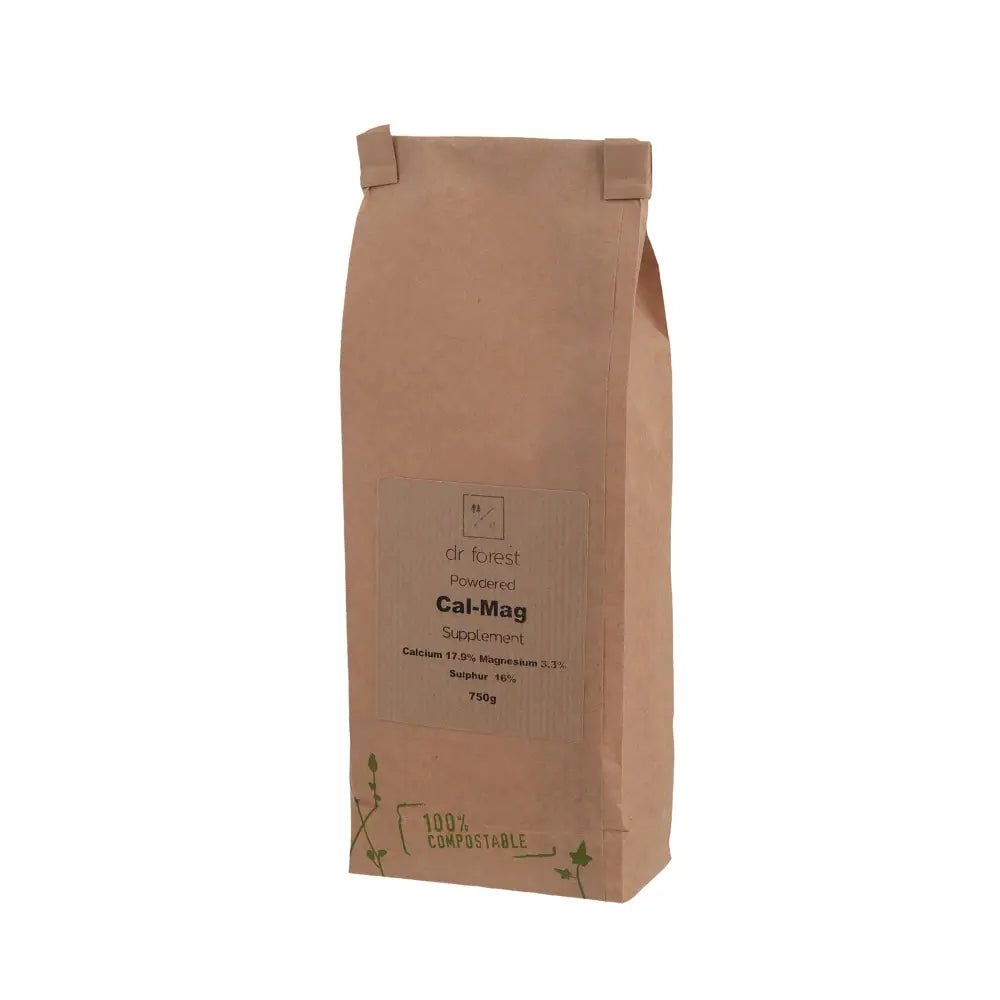
Dr Forest cal-mag powder
Weighing gypsum and Epsom salt yourself
Customer highlight
I have been using different amendments from DR. forest since 2021,I tried everything and this cal mag it's exceptional!
Editorial highlight from marketplace and store reviews — separate from the full review list below.
Dr Forest Cal-Mag is a pH-neutral calcium, magnesium and sulphur feed for plants, built on two naturally mined minerals — gypsum and kieserite — both permitted for use in organic growing. It supplies roughly 16% calcium, 4% magnesium and 18% sulphur in a balanced 4:1 calcium-to-magnesium ratio. Unlike garden lime, it raises calcium without lifting your soil pH, so you can correct a shortage without disturbing a pH you are happy with.
It is a small-batch blend handcrafted in Stockport, designed to sit alongside your Dr Forest fertilisers at 10% of the feed rate, so calcium and magnesium are never the nutrient that runs short. A trace of humic-stabilised boron — calcium's partner element — and a little fulvic acid round it out and help the plant take everything up.
This is a plant and soil product. It is not food-grade, not tested to supplement standards, and contains boron that is not intended for human consumption. If you are looking for a calcium-magnesium supplement to take yourself, this is not it.
Handcrafted in small batches in Stockport.
Four inputs, each doing one job. The two mined minerals carry the calcium, magnesium and sulphur; the boron and fulvic acid are small additions that make those nutrients work harder in the plant.
Calcium sulphate dihydrate, roughly 23% calcium and 18% sulphur. A mined mineral permitted for use in organic growing, and the bulk of the calcium and sulphur in the blend. It dissolves to release calcium without raising soil pH, which is what sets it apart from lime.
Magnesium sulphate monohydrate, roughly 16% magnesium and 22% sulphur. Another mined mineral permitted in organic growing. Because it holds far less water than Epsom salt (one water molecule rather than seven), it carries more magnesium per gram and stores without caking.
Boron fused into a humic-acid complex. Boron is the most easily leached of all the trace elements, so binding it to humic acid keeps it in the root zone and releases it slowly. It works as a calcium synergist — present at roughly 0.1% boron in the finished blend, a trace, deliberately kept small.
A low-molecular-weight biostimulant that complexes calcium and magnesium and helps carry them into the roots and around the plant. A small inclusion that improves the uptake of everything else in the blend.
| Nutrient | Elemental | Oxide form |
|---|---|---|
| Calcium (Ca) | ~16% | ~22% CaO |
| Magnesium (Mg) | ~4% | ~6.6% MgO |
| Sulphur (S) | ~18% | ~45% SO₃ |
| Boron (B) | ~0.1% (trace) | — |
| Ca : Mg ratio | ~4 : 1 | — |
Values are nominal, calculated from the mineral inputs. Confirm against the figures on your product label before quoting them as guaranteed.
Use rainwater or stand tap water for 24 hours where you can. The fulvic acid binds calcium and magnesium from hard tap water before it reaches the plant, so soft water gets the best out of the blend.
If you water it in, treat it as a suspension, not a clear solution. The calcium, magnesium and sulphur dissolve, but the boron is held in a humic form that does not — it settles to the bottom. So stir the powder into your water, leave it to stand about 30 minutes (the kieserite is slow to dissolve), then keep it moving and pour the whole lot onto the soil, sediment and all, so the boron goes down with it. Apply to the root zone only — never through a sprayer or a fine rose, which will clog and leave the boron behind.
These rates look modest next to instant liquid feeds, but the whole dose reaches the roots: you pour the full suspension onto the soil, where the gypsum releases its calcium steadily rather than in one quick flush. Gram for gram it delivers more calcium than a typical bottled cal-mag — it just feeds the soil slowly, the way it should.
Whatever you are feeding, add cal-mag at one tenth of that weight. Feeding 5 g of fertiliser? Add 0.5 g of cal-mag. Feeding 10 g? Add 1 g. Either top-dress it when you feed, or stir it into the same water and pour the lot onto the soil. This keeps calcium and magnesium in step with the rest of the feed without overdoing it.
Scatter over the surface, scratch lightly into the top centimetre and water in. Keep it light — it is a calcium and magnesium top-up, not the main feed.
Blends a season’s worth of calcium and magnesium evenly through the root zone. Useful in peat-free and coir-based mixes, which hold little calcium of their own, and for opening up heavy clay before planting.
For gardeners not on a Dr Forest feed who want steady calcium and magnesium. Stir it into the can as a suspension, keep it moving and pour the whole lot — sediment included — over the root zone. Not for sprayers or fine roses.
Stir and pour the whole suspension over the root zone. Calcium is immobile in the plant, so it fixes new growth, not the leaves already damaged — and steady, repeated supply matters more than a single strong dose. Watch the fresh growth that follows to judge whether it has worked.
A few plants are sensitive to boron, which builds up slowly in the soil with repeated use. On these, halve the amount or apply half as often. The boron-sensitive group is beans and peas; strawberries and other soft and cane fruit (raspberries, blackberries, currants, gooseberries); top and stone fruit (apples, pears, cherries, plums, peaches); grapevines; and onions, garlic and leeks. Most other plants — including tomatoes, chillies and the bulk of vegetables — are fine at the standard rate.
Cal-Mag tops up calcium and magnesium from the soil side. It's most useful in pots of peat-free compost and on light, sandy soil. All fruit is on our boron-sensitive list, so always use the half rate on fruit.
Brown, corky spots in your apples? That's bitter pit. Bitter pit is mainly a calcium-supply and watering issue; calcium sprays are the route. The spots come from too little calcium reaching the fruit, usually because of uneven watering, too much nitrogen or potash, or very vigorous growth, rather than a lack of calcium in the soil. Cal-Mag on the soil won't cure it. What helps:
Boron is needed only in trace amounts and becomes toxic just above sufficiency — the gap between "enough" and "too much" is narrow. The 10% rate keeps boron comfortably in the safe band. Do not stack this with a separate boron product, and do not exceed the rates above to "make up" for a deficiency. Pick the one method that suits your setup rather than layering several at once. With boron, more is not better.
Pairs with the Dr Forest Veg 4-4-4 and Bloom feeds for stage-feeding (veg & bloom), where calcium demand rises through fruit and flower set. The Dr Forest Fulvic Acid Powder is the natural companion if you want to push uptake further in soft-water gardens.
Keep dry and sealed in the compostable pouch. Gypsum and kieserite both absorb moisture and will cake if left open. Store cool and dry, out of reach of children and pets. Kept dry, it lasts several years.
Calcium and magnesium are the two structural cations a plant draws on most heavily, and they compete for the same uptake sites at the root. Supply them badly out of balance and one suppresses the other. This blend pairs a pH-neutral calcium source with a soluble magnesium source at a sensible 4:1 ratio, then adds the two elements that make calcium work — boron and fulvic acid.
Gypsum (CaSO₄·2H₂O) dissolves to calcium and sulphate ions and is essentially pH-neutral. Unlike lime, it raises plant-available calcium without raising soil pH, which makes it the right calcium source where pH is already where you want it.1
Magnesium sulphate monohydrate dissolves to release Mg²⁺, the central atom of every chlorophyll molecule. Magnesium is the element most often overlooked in feeding programmes, yet it powers the sugar transport that fills fruit and flowers.2
Severe cation imbalance causes antagonism at the root, but the old idea of a single "ideal" calcium-to-magnesium ratio is overstated — the real goal is sufficiency of each nutrient across a wide workable range. A 4:1 supply delivers plenty of both without one crowding out the other.3
Boron governs the movement of calcium through the plant and cross-links the pectins that hold cell walls together. Deficiency shows first at the growing points and in poor fruit and seed set — the same places calcium problems appear, which is why the two are dosed together.4
Boron is the most leachable trace element and washes out of low-humus soils quickly. Fusing it into a humic complex keeps it in the root zone and releases it gradually, so a small, safe dose lasts rather than draining away after the first watering.5
Low-molecular-weight fulvic acid complexes mineral cations and acts as a biostimulant, improving the uptake and translocation of calcium and magnesium into and around the plant.6
Both mined minerals are sulphate sources, so the blend also supplies sulphur — a secondary nutrient needed for protein and enzyme synthesis and increasingly short in modern soils.7
Every time you feed, at one tenth of your fertiliser dose: 0.5 g of cal-mag with 5 g of fertiliser, 1 g with 10 g. When you're making up compost, mix in 1–2 g per litre (or about 50 g per m² forked into a bed) at planting. For tomatoes, peppers and chillies, keep it going from the first flowers through cropping, as that's when calcium demand at the fruit is highest. There's no need to stop at flowering. Ease off when plants finish in autumn, and skip it altogether if you water with very hard tap water and your plants show no signs of shortage.
For soil and compost, one that adds calcium and magnesium without moving your pH. That's why this one is built on gypsum (calcium sulphate, pH-neutral) and kieserite (a mined magnesium sulphate that holds far less water than Epsom salt), with a deliberate trace of boron and a little fulvic acid. Lime adds calcium too, but it also raises pH, which you don't want on neutral or alkaline soil. This is a soil product, not a spray.
Calcium and magnesium compete with each other, and with potassium, for uptake, so piling on more can cause the very imbalance you're trying to fix. Boron is the bigger concern: plants need only a trace and too much is toxic, which is why this blend holds it at about 0.1% in slow-release form. Stick to the 10% rule with each feed. If you've overdone it, stop for a few weeks and water normally; in pots, a thorough watering through the compost helps carry the excess away.
Fruiting crops first: tomatoes, chillies and peppers, which are prone to blossom end rot when calcium doesn't reach the fruit. Then anything in containers, especially in peat-free compost or watered with rainwater, which carries almost no calcium or magnesium. Leafy crops that get tip burn, such as lettuce, and plants showing yellowing between the veins of older leaves (a sign of magnesium shortage) are also good candidates. Plants in the ground on chalky or limestone soil, watered from a hard tap, rarely need it.
22% of buyers here also chose Organic Bloom Fertiliser 2-8-4
High-phosphorus 2-8-4 for flowering and fruiting.
from £12.00