What is organic fertiliser made of?
Three groups of material do nearly all the work: milled plant meals, seaweed, and mined minerals such as rock phosphate, polyhalite and sulphate of potash. A finished blend combines them so one bag covers a season.
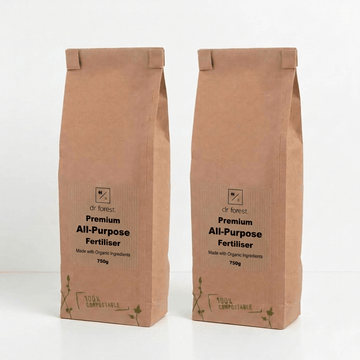
Handcrafted in Stockport
Premium Organic Fertilisers
Every input named on the label, with its own analysis. From £6.25
Shop organic fertilisersWhere each nutrient comes from
Nitrogen is the hardest of the three to concentrate naturally. Milled meals such as alfalfa and rapeseed carry only 2 to 3%, so a feed that needs a high figure uses a protein extract instead, which reaches around 13%. Phosphorus comes from micronised rock phosphate, which is roughly 31% P and about half calcium, and from calcined meals. Potassium comes from sulphate of potash at 50% K₂O, or from polyhalite, which carries 14% potassium along with calcium, magnesium and sulphur in one granule.
| Nutrient | Usual sources | Rough analysis of the raw ingredient |
|---|---|---|
| Nitrogen (N) | Protein meals, concentrated protein extract | 2 to 3% in meals, up to 13% concentrated |
| Phosphorus (P₂O₅) | Micronised rock phosphate, calcined meals | About 31% P in rock phosphate, with roughly 49% calcium |
| Potassium (K₂O) | Sulphate of potash, polyhalite | 50% K₂O, or 14% K in polyhalite |
| Calcium and sulphur | Gypsum, polyhalite | Gypsum is about 23% calcium |
| Magnesium | Kieserite, Epsom salt, polyhalite | Epsom salt is 17.7% magnesium |
| Trace elements | Seaweed, rock dust, clay minerals | Small amounts of many elements rather than much of one |
Figures are for the raw ingredients, not the finished blend. A blend dilutes each one to whatever the analysis on the bag says.
What the rest of the bag is doing
A multi-input blend is not just N, P and K with filler around it. Gypsum and rock dust supply calcium, magnesium and sulphur, which most general feeds leave out entirely. Seaweed contributes trace elements and alginates. Humic and fulvic acids help hold nutrients in the root zone rather than letting them wash through. Fermented biochar gives soil organisms somewhere to live.
None of that shows up in the headline three numbers, which is why two bags marked 4-4-4 can behave quite differently in the ground.
Why the ingredient list matters more than the analysis
An analysis tells you how much nitrogen is in the bag. It does not tell you how fast it will arrive, what else came with it, or whether the phosphorus is in a form your soil can actually release. Two feeds with identical NPK can differ by weeks in how quickly they start working, purely because of what the nutrients are held in.
The practical test is simple. Can you see every ingredient named, or does the label stop at a phrase like "organic base"? Dr Forest blends carry fifteen to eighteen inputs, each one printed on the label.
From the Dr Forest range
Premium Organic Fertilisers
Fifteen to eighteen inputs in one bag, every one named on the label with its own analysis. Hand-blended in small batches in Stockport.
Every ingredient named · Calcium, magnesium and sulphur included · Rates published
Browse the organic fertiliser rangeMore organic fertiliser questions
What is organic fertiliser?What are examples of organic fertilisers?What is the best organic fertiliser high in nitrogen?Sources
- Royal Horticultural Society. Fertilisers: types and uses. rhs.org.uk
- Cassity-Duffey, K. et al. (2020). Nitrogen mineralization from organic materials and fertilizers: predicting N release. Soil Science Society of America Journal 84(2), 522–533. doi.org
Soil notes
Get the evidence, not the marketing
Occasional notes from Stockport on feeding, soil structure and what the research actually supports, including the things that turn out not to work.
No spam. Unsubscribe in one click. See our privacy notice.