Skip to product information
1 of 1

Dr Forest

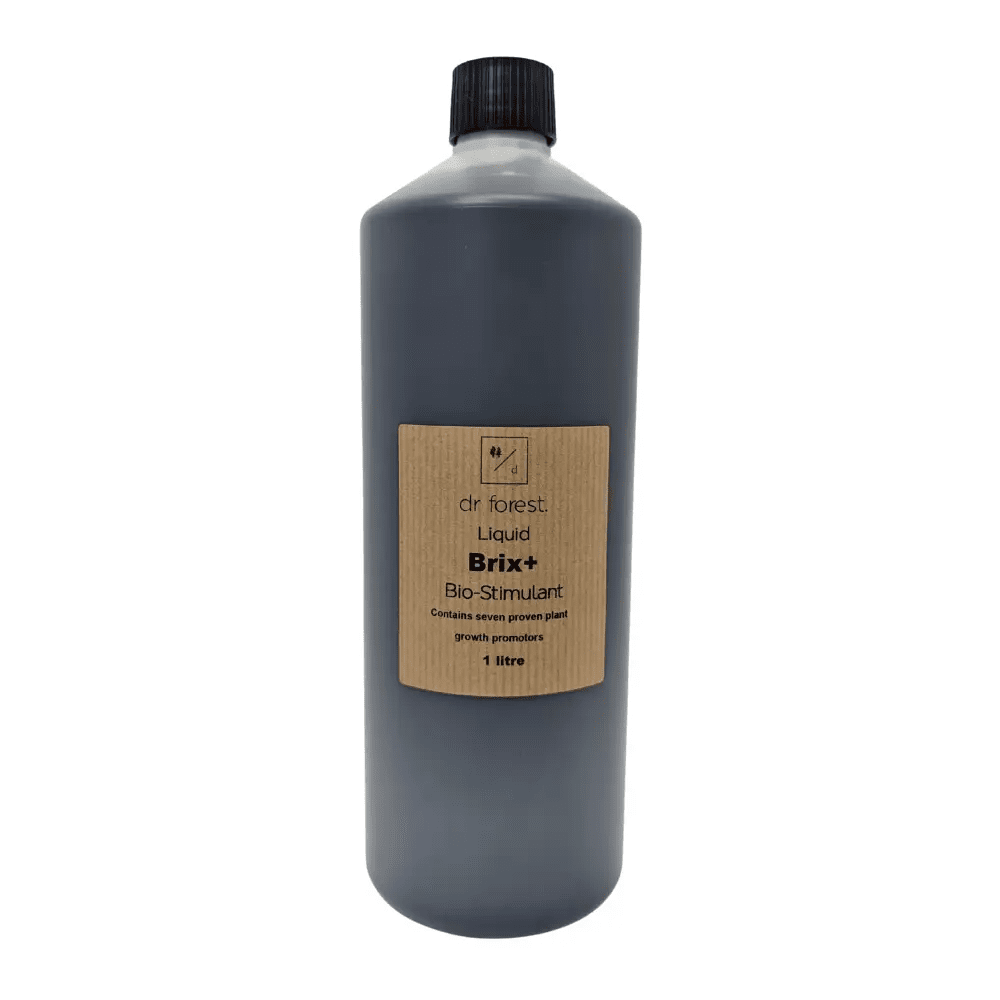
Brix+ Liquid Seaweed Biostimulant Booster

Brix+ Liquid Seaweed Biostimulant Booster

Regular price £12.99 GBP
Regular price Sale price £12.99 GBP
Sale Sold out
Shipping calculated at checkout.
size
Quantity

Brix+ — liquid seaweed biostimulant with 7 growth promoters, triacontanol & 74 ocean-derived trace minerals

7 Growth Promoters Contains Triacontanol 74 Ocean Trace Minerals Increases Brix Levels Foliar & Soil Use All Growth Stages

Brix is a measurement of the dissolved sugar content in plant sap — and it is the single most reliable indicator of crop quality, flavour, and plant health. Higher Brix means sweeter fruit, more complex flavour, denser nutrition, longer shelf life, and — critically — greater natural resistance to pests and disease. Insects preferentially attack low-Brix plants because they lack the sugar density and secondary metabolites that healthy plants use as defence. Raising your crop's Brix level is the most direct route to better-tasting, healthier, more resilient plants.

Brix+ is a concentrated liquid seaweed biostimulant formulated to do exactly this. It delivers seven proven growth promoters in a single product — triacontanol, cytokinins, gibberellins, auxins, betaines, mannitol, and a suite of natural acids and phenolic compounds — alongside 74 ocean-derived trace minerals and a full complement of amino acids. These compounds work synergistically to accelerate photosynthesis, increase sugar accumulation, stimulate cell division and elongation, prime defence systems, and improve nutrient uptake — all of which drive Brix levels upward.

Suitable for all plants at all growth stages: from planting through vegetative growth, pre-flower, flowering, fruit set, and fruit fill. Use on vegetables, fruit, cereals, lawns, shrubs, roses, tomatoes, and all ornamental and edible crops. Can also be applied immediately before or after stress events — frost, drought, heat — to support recovery.

7Growth Promoters
74Ocean Trace Minerals
17.5%Bioactive Content
All StagesPlanting to Harvest

What Brix+ is used for

  • Increasing Brix (sugar content) in fruit, vegetables and all edible crops — the seven growth promoters drive photosynthesis and sugar accumulation, producing sweeter, more flavourful, and more nutritious harvests with improved post-harvest shelf life
  • Boosting flowering, fruit set and yield — cytokinins, gibberellins, and auxins stimulate flower development, improve pollen viability, reduce flower drop, and promote more uniform fruit set; the result is more fruit per plant and more consistent ripening
  • Enhancing photosynthesis through triacontanol — triacontanol is a fatty alcohol that directly increases the rate of photosynthesis by improving CO₂ fixation and chloroplast efficiency; more photosynthesis means more sugar, more growth, and higher dry matter accumulation
  • Stress recovery and resilience — betaines and mannitol are osmoprotectants that stabilise cell membranes under drought, frost, heat, and salinity stress; applied before or after a stress event, they help the plant maintain cell integrity and recover faster
  • Supplying 74 ocean-derived trace minerals via foliar and soil application — the seaweed base delivers the full spectrum of marine-origin trace elements in naturally chelated, immediately bioavailable form
  • Strengthening natural pest and disease resistance — high-Brix plants produce higher concentrations of secondary metabolites (phenolics, terpenes, organic acids) that deter insects and inhibit fungal pathogens; the phenolic compounds in Brix+ directly contribute to this chemical defence
  • Improving lawn colour, density and vigour — foliar application to lawns increases chlorophyll production, root density, and drought tolerance; particularly effective applied before anticipated dry spells or as a recovery spray after summer stress
  • Rose and ornamental bloom quality — the growth promoter suite stimulates flower bud development, increases bloom size, improves colour intensity, and extends the flowering period; the trace minerals support the enzyme pathways that produce floral pigments and fragrances

Typical analysis

Composition

  • Natural acids, phenolic compounds, amino acids, 74 ocean-derived trace minerals, cytokinins, gibberellins, auxins, betaines, and mannitol: 17.5%
  • Total nitrogen (N): 0.26%
  • Total potassium (K): 1.65%
  • Sulphur (S): 0.37%
  • Magnesium (Mg): 0.15%
  • Specific gravity: 1.0
  • pH: 5.0–5.8
  • Conductivity: 30–50 mS/cm
  • Appearance: brown liquid

The seven growth promoters

  • Triacontanol — a C30 fatty alcohol that directly increases photosynthetic rate and CO₂ fixation; the signature compound in this formulation
  • Cytokinins — drive cell division in shoots and roots; delay leaf senescence; promote lateral bud growth and branching
  • Gibberellins — regulate stem elongation, flowering, and fruit development; promote seed germination and break dormancy
  • Auxins — direct root initiation and elongation; control apical dominance and fruit development
  • Betaines — osmoprotectants that stabilise cell membranes and proteins under drought, frost, and salt stress
  • Mannitol — a sugar alcohol that acts as an osmolyte and antioxidant under stress; contributes to Brix readings directly
  • Natural acids and phenolics — organic acids feed soil micro-organisms; phenolics prime plant defence systems and contribute to pest and disease resistance

The science of Brix: what sugar content tells you about plant health, flavour & pest resistance

What Brix is and why it matters

Brix is a measurement of the total dissolved solids in plant sap — primarily sugars (sucrose, glucose, fructose) but also amino acids, organic acids, vitamins, and minerals. It is measured with a refractometer — a simple handheld instrument that reads the refractive index of a drop of sap and expresses it as degrees Brix (°Bx). A tomato at 4°Bx is watery and bland. A tomato at 8°Bx is sweet, complex, and flavourful. A tomato at 12°Bx is exceptional.

Brix is not just a flavour indicator. It is a comprehensive proxy for plant health. High-Brix plants photosynthesise more efficiently, produce more secondary metabolites, have stronger cell walls, accumulate more vitamins and minerals, and — critically — are naturally more resistant to insect pests and fungal diseases. This is not coincidental. Insects are attracted to plants with low sugar density and high free amino acid content — the biochemical signature of a poorly photosynthesising, nutritionally incomplete plant. Raising Brix moves the plant out of this vulnerability zone.


Seven growth promoters — how each one drives Brix upward

01

Triacontanol — the Photosynthesis Accelerator

Triacontanol is a C30 primary fatty alcohol found naturally in plant leaf waxes and beeswax. When applied exogenously (as a foliar spray), it directly increases the rate of photosynthesis by improving the efficiency of Rubisco — the enzyme that fixes CO₂ into sugar during the Calvin cycle. Research shows that triacontanol-treated plants fix more carbon per unit of light, producing more sugar per hour of sunshine. More sugar production means higher Brix, more growth, and greater dry matter accumulation. Triacontanol also stimulates the production of growth hormones by the plant itself, amplifying the effect of the other six promoters in the formulation.

02

Cytokinins — Cell Division & Anti-Senescence

Cytokinins drive cell division in meristematic tissue — the growing tips of shoots and roots. More cell division means faster growth and more growing points. Equally important, cytokinins delay leaf senescence — keeping leaves green, photosynthetically active, and productive for longer. A leaf that stays green two weeks longer than it otherwise would produces two additional weeks of sugar through photosynthesis. Applied as a foliar spray, the cytokinins in Brix+ are absorbed directly by leaf tissue and begin signalling within hours.

03

Gibberellins — Flowering, Fruit & Stem Extension

Gibberellins regulate stem elongation, flowering induction, and fruit development. They promote the transition from vegetative to reproductive growth, stimulate flower organ development, and support fruit expansion after pollination. In the context of Brix improvement, gibberellins contribute by ensuring the plant allocates its photosynthate (sugar) efficiently to fruit development — producing larger, more sugar-dense fruit rather than excessive vegetative growth.

04

Auxins — Root Development & Fruit Set

Auxins direct root initiation and elongation — building the uptake system that delivers water and minerals to the photosynthetic machinery above. Without adequate roots, photosynthesis is mineral-limited regardless of how much light the plant receives. Auxins also play a critical role in fruit set — preventing premature fruit drop after pollination and promoting even fruit development. The auxin component in Brix+ supports both the input (root nutrient uptake) and output (fruit sugar accumulation) sides of the Brix equation.

05

Betaines — Stress Shield

Betaines are quaternary ammonium compounds that function as osmoprotectants — they stabilise protein structure and cell membrane integrity under environmental stress. Drought, frost, heat, and salinity all cause osmotic stress that disrupts cell function and shuts down photosynthesis. Betaines maintain cell turgor and enzyme activity through these stress events, allowing photosynthesis to continue when it would otherwise stop. Continued photosynthesis during stress means continued sugar production — maintaining Brix levels through conditions that would normally collapse them.

06

Mannitol — Osmolyte & Antioxidant

Mannitol is a sugar alcohol produced by seaweed as a stress response compound. It functions as both an osmolyte (maintaining cell water balance under stress) and a free radical scavenger (neutralising the reactive oxygen species that cause oxidative damage during stress). Applied to plants, mannitol contributes directly to the dissolved solids measured by a refractometer — it literally adds to the Brix reading while simultaneously protecting the photosynthetic apparatus from oxidative damage.

07

Natural Acids & Phenolics — Microbial Fuel & Defence Chemistry

The organic acid fraction feeds soil biology when applied as a soil drench, stimulating the microbial enzyme activity that cycles nutrients into plant-available forms. The phenolic compounds are absorbed by leaf and root tissue and contribute to the plant's chemical defence arsenal — the secondary metabolites that deter herbivorous insects and inhibit fungal germination. High-Brix plants naturally produce more phenolics; applying them exogenously through Brix+ gives an additional boost while the plant builds its own internal concentrations.

Scientific References

  1. Ries, S.K. (1985). Regulation of plant growth with triacontanol. CRC Critical Reviews in Plant Sciences, 2(3), 239–285.
  2. Khan, W. et al. (2009). Seaweed extracts as biostimulants of plant growth and development. J. Plant Growth Regul., 28, 386–399.
  3. Craigie, J.S. (2011). Seaweed extract stimuli in plant science and agriculture. J. Applied Phycology, 23, 371–393.
  4. Shukla, P.S. et al. (2019). Ascophyllum nodosum-based biostimulants: sustainable applications. Frontiers in Plant Science, 10, 655.
  5. Wally, O.S.D. et al. (2013). Phytohormone regulation following seaweed treatment. J. Plant Growth Regul., 32, 324–339.
  6. Naeem, M. et al. (2012). Triacontanol: a potent plant growth regulator. Plant Science, 195, 1–15.

How to use Brix+: foliar spray, soil drench rates

Increase frequency, not concentration

Brix+ is designed to be used at low concentration and high frequency. It is preferable to increase the frequency of applications rather than the concentration of the solution. The growth promoters work through signalling pathways that respond to repeated, consistent stimulation — not single high-dose applications. Stick to the recommended dilution rates and apply regularly throughout the growing season.

Application rates

Foliar spray — all plants

Rate: 2–2.5 ml per litre of water  |  Frequency: Every 10–14 days or as required

Shake well before use. Mix 2–2.5 ml of Brix+ per litre of water and apply as a fine foliar spray to both upper and lower leaf surfaces. Apply in early morning or late evening when stomata are open and evaporation is minimal. This method allows rapid absorption through the leaf surface — ideal for fast Brix elevation and immediate delivery of triacontanol and the growth hormone suite directly to the photosynthetic tissue. Suitable for all plants including lawns, shrubs, roses, tomatoes, vegetables, and fruit.

Soil drench — all plants

Rate: 5–12.5 ml per litre of water  |  Frequency: Every 4 weeks

Mix 5–12.5 ml of Brix+ per litre of water and apply around the root zone with a watering can. The organic acids and phenolics stimulate rhizosphere microbial activity, while the trace minerals and growth promoters are absorbed through the root system. Soil drenching provides a longer-lasting, deeper effect than foliar spraying — particularly effective for promoting robust root development and sustained mineral uptake. Use the lower rate (5 ml/L) for regular maintenance; the higher rate (12.5 ml/L) for plants under stress or during peak fruiting demand.

Fertigation

Rate: 0.4 L per 5 L Part B, or 16 ml per 10 L of final nutrient mix

Add to the Part B nutrient solution before combining with Part A, or add directly to the final nutrient mix at 16 ml per 10 litres. Do not pre-mix with concentrated nutrient solutions — always dilute into the working volume. The growth promoters and trace minerals complement liquid feed programmes by supplying the biostimulant and micronutrient components that synthetic nutrient formulations typically lack.

Stress recovery — pre- and post-frost, drought, or heat

Rate: 2–2.5 ml per litre (foliar)  |  Timing: Immediately before or after the stress event

Apply a foliar spray at the standard rate immediately before an anticipated frost, drought, or heat event to prime the betaine and mannitol osmoprotection system. If the stress event has already occurred, spray as soon as conditions allow to support recovery — the cytokinins delay senescence in damaged tissue, the betaines stabilise remaining cell membranes, and the triacontanol restarts photosynthesis in recovering leaves.

Growth stage application guide

  1. At planting / transplanting. Apply as a soil drench at 5 ml/L when transplanting into final position. The auxins and trace minerals support root establishment. Combine with Mycorrhizal Fungi dusted onto the root ball for maximum root colonisation.
  2. Vegetative growth. Begin foliar spraying at 2–2.5 ml/L every 10–14 days. The cytokinins drive cell division and branching; triacontanol accelerates photosynthesis; the plant builds the leaf canopy and root system that will support fruiting later.
  3. Pre-flower. Continue foliar applications. The gibberellins support the transition from vegetative to reproductive growth. Increase to fortnightly soil drenches if not already doing so.
  4. Flowering. Maintain foliar programme. The growth hormone suite improves pollen viability, reduces flower drop, and supports fruit set. This is the stage where Brix+ has the most direct impact on eventual yield.
  5. Fruit set and fill. Continue foliar and soil applications through to harvest. Sugar accumulation in developing fruit is driven by photosynthesis — triacontanol keeps the photosynthetic rate high, and the trace minerals provide the enzyme cofactors that convert photosynthate into the sugars, organic acids, and aromatic compounds that determine flavour.
Important handling notes

Shake or stir well before every use. Do not mix with low-pH solutions — perform a jar test to confirm compatibility with other products before tank mixing. Avoid spraying close to harvest if produce is prone to staining (the brown liquid can mark pale-skinned fruit). Do not pre-mix or store in diluted form. Use within 6 months of opening. Store sealed in a cool, dry place out of direct sunlight. Crystallisation or sedimentation may occur below 5°C — this is normal and does not affect quality; warm gently and shake to re-dissolve.

Works well combined with…

Brix+ delivers the biostimulant and growth promoter signal; combine it with a base fertiliser that provides the NPK building blocks. Use alongside Dr Forest Veg 4-4-4 during vegetative growth and switch to Bloom 2-8-4 at flowering — the Brix+ amplifies the effectiveness of both. Tank-mix with Dr Forest Seaweed Powder for a double seaweed hit (one for growth hormones, one for mineral density). Apply Activated Biochar Condensate as a soil drench on alternate weeks for complementary karrikin signalling and microbial stimulation. Combine with Humic Acid in soil drenches — the humic acid chelates the trace minerals in Brix+ for improved root uptake.

Frequently asked questions about Brix+

Brix (°Bx) is a measurement of the total dissolved solids in plant sap — primarily sugars, but also amino acids, organic acids, and minerals. It is measured with a refractometer: squeeze a drop of sap onto the lens, close the cover, and read the scale through the eyepiece. A basic optical refractometer costs £15–£25 and requires no batteries or calibration beyond an occasional zero check with distilled water. Higher Brix = sweeter, more flavourful, more nutritious, and more pest-resistant crops.
Triacontanol is a C30 primary fatty alcohol found naturally in plant leaf waxes, beeswax, and some plant oils. When applied exogenously as a foliar spray, it directly increases the rate of photosynthesis by improving Rubisco efficiency — the enzyme responsible for fixing CO₂ into sugar. Research consistently shows that triacontanol-treated plants produce more dry matter, accumulate more sugar, and show higher growth rates than untreated controls. It is one of the most potent natural plant growth regulators known, and it is the signature compound in Brix+.
It is a biostimulant, not a primary fertiliser. It contains modest nitrogen (0.26%), potassium (1.65%), sulphur (0.37%), and magnesium (0.15%), plus 74 trace minerals — but its primary value is the seven growth promoters that drive photosynthesis, cell division, stress tolerance, and sugar accumulation. Use it alongside a balanced NPK fertiliser for best results — the fertiliser provides the building blocks, Brix+ provides the biological signals that tell the plant what to do with them.
Yes — foliar spray at 2–2.5 ml/L every 10–14 days. The cytokinins promote lateral growth and tillering, the triacontanol increases photosynthesis for deeper green colour, and the betaines improve drought tolerance. Particularly effective as a recovery spray after summer heat stress or before anticipated dry periods. Apply in the morning to wet, dewy grass for maximum leaf absorption.
Insects are attracted to plants with low sugar density and high concentrations of free amino acids — the biochemical signature of an inefficiently photosynthesising plant. High-Brix plants have lower free amino acid levels (they are being incorporated into proteins efficiently), higher sugar concentrations (which insects struggle to digest), and greater concentrations of phenolic and terpene defence compounds. The net effect is that high-Brix plants are less attractive, less digestible, and more chemically defended than low-Brix plants. Raising Brix through better nutrition and biostimulation is a form of pest prevention.
Yes, but always perform a jar test first. Mix a small amount of Brix+ with the other product in a jar at the intended dilution ratios and check for precipitation, clumping, or colour change. If the mixture remains stable, it is safe to tank-mix. Do not mix with low-pH (strongly acidic) solutions — the pH difference can cause precipitation. Brix+ is compatible with most organic liquid fertilisers and seaweed extracts. Do not pre-mix or store in diluted form — make fresh each time.
The product is a brown liquid and can leave a visible residue on pale-skinned fruit or light-coloured foliage if applied too close to harvest. Avoid spraying directly onto fruit that will be displayed or sold unwashed within a few days of application. On green foliage the residue is not visible. Rain or overhead irrigation will wash off any residue. For produce that will be washed before sale or consumption, this is not a concern.
Sealed in a cool, dry place out of direct sunlight. Tested to store safely down to 5°C. Crystallisation or sedimentation may occur below 5°C — warm gently and shake to re-dissolve; quality is unaffected. Seal the cap immediately after each use. Use within 6 months of opening for best results. Do not store in diluted form.
View full details