Is organic fertiliser better for plants?
Not in the way the question usually means. A root takes up the same ions either way. Organic feeding is better for the soil, and healthier soil grows steadier plants, which is a slower and less dramatic claim than the marketing tends to make.
Looking for the full answer? See our organic fertiliser FAQ. If you only need one bag, start with All Purpose 4-4-4. To browse the range, open organic fertilisers.
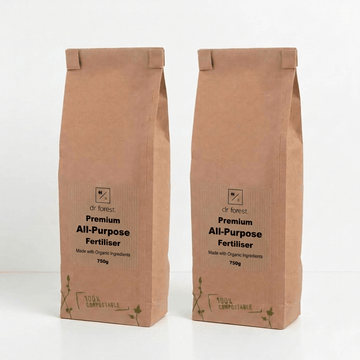
Handcrafted in Stockport
Premium Organic Fertilisers
Feeds the plant and leaves organic matter behind in the soil. From £6.25
Shop organic fertilisersWhat the plant actually takes up
Roots absorb nitrogen mostly as nitrate and ammonium, phosphorus as phosphate, potassium as the potassium ion. Those are the same molecules regardless of origin. Nitrogen bound in a protein has to be mineralised by soil organisms into exactly the nitrate a manufactured feed supplies ready-made, and the plant then does the same thing with it.
So the common claim that organic nutrients are somehow richer or more complete at the root is not supported. Where it does hold up is in what comes alongside: a multi-input blend usually carries calcium, magnesium, sulphur and trace elements that a straight NPK feed omits, and shortages of those are more common in gardens than shortages of the big three.
Where the advantage is real
The soil. Organic materials leave carbon behind when they break down, and soil bacteria, fungi and worms live on that carbon. Over several seasons the result is better crumb structure, which lets water in and air through, and a soil that holds more water before it dries out. Plants growing in that soil are less prone to the swings that stress them.
That is a genuine benefit and it is worth paying for. It is also slow, undramatic and invisible in a single season, which is why it gets dressed up in stronger language than it deserves.
Be careful with soil biology claims
The area where the marketing gets furthest ahead of the evidence is added microbes. A 2025 meta-analysis of commercially sourced mycorrhizal inoculants found they frequently fail to deliver what the label promises, and separate testing of individual products has repeatedly found low viability. Treat any feed sold mainly on its living-organism content with scepticism unless the batch has been verified.
Feeding the organisms already in your soil, which is what organic matter does, is far better established than adding new ones from a packet.
The short answer. Better for the soil, not better for the root. If someone tells you the plant can tell the difference, they are selling you something.
From the Dr Forest range
Premium Organic Fertilisers
Blends built around what the soil needs as well as what the plant does: six nutrients, organic matter, and every ingredient named.
Six nutrients, not three · Feeds soil life · Published rates
Browse the organic fertiliser rangeMore organic fertiliser questions
What are the advantages and disadvantages of organic fertiliser?What does organic fertiliser do?What is organic fertiliser?Sources
- Royal Horticultural Society. How plants absorb nutrients. rhs.org.uk
- Royal Horticultural Society. Organic matter: how to use it in the garden. rhs.org.uk
- Koziol, L. et al. (2025). Meta-analysis reveals globally sourced commercial mycorrhizal inoculants fall short. New Phytologist 245(4). doi.org
Soil notes
Get the evidence, not the marketing
Occasional notes from Stockport on feeding, soil structure and what the research actually supports, including the things that turn out not to work.
No spam. Unsubscribe in one click. See our privacy notice.