What is the best natural fertiliser?
Compost and well-rotted manure for the soil, seaweed for trace elements, and comfrey or nettle for a cheap seasonal top-up. If you want one bought product that does the widest job, seaweed meal is the one that earns its place.
Looking for the full answer? See our organic fertiliser FAQ. If you only need one bag, start with All Purpose 4-4-4. To browse the range, open organic fertilisers.
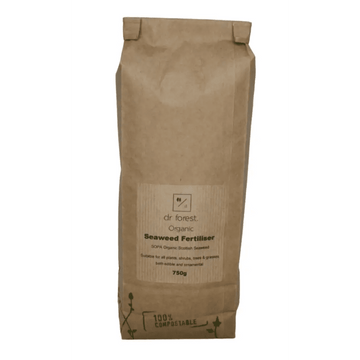
Handcrafted in Stockport
Seaweed Plant Food
Scottish kelp meal, for trace elements and alginates. 750g from £10.89
Shop Seaweed Plant FoodWhat natural means here
Natural is a loose word and worth pinning down. In practice it means the material is used close to how it is found: milled, dried, composted or steeped, rather than synthesised as a soluble salt. It does not mean gentle, and it does not mean it works. Wood ash is entirely natural and will shift your soil pH if you use enough of it.
The short, honest list
| Material | Strongest in | Best used for |
|---|---|---|
| Garden compost | Organic matter | Building soil. Free, and better than anything bagged at this job |
| Well-rotted manure | Organic matter, some nitrogen | Bulk soil improvement. Must be well rotted |
| Seaweed meal | Trace elements, alginates | A broad top-up alongside a main feed |
| Comfrey liquid | Potassium | Fruit and flowers, through the season |
| Nettle liquid | Nitrogen | Leafy growth, early season |
| Worm castings | Available nutrients, biology | Potting mixes and seedlings |
| Wood ash | Potassium | Sparingly. It raises pH |
The honest ranking
If you can only do one thing, compost the garden. Nothing you can buy will do as much for a bed as several years of organic matter, and it costs nothing but the space for a heap.
If you want one bought product to sit alongside it, seaweed meal is the one that does the widest job: trace elements and alginates that compost is often short of, applied a few times a season. It is not a substitute for a balanced feed, and anyone selling it as one is overstating it.
And if you want to make your own liquid feed, seaweed meal will do that too. Steep 50g in 10 litres of water for 24 to 48 hours, stirring occasionally, then strain and apply as a root drench. Alfalfa pellets work the same way at 100g in 10 litres over three to five days, though they smell considerably stronger while they brew.
Homemade liquids vary. Comfrey and nettle brews differ batch to batch depending on what went in and how long it sat. Dilute well and treat them as top-ups rather than a measured feed.
The broadest single ingredient
Seaweed Plant Food
Hand-harvested Scottish kelp meal, for trace elements and alginates alongside a main feed, or steeped as a liquid drench.
Trace elements · Use dry or steeped · Rates published
Shop Seaweed Plant FoodMore organic fertiliser questions
What is the best homemade plant food?What are examples of organic fertilisers?How do I feed my plants without chemicals?Sources
- Royal Horticultural Society. Organic matter: how to use it in the garden. rhs.org.uk
- Royal Horticultural Society. Homemade fertilisers. rhs.org.uk
Soil notes
Get the evidence, not the marketing
Occasional notes from Stockport on feeding, soil structure and what the research actually supports, including the things that turn out not to work.
No spam. Unsubscribe in one click. See our privacy notice.