Fertiliser
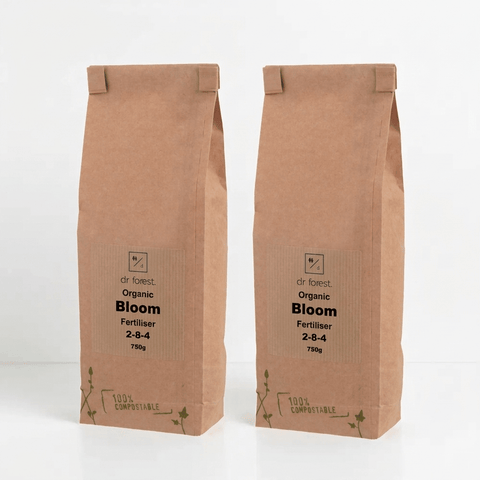
Organic Bloom Fertiliser 2-8-4 | High Phosphorus Flower Feed
High-phosphorus 2-8-4 for flowering and fruiting.
from £12.00
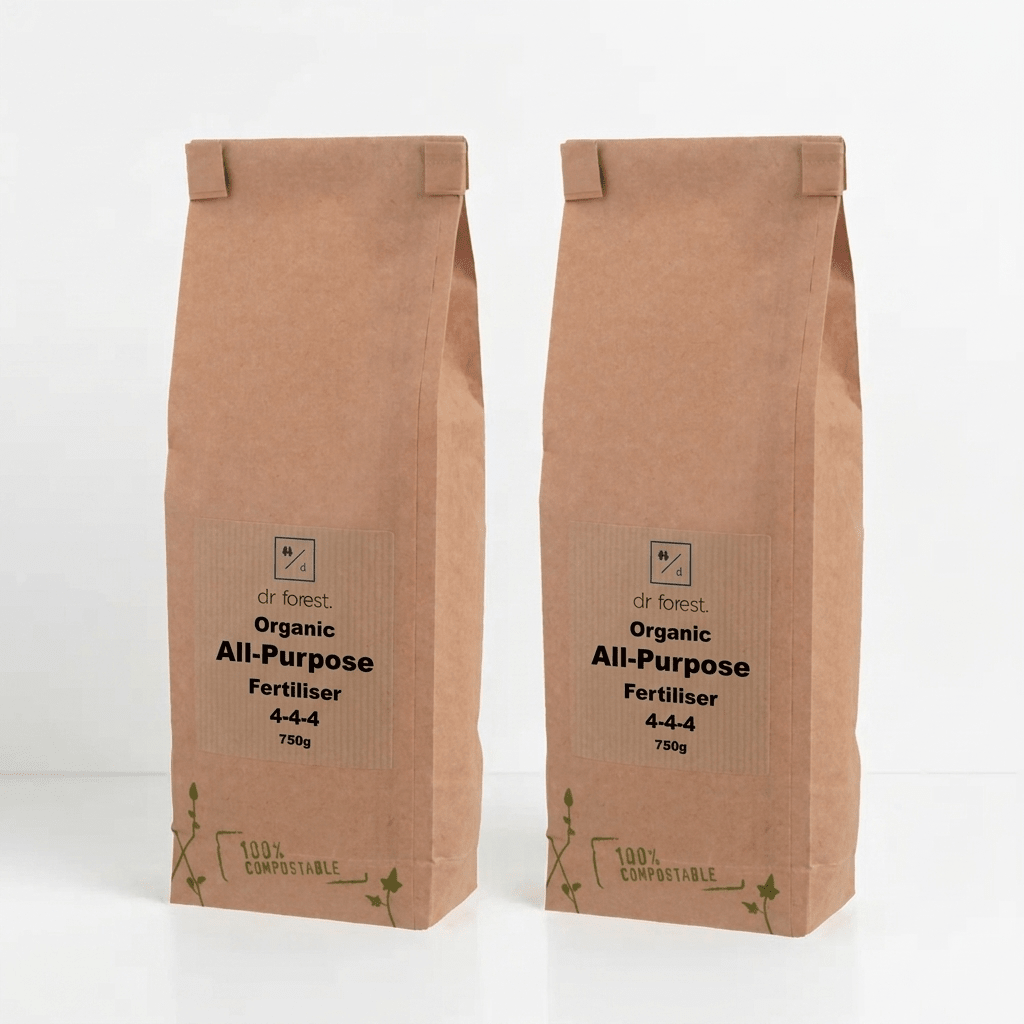
All Purpose 4-4-4 is a balanced organic fertiliser that feeds almost everything in the garden from a single bag — vegetables, fruit, flowers, roses, herbs and container plants. An even ratio of nitrogen, phosphorus and potash covers leaf, root and flower together, released slowly through soil biology so there are no salt spikes and no scorched roots. Dr Forest blends it by hand in Stockport from ten organic inputs, with slow-release phosphorus and calcium from bone meal and natural biostimulants from Scottish seaweed and alfalfa.
It takes over from our Veg 4-4-4. Growers kept using that right across the plot rather than only for leafy growth, so we reformulated it as a true all-purpose feed — the same balanced 4-4-4 ratio, but a new recipe with some different ingredients chosen to suit the whole garden. The even ratio covers the majority of what UK gardeners grow, and the feeding guide simply matches the rate to how hungry each plant is.
It is a granular dry amendment — sprinkle it on or mix it in, with no dissolving, no measuring pH and no weekly liquid feeding. Because the nutrients come from organic meals and slow-release minerals rather than soluble salts, soil microbes release them at the pace the plant demands, building soil health rather than degrading it. Made with organic ingredients, compostable packaging, handcrafted in small batches.
Handcrafted in small batches in Stockport, Greater Manchester, using British ingredients where possible, including Scottish seaweed. Made with organic ingredients, with no synthetic chemistry. Made by Growers. Backed by Science.
This is a multi-input blend, not a two-part salt feed. Every ingredient earns its place — a primary nutrient, a secondary nutrient, or a biological function. Shares below are the proportion of the mix.
The largest single input, and the carbon backbone of the blend. At a third of the mix, alfalfa is the main source of plant-based organic matter — the carbon that soil microbes feed on and steadily turn into humus, building soil structure, water-holding and long-term fertility. It also carries triacontanol, a natural growth promoter shown to lift chlorophyll and photosynthesis, along with nitrogen, potassium and amino acids that feed soil bacteria. It breaks down at a medium pace, bridging the fast and slow nitrogen sources.
The main phosphorus and calcium source — around 18% phosphorus (P₂O₅) with a large calcium fraction, released slowly as soil acids and microbes work on it. Phosphorus drives roots, flowering and fruit set; calcium builds firm cell walls. Availability is best in slightly acidic to neutral soil. (Because it contains bone meal, this blend is not suitable for vegan gardening.)
A concentrated plant nitrogen at around 13% N, derived from molasses and rich in amino acids — the early drive of the blend. Amino-acid nitrogen is taken up efficiently and feeds through microbial mineralisation rather than as a soluble salt, so there is no ammonia volatilisation and no EC spike, just a steady release as the soil warms.
Cold-pressed linseed meal adds a further slow-release nitrogen source plus organic matter and oils that feed the soil microbiome. It rounds out the nitrogen curve and improves the texture and workability of the blend in the soil.
Calcium sulphate — a pH-neutral source of calcium and sulphur. It adds calcium without shifting soil pH, supports cell-wall strength and fruit quality, and helps open up heavier soils.
Chloride-free potassium (50% K₂O) with sulphur alongside. Potassium governs water movement, fruit and flower quality and disease resistance — the nutrient fruiting crops draw down hardest — and the sulphate form avoids the chloride that some crops dislike.
Magnesium sulphate — a steady source of magnesium and sulphur. Magnesium sits at the centre of every chlorophyll molecule, so it keeps foliage green; sulphur supports protein and amino-acid synthesis.
Cold-water Ascophyllum nodosum from the Scottish coast. A biostimulant rather than a headline nutrient source, it supplies cytokinins, auxins, alginates and a spread of trace elements that prime the plant's own growth and stress responses.
Humic acid raises the soil's cation exchange capacity and improves structure and root growth; fulvic acid is a low-molecular-weight chelator that binds micronutrients into forms roots can take up. A little goes a long way.
Pyrolysed carbon with a vast internal surface that houses beneficial microbes. Pre-fermented so it is biologically active from day one, it helps hold nutrients in the root zone and reduce leaching under heavy watering or rain.
Soil mix (before planting): 5–10 g per litre of soil or compost, worked in thoroughly. Top dress (during growth): 2–4 g per litre of soil, scattered on the surface and watered in. As a guide, a level tablespoon holds roughly 12–15 g. Match the rate to how hungry the plant is, using the three groups below.
Plants are grouped by how much feeding they need. Light feeders — legumes, root crops and Mediterranean herbs — grow best in leaner soil and can run to leaf or fork if overfed. Heavy feeders — fruiting vegetables, brassicas and container plants — draw nutrients down fast and need topping up often. Medium feeders sit in between.
Fix their own nitrogen or store food in their roots, so too much feed brings leafy tops, forked roots or fewer flowers.
Steady demand through the season, happy on a balanced feed.
High, sustained demand, especially in pots, grow bags and baskets where roots are confined and watering leaches nutrients away.
Scatter evenly and work lightly into the top 5–10 cm. Lower end for light feeders and established beds, upper end for heavy feeders and new plantings. A handful is roughly 40–50 g.
1. Overfeeding light feeders — beans and carrots want lean soil. 2. Underfeeding pots — confined roots and frequent watering empty a container fast. 3. Expecting an overnight response — this feeds over weeks, not hours. 4. Applying to bone-dry soil — always water in. 5. Feeding dormant plants in winter — wait until growth restarts in spring.
Pair with Sulphate of Potash for a potash lift on tomatoes, roses and fruit as they flower and set, and with Seaweed Plant Food for extra biostimulant during heat or transplant stress. For fruiting crops that want more phosphorus and potash later on, our Fruit & Vegetable Fertiliser 4-5-6 carries them through to harvest.
Keep the bag sealed in a cool, dry place. As a natural product it may vary slightly in colour and texture between batches, and the odd seed may sprout if left damp — neither affects performance. It contains bone meal, which some dogs find tempting, so store out of reach of children and pets.
Nitrogen builds leaves and stems, phosphorus drives roots and flower set, potassium governs water movement, fruit quality and disease resistance. Nearly every plant needs all three throughout its life; what changes between crops is the quantity, not the mix. A balanced 4-4-4 supplies the full range, and the feeding rate is matched to demand.
Because the nutrients are held in organic matter and slow-release minerals rather than soluble salts, soil microbes release them as the plant's roots call for them. That is why one bag suits a hungry courgette and a lean-feeding carrot: the plant and its root-zone biology set the pace.
An amino-acid nitrogen extract derived from molasses (13% N) gives the early drive, while alfalfa, flaxseed meal, bone meal and seaweed release nitrogen more slowly through microbial mineralisation (Cassity-Duffey et al., 2020). Staggered release means healthy growth without the soft, sappy, pest-prone tissue that a single hit of soluble nitrogen produces.
Bone meal supplies phosphorus (around 18% P₂O₅) alongside a large dose of calcium, released as soil acids and microbes work on it. Phosphorus is the core of ATP, driving root development, cell division and flower and fruit set. Availability is highest in slightly acidic to neutral soil (Penn & Camberato, 2019).
Sulphate of potash (50% K₂O) delivers potassium in a chloride-free form with sulphur alongside, topped up by potassium in alfalfa and seaweed. Sulphate-based potassium suits chloride-sensitive crops such as tomatoes, strawberries and potatoes.
Gypsum (calcium sulphate) and kieserite (magnesium sulphate) supply the calcium, magnesium and sulphur most all-purpose feeds omit, with more calcium from the bone meal. Most liquid feeds contain no calcium at all — a key gap this blend closes. Magnesium sits at the centre of chlorophyll; sulphur drives protein synthesis.
Scottish seaweed (Ascophyllum nodosum) supplies cytokinins, auxins, alginates and trace elements. Reviews of seaweed biostimulants report gains in growth, yield and crop quality across a range of crops (Khan et al., 2009; Ali et al., 2021).
Alfalfa carries triacontanol, a natural plant growth regulator linked in the literature to higher chlorophyll content and photosynthetic rate (Naeem et al., 2012), on top of the nitrogen and amino acids it contributes.
Humic and fulvic acids stimulate root growth and microbial activity and improve nutrient uptake (Nardi et al., 2002; Canellas & Olivares, 2014); they also raise the soil's cation exchange capacity. Fulvic acid chelates micronutrients into plant-available forms.
Fermented biochar's vast internal surface provides habitat for soil microbes (Lehmann et al., 2011) and helps hold nutrients in the root zone, so less drains away after heavy watering or rain.
At a third of the blend, alfalfa is the main organic-carbon feedstock — the raw material soil microbes live on. As they consume it, part of that carbon is stabilised as soil organic matter, the humus fraction that holds water, resists compaction and stores nutrients on the soil's exchange sites. Feeding the soil organic carbon this way builds that fraction over repeated seasons, so fertility compounds rather than running down.
Dry organic feeding builds soil rather than depleting it. A global meta-analysis found organic fertilisation raised plant biomass by 56% while maintaining plant diversity, where inorganic-only feeding raised biomass 42% but cut species richness by 18% (Shi et al., 2024). Organic feeding also tends to lower nitrate accumulation in leafy crops compared with synthetic nitrogen, and long-term trials such as Rothamsted's Park Grass show organic plots holding or improving while mineral-only plots decline.
Figures describe the published literature on these ingredient classes and are not product-specific yield guarantees.
41% of buyers here also chose Organic Bloom Fertiliser 2-8-4
High-phosphorus 2-8-4 for flowering and fruiting.
from £12.00
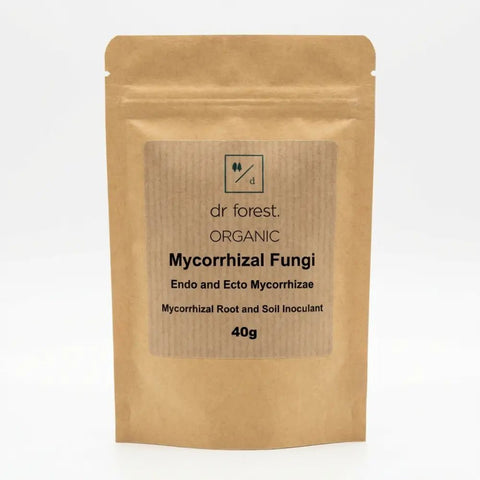
A plant-based root inoculant, 18 endo and ecto species.
from £6.99
A trace-mineral mix to round out your feeding.
from £11.99