A nitrogen-led liquid feed that greens a lawn from a watering can.
50 ml per 4.5 litre can
Every 3–4 weeks, April–August
Low salt, low scorch
Free UK delivery on orders over £40
Otherwise £2.25 under £22, or £3.00 from £22 to £40.
Dispatched from Stockport in 1–2 working days. Order now and it leaves us by .
Unopened packs can be returned within 30 days.
It won't green a lawn gone straw-coloured in a drought: that grass is dormant, not hungry, and recovers when rain returns.
Any 3 small packs, 10% off. Mix and match the smallest size of any product. Here that's the 500ml.
Complete the season
★★★★★ 4.95/5 from 513 reviews
Packed in Stockport
Virtually odourless
Liquid Lawn Feed 7-2-3500 ml · £13.99
Overview
A light feed every 3–4 weeks keeps the colour steady.
A nitrogen-led liquid grass feed, recovered from plant material and already in solution, so the grass can use it straight away. Pour this liquid lawn fertiliser from a watering can every 3–4 weeks from April to August; we pack it in Stockport.
Colour in a week or two
Pale, yellowing grass is most often short of nitrogen. Colour usually returns within a week or two while it's growing.
Low salt, low scorch
It carries much less salt than concentrated synthetic feeds, so the margin for error is wider.
Steady colour, no growth surge
A light, little-and-often dose greens the lawn without forcing soft, sappy growth and extra mowing.
Feeds the whole garden too
A general plant food: the same bottle feeds beds, borders, pots and vegetables at the same dilution. Growing notes for those plants are in our How to Grow Plants guides.
On the bag
What 7-2-3 means
N7%
Nitrogen
Leaf and shoot growth. Too little shows as pale older leaves and slow growth.
P2%
Phosphate
Roots, flowering, and fruit and seed set. Too little shows as stunted plants.
K3%
Potash
Water control, flower and fruit quality, and hardiness against drought and cold.
All three are recovered from residual plant matter that has already taken them up, rather than mined or made from natural gas, at a fraction of the salt in a mineral feed.
Dose and size finder
How much do I need?
Tell us your lawn's size. You'll get the millilitres for each feed, the water to mix it into, and the bottle that lasts your season.
–
–
–
Your best pack
Rates from this page: 50 ml per 4.5 litre can over about 6–7 m², every 3–4 weeks from April to August: six to eight feeds a season.
How to use
Shake, dilute, pour, water in.
A concentrate, not a ready-to-use spray. Dilute it in a watering can, pour it evenly over the lawn through a rose, then water it in.
Shake the bottle
A little settling is normal in a plant-derived liquid. Shake it well before you measure.
Measure into the can
50 ml for a 4.5 litre can, 100 ml for a 9 litre one. Top up with water and stir.
Pour through a rose
Even, all-over cover with no puddles: about 6–7 m² per 4.5 litre can.
Water it in
Or feed just before light rain, so the feed reaches the roots instead of drying on the leaf.
Repeat every 3–4 weeks
From April, once the grass is growing, to a last feed by the end of August. For autumn, use a potash-led feed, or our Autumn Lawn Feed for Clay kit on heavy soil.
Feeding a lawn
Every 3–4 weeks, April–August
Rate
50 ml per 6–7 m² (about 7.7 ml per m²)
4.5 litre can
50 ml, covers about 6–7 m²
9 litre can
100 ml, covers about 12–14 m²
Last feed
By the end of August
How often
Every 3–4 weeks, April to August
Pale, yellow or tired grass, usually short of nitrogen. Colour usually improves within a week or two while the grass is growing.
After overseeding
Once new grass is established
Rate
50 ml per 6–7 m² (about 7.7 ml per m²)
How often
Once the new grass is established
After overseeding or scarifying. A light feed, once the new grass is established, helps it settle in.
Beds, borders and pots
The same dilution
Small can
50 ml per 4.5 litre can
Large can
100 ml per 9 litre can
A general plant food: the same bottle feeds beds, borders, pots and vegetables at the same dilution as the lawn.
A typical UK lawn year
JanFebMarAprMayJunJulAugSepOctNovDec
Watch: wait for clear growth: March to March
Feed every 3–4 weeks: April to August
Skip in a heatwave or drought: July to August
No nitrogen: potash-led instead: September to October
Rest: nothing to do: November to February
Now
Avoid these
Six common mistakes
Feeding a dry, dormant lawnStraw-coloured grass in a drought isn't hungry. It greens up when rain returns.
Feeding in a heatwaveDry, stressed grass can scorch. Wait until it has been watered or rain returns.
Using it neat or as a sprayA concentrate and a watering-can feed: dilute it, then pour it through a rose.
Skipping the watering inWater it in so the feed reaches the roots instead of drying on the leaf.
Feeding after AugustNo more nitrogen from September: soft late growth won't harden before the cold.
Pouring it on unevenlyAim for even, all-over cover with no puddles, poured through a rose.
What's in it
Three nutrients, from plants
Nitrogen, phosphorus and potassium recovered from residual plant matter that has already taken them up, not mined or made from natural gas.
7%
Nitrogen (N)
Drives growth and colour. Already in solution, so the grass can use it straight away.
Nitrogen
2%
Phosphorus (P₂O₅)
A smaller amount, for the roots. Turf feeds normally keep phosphorus low.
Phosphorus & calcium
3%
Potassium (K₂O)
Toughens the grass against drought, wear and cold.
Potassium
Vegan. Its nutrients are recovered from plant material. Made with organic ingredients.
A lower footprint, not a zero one. No mining and no fossil-fuel nitrogen, but it still takes energy to process, bottle and deliver any feed.
Pet and child friendly. Used as directed. Keep children, pets and wildlife off until it's watered in and the grass is dry, and store the bottle closed and out of reach.
The science
Why plant-derived nitrogen greens without scorch
Recovered from plant material and held in solution, the nutrients arrive ready to use, at a fraction of the salt in a mineral feed.
In the bottle
Already released from the plant matter
It arrives as soluble nitrogen, not as material soil organisms must break down first, so it acts faster than bagged organics.
Within a week or two
Pale grass colours up
Pale, yellowing grass is most often short of nitrogen. Colour usually returns within a week or two while the grass is growing.
Every 3–4 weeks
Little and often
A light, even feed keeps the colour steady without forcing the soft, sappy growth and extra mowing that heavy feeds cause. Our guide to high nitrogen lawn feed explains how much grass really needs.
31–56%
uptake within eight hours across the nitrogen sources tested on creeping bentgrass. Amino acids did about as well as urea.
Stiegler, J.C. et al. (2013). Crop Science, 53(3), 1148–1152.
It's the salt that scorches
Salt in concentrated feeds, not the nitrogen itself, scorches a lawn when feed goes on too heavily or onto dry grass. A plant-derived liquid at this dilution carries far less.
What the trial does and doesn't show
It measured leaf uptake on a golf green, not a home lawn. It shows soluble organic nitrogen is usable by grass, not what any one lawn will do.
Recovered, not mined or synthesised
Most lawn feeds' nitrogen starts as ammonia made from natural gas, and their potash and phosphate are mined. Here all three are recovered from plant matter.
Figures from published research are not a trial of this product.
A plant-derived liquid food for your lawn: dilute a little in a watering can, pour it over the grass and water it in. It feeds the grass nitrogen for growth and colour, plus potassium to toughen it and a smaller amount of phosphorus for the roots. It is a watering-can feed, not a spray.
Why 7-2-3? Is that a lot of nitrogen?
It is a deliberately nitrogen-led ratio, and that suits a lawn. Grass is grown for its leaves, and leaves run on nitrogen, so turf feeds are normally N-heavy while phosphorus stays low. The 7% here is a concentration, not a dose: you dilute it heavily and apply a light, even feed, so the grass gets a steady supply rather than a surge.
Is this a pet-friendly lawn feed?
Yes, used as directed. It is a plant food, not a pesticide. That suits wildlife gardening, since it is a plant food with no pesticide in it. Keep children, pets and wildlife off the lawn until the feed has been watered in and the grass is dry, and store the bottle closed and out of reach.
My grass is yellow and pale, will this help?
Usually, yes. Pale, yellowing grass is most often short of nitrogen, which this feed leads on, so colour tends to return within a week or two of feeding while the grass is growing. One exception: grass that has gone straw-coloured in a summer drought is not hungry, it is dormant, and it will green up on its own when rain returns. Do not feed a dry, dormant lawn.
When do I start and stop feeding?
Start in spring once the grass is actively growing. If you are mowing it, you can feed it, usually around April, once the soil stays above 10°C. Feed every three to four weeks and give the last feed by the end of August, as the RHS advises. Colder or northern gardens start a little later. The Calendar tab lays out the whole year month by month.
Will it burn or scorch my lawn?
The risk is low, because it carries much less salt than concentrated synthetic feeds. Stick to the dilution, feed grass that is growing rather than dry and stressed, and water it in afterwards, and you should not see any scorch.
Is liquid lawn feed better than granules?
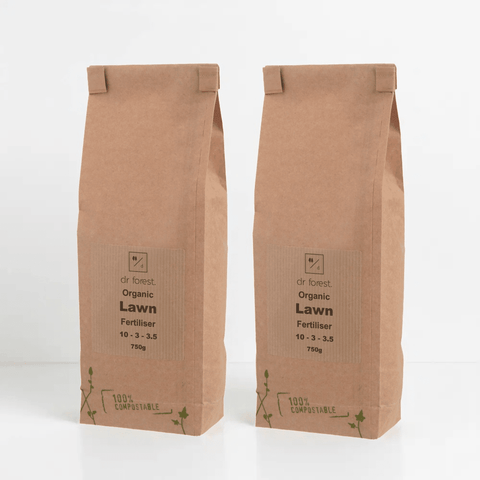
As a liquid lawn fertiliser it's quicker. The nutrients are already in solution, so pale grass usually colours up within a week or two. The trade-off is that you feed more often, every three to four weeks from April to August. Granules such as our Organic Lawn Fertiliser 10-3-3.5 go down every six to eight weeks.
Is this an autumn lawn feed?
No. It is a nitrogen-led spring and summer feed, with the last feed by the end of August. For autumn, switch to a potash-led feed such as Sulphate of Potash, or our Autumn Lawn Feed for Clay kit on heavy soil.
No questions match. Try “dose”, “vegan” or “dogs”.
Which feed?
Liquid Lawn Feed works from a watering can. Here's when another feed suits better.
It's quicker, but goes on every 3–4 weeks. Lawn Fertiliser 10-3-3.5 granules go down every 6–8 weeks. Use Scottish Seaweed after scarifying or overseeding, and Granulated Rock Dust to remineralise tired lawn soil.
You're here
NPK 7-2-3
Liquid Lawn Feed
Pale lawns, fed from a watering can every 3–4 weeks.